

2018-2023 Jaguar E-PACE Intercooler Hose: Diagnosing Boost Leaks and P0299 Codes
A cracked intercooler hose is a common cause of power loss and Check Engine lights on the Jaguar E-PACE, and is often misdiagnosed as a failed turbocharger.
- A leaking intercooler hose is a primary cause of the P0299 (Underboost) code and significant power loss; it should be checked before suspecting turbo failure.
- Symptoms include a loud hissing noise under acceleration, a major drop in power, and a Check Engine Light.
- When buying a used hose, inspect it carefully for cracks, soft/swollen spots, and brittleness to ensure it's in good condition.
- There are no specific recalls or TSBs for this hose, but it is a known failure point in many turbocharged vehicles, including the E-PACE.
Symptoms of a Failing Intercooler Hose
A failing intercooler hose creates a 'boost leak,' which prevents the engine from receiving the correct amount of pressurized air from the turbocharger. The symptoms are often mistaken for a much more serious turbo failure. If you experience these issues, inspecting the intercooler hoses should be your first step.
- Significant Loss of Power: The vehicle will feel sluggish and accelerate slowly, especially when you need power for merging or climbing hills. This happens because the pressurized air needed for combustion is escaping before it reaches the engine.
- Hissing or Whooshing Sound: A distinct hissing or whistling noise that gets louder during acceleration is a classic sign of a boost leak. This is the sound of high-pressure air escaping through a crack or split in the hose.
- Check Engine Light: A boost leak will almost always trigger a Check Engine Light. The most common trouble code is P0299 (Turbocharger/Supercharger Underboost Condition). This code means the engine's computer detects that the boost pressure is lower than expected. You may also see codes related to the mass airflow sensor or fuel mixture.
- Reduced Fuel Economy: The engine's computer tries to compensate for the incorrect air-fuel mixture caused by the leak, often by injecting more fuel. This leads to a noticeable drop in gas mileage.
- Black Smoke from Exhaust (Diesel Models): On diesel E-PACE models, a significant boost leak can cause an overly rich fuel mixture, resulting in black smoke from the exhaust pipe during acceleration.
Known Issues, TSBs, and Recalls for 2018-2023 Jaguar E-PACE
While the 2.0L Ingenium engine in the E-PACE has known issues with turbochargers and timing chains (on diesel models), there are no specific recalls or Technical Service Bulletins (TSBs) issued by Jaguar for failing intercooler hoses.
However, a leaking intercooler hose is a very common cause for the P0299 underboost code that is often associated with these other problems. Technicians frequently find that a simple split hose is the true culprit behind power loss issues that were initially blamed on a faulty turbocharger. Always inspect the intake plumbing thoroughly before approving a costly turbo replacement.
Pro Tip: The intercooler system has multiple hoses, including an inlet and an outlet tube. While the part number HJ326C782AC is a common replacement, it's wise to inspect all charge pipes and their connections, as a leak can occur at any point between the turbo and the intake manifold.
Buying a Used Intercooler Intake Hose
For a part like this, a quality used OEM hose is often a better choice than a cheap, new aftermarket part. The original Jaguar part is designed with specific materials to withstand the heat, oil vapor, and pressure of the turbo system. Here’s what to check before buying a used one:
- Verify the Part Number: Make sure the part number (e.g., HJ326C782AC) matches what is required for your vehicle. While other hoses may look similar, small differences in length or bend radius can make them impossible to install.
- Physical Inspection for Cracks: Carefully bend and twist the hose, paying close attention to the ribbed, flexible sections and the areas near the ends where clamps are fitted. Look for any signs of cracking, splitting, or tearing. Even a small crack will leak under pressure.
- Check for Swelling or Soft Spots: Squeeze the hose firmly along its entire length. It should feel firm and springy. If you find any soft, spongy, or swollen areas, the hose has been contaminated by oil and its structure is compromised. Do not buy it.
- Inspect the Inside: Look inside the hose. A thin film of oil is normal in a turbocharged engine due to the crankcase ventilation system. However, if there are pools of liquid oil, it could be a sign of a failing turbocharger on the donor vehicle, and the hose itself may be degraded.
- Check for Brittleness: The rubber or silicone should still be flexible. If the hose feels hard, stiff, or brittle, it has been degraded by heat cycles and is likely to crack soon after installation.
Cost Comparison
Replacing a split intercooler hose is far more affordable than replacing the turbocharger it is often misdiagnosed as. Prices can vary, but here is a general breakdown:
| Part Type | Estimated Cost |
|---|---|
| New OEM (Jaguar) | $190 - $320 |
| New Aftermarket | Not widely available |
| Used OEM | $50 - $90 |
| Shop Labor | $160 - $250 |
Note: Labor costs are based on estimates for similar hose replacement jobs. The actual time can vary depending on which hose has failed and how difficult it is to access.
Installation Guide
Difficulty: 2 out of 5
Replacing an intercooler hose is a straightforward job for a DIY mechanic with basic tools. The main challenge is usually accessing the clamps, which may be hidden by other engine components. The estimated time is 1-2 hours.
Tools Needed:
- Socket set or nut driver for hose clamps
- Pliers (for spring-type clamps)
- Flathead screwdriver (for prying off old hose)
- Flashlight
Step-by-Step Process:
- Let the Engine Cool: Never work on a hot engine. Wait at least an hour for components to cool down.
- Locate the Hose: Identify the failed intercooler hose. It will be one of the large diameter pipes running from the front-mounted intercooler to the engine's throttle body or from the turbocharger to the intercooler.
- Loosen the Clamps: Use a socket, nut driver, or pliers to loosen the hose clamps at both ends of the damaged hose.
- Remove the Old Hose: Gently twist and pull the hose off its connection points. If it's stuck, you can use a flathead screwdriver to carefully break the seal, but be careful not to gouge the plastic or metal connection points.
- Install the New Hose: Slide the new hose into place, making sure it is fully seated on both ends. The fit should be snug.
- Tighten the Clamps: Position the clamps a small distance from the end of the hose and tighten them securely. They should be tight enough to prevent leaks but not so tight that they damage the hose.
- Clear Codes and Test Drive: If you have an OBD-II scanner, clear the P0299 code. Start the engine and listen for any hissing sounds. Take the vehicle for a test drive to confirm that power has been restored and the Check Engine Light does not return.
Frequently Asked Questions
Can I drive my Jaguar E-PACE with a leaking intercooler hose?
It is not recommended. While the car may be drivable, you will have significantly reduced power, which can be unsafe for merging or overtaking. Continuing to drive can also force the turbocharger to work harder to compensate for the lost pressure, potentially leading to premature wear or failure of the turbo itself.
Will a bad intercooler hose cause my car to fail an emissions test?
Yes, it is very likely. A leaking intercooler hose disrupts the air-fuel ratio, which can increase emissions. More importantly, the active Check Engine Light that a boost leak causes will result in an automatic failure in most states.
Is it better to use a silicone aftermarket hose instead of an OEM rubber one?
High-quality silicone hoses can offer better durability and resistance to heat and oil compared to standard OEM rubber. However, for the Jaguar E-PACE, direct-fit aftermarket silicone options are not widely available. A good-condition used OEM hose is a reliable and cost-effective solution that guarantees perfect fitment.
How can I test for a boost leak if I can't see the crack?
A common professional method is to use a smoke machine. This tool fills the intake system with a harmless, visible smoke under low pressure. Smoke will pour out of any cracks or loose connections, making even the smallest leaks easy to find. You can also spray soapy water on the hoses and connections while the engine is running; a leak will create bubbles.
Technical Specifications
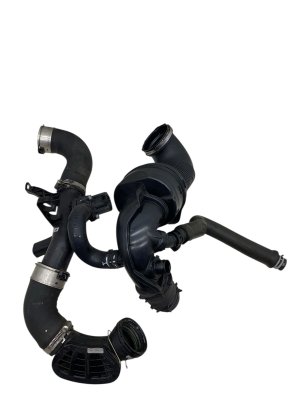
OEM Part Numbers: HJ326C782AC J9C6410 (Outlet Tube) J9C6409 (Inlet Tube)
Fits 2018-2023 Jaguar E-PACE models equipped with the 2.0L turbocharged gasoline engine.
We Have This Part in Stock

The information in this article is provided for general reference and educational purposes only. Vehicle specifications, procedures, and part compatibility can vary by production date, trim level, and region. Always consult your vehicle's factory service manual and verify part numbers before purchasing or performing repairs. Safety-critical components such as airbags, seat belts, and braking systems should be installed by a qualified professional.
- Jaguar E-PACE: