

2021-2025 Bronco & 2024-2025 Ranger Intercooler: Diagnosing Leaks, Power Loss, and Replacement
This guide covers the common failure symptoms, replacement costs, and what to inspect when buying a used OEM intercooler for your Ford Bronco or Ranger.
- The most common failure is a leak, causing power loss, hissing noises, and engine codes like P0299.
- When buying a used intercooler, thoroughly inspect the plastic end tanks for cracks and the aluminum fins for major damage.
- The same OEM intercooler fits the 2021-2025 Bronco (2.3L & 2.7L) and the 2024-2025 Ranger (2.3L).
- Replacement is a feasible DIY job that requires removing the front skid plate but not the entire bumper.
Symptoms of a Failing Intercooler

A problem with your intercooler will almost always result in noticeable performance issues. Because its main job is to provide cool, dense air for the turbo, any failure will disrupt the air-fuel mixture and boost pressure. Look out for these common signs.
1. Loss of Power and Sluggish Acceleration
This is the most common symptom. If the intercooler is leaking, the turbocharger can't supply the engine with the correct amount of pressurized air. The vehicle will feel noticeably slower, especially when you try to accelerate hard. In severe cases, the vehicle's computer may enter a "limp mode" to protect the engine, drastically reducing power and limiting RPMs.
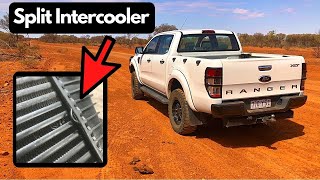
🎬 Watch: Ford Ranger intercooler replacement and limp mode fix2. Hissing or Whistling Noises
A crack or leak in the intercooler or its connecting hoses will allow pressurized air to escape, often creating an audible hissing or whistling sound that gets louder with acceleration as the turbo builds boost.
3. Check Engine Light
A faulty intercooler can trigger the check engine light. The leak disrupts the air measurement systems, leading to specific diagnostic trouble codes (DTCs). Common codes include:
- P0299: Turbo/Supercharger Underboost
- P00BD: Mass or Volume Air Flow 'A' Circuit Range/Performance - Air Flow Too High
- P0234: Turbo/Supercharger Overboost Condition
4. Reduced Fuel Economy
When the engine isn't receiving the proper air-to-fuel ratio due to an intercooler leak, the engine control unit (ECU) may try to compensate by adding more fuel. This inefficient combustion process leads to burning more fuel than necessary, causing a noticeable drop in your average miles per gallon (MPG).
5. Black Smoke from Exhaust
In some cases, a significant boost leak can cause the engine to run rich (too much fuel, not enough air). This unburned fuel is then expelled through the exhaust, appearing as black smoke, particularly under heavy acceleration.
Known Issues, TSBs, and Recalls

As of late 2025, there are no specific recalls or widespread Technical Service Bulletins (TSBs) from Ford directly addressing the intercooler on the 2021-2025 Bronco or 2024-2025 Ranger. The primary issues reported by owners are related to physical damage from off-roading or leaks developing in the plastic end tanks or hose connections over time. While several recalls exist for these vehicles for issues like steering components or airbags, the intercooler itself has not been the subject of a major recall campaign.
Pro Tip: Many owners of modified Broncos find that the stock intercooler can become "heat soaked" during demanding situations like slow trail driving or towing in hot weather. This means it can't dissipate heat fast enough, leading to a temporary loss of power. While not a failure, it's a limitation of the stock design that leads many to upgrade to larger aftermarket units.
Buying a Used Intercooler: What to Check

A used OEM intercooler is a great way to save money, especially since the part is identical for both the 2.3L and 2.7L EcoBoost engines in the Bronco and the 2.3L in the Ranger. However, a thorough inspection is crucial before buying.
Physical Inspection Checklist:
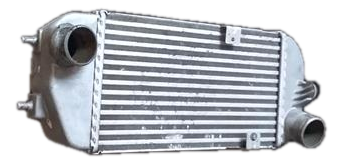
- Check the End Tanks: The OEM intercoolers use plastic end tanks crimped onto the aluminum core. This is the most common failure point. Carefully inspect the plastic for any hairline cracks, especially around the inlet/outlet ports and where the plastic meets the aluminum.
- Inspect the Cooling Fins: Look for significant damage to the cooling fins. While a few bent fins are purely cosmetic, large areas of crushed or blocked fins will reduce the intercooler's ability to cool the air.
- Look for Oil Residue: A light coating of oil inside the intercooler is normal, as it comes from the PCV (Positive Crankcase Ventilation) system. However, if there is a large amount of pooled oil, it could be a sign that the donor vehicle had more serious engine problems, like failing turbo seals.
- Verify Hose Connections: Check the inlet and outlet ports to ensure they are not cracked or deformed. This is where the charge pipes connect, and a good seal is critical to prevent boost leaks.
- Confirm Part Numbers: While multiple part numbers may fit, try to match the number on the replacement part to your original. Verified OEM numbers include MB3G-6D624, MB3G-6D624-AA, and MB3Z-6C839-A.
Cost Comparison for Intercooler Replacement
The cost to replace the intercooler can vary significantly based on the type of part you choose and whether you perform the labor yourself.
| Part Type | Estimated Cost |
|---|---|
| New OEM | $240 - $375 |
| New Aftermarket (Performance Upgrade) | $600 - $1,200+ |
| Used OEM | $85 - $250 |
| Shop Labor | $200 - $400 |
Replacement Difficulty and Procedure
Replacing the intercooler on a Ford Bronco or Ranger is moderately difficult but is feasible for a DIY mechanic with the right tools.
- Difficulty Rating: 3 out of 5
- Estimated Time: 2-3 hours
- DIY Feasible: Yes
The basic replacement process involves removing the front skid plate to access the intercooler from below. The unit is held in by several bolts and support brackets. No bumper removal is required for a stock-location replacement.
High-Level Steps:
- Park on a level surface and disconnect the battery.
- Remove the front skid plate. This typically involves removing a few 15mm bolts.
- Remove the lower intercooler support brackets.
- Disconnect the quick-disconnect charge pipes from the inlet and outlet of the intercooler. A pick tool can help release the clips.
- Unbolt the top support bracket and carefully lower the intercooler from the vehicle.
- Transfer the rubber mounting bushings from the old intercooler to the new one.
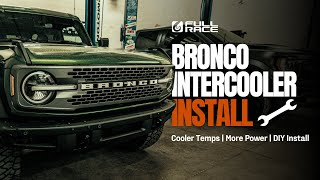
- Installation is the reverse of removal. It's a good idea to apply a small amount of silicone lubricant to the O-rings on the charge pipes to make reinstallation easier. 🎬 See this step-by-step aftermarket intercooler installation guide
Warning: The intercooler is located in front of the A/C condenser and radiator. Be careful not to damage these components during removal and installation.
Frequently Asked Questions (FAQ)

Can I drive with a leaking intercooler?
You can, but it's not recommended for long. You will experience poor engine performance, terrible fuel economy, and could cause the engine to enter a low-power "limp mode." Continuing to drive with a significant leak could potentially cause further stress on the turbocharger.
Will a bigger aftermarket intercooler give me more power?
Not directly on a stock vehicle. An upgraded intercooler's main benefit is preventing power loss from heat soak. By keeping the air charge cooler for longer, it allows the engine to produce its maximum designed power more consistently, especially in hot weather or during heavy use like towing or off-roading. Some performance-oriented aftermarket intercoolers have shown modest horsepower and torque gains on a dynamometer.
How do I know if the leak is from the intercooler or just a hose?
A visual inspection is the first step. Check the rubber and plastic charge pipes for cracks or loose clamps. If no obvious hose issues are found, the leak is likely in the intercooler itself, often at the plastic end tanks. A technician can perform a smoke test, which involves filling the intake system with pressurized smoke to easily see where it escapes.
Does this intercooler fit both the 2.3L and 2.7L engines?
Yes, the factory OEM intercooler is the same part for both the 2.3L 4-cylinder and 2.7L V6 EcoBoost engines in the 2021-2025 Ford Bronco, as well as the 2.3L EcoBoost in the 2024-2025 Ford Ranger.
Helpful Videos
Technical Specifications
OEM Part Numbers: MB3G-6D624 MB3G-6D624-AA MB3G6D624 MB3G6D624AA MB3Z-6C839-A MB3Z6C839A
Air-to-air intercooler with aluminum core and plastic end tanks. Mounts in the lower front grille area.
We Have This Part in Stock


The information in this article is provided for general reference and educational purposes only. Vehicle specifications, procedures, and part compatibility can vary by production date, trim level, and region. Always consult your vehicle's factory service manual and verify part numbers before purchasing or performing repairs. Safety-critical components such as airbags, seat belts, and braking systems should be installed by a qualified professional.
- Ford Bronco:
- Ford Ranger:
- 🎬 Helpful Videos
- 🛍️ Shop This Part
- Symptoms of a Failing Intercooler
- 1. Loss of Power and Sluggish Acceleration
- 2. Hissing or Whistling Noises
- 3. Check Engine Light
- 4. Reduced Fuel Economy
- 5. Black Smoke from Exhaust
- Known Issues, TSBs, and Recalls
- Buying a Used Intercooler: What to Check
- Physical Inspection Checklist:
- Cost Comparison for Intercooler Replacement
- Replacement Difficulty and Procedure
- High-Level Steps:
- Frequently Asked Questions (FAQ)
- 🎟️ Get 5% Off