

Audi 3.0T Supercharger Intercooler (2009-2017): Diagnosing Internal Coolant Leaks in S4, S5, Q5, Q7 & More
This guide covers the common failure of the internal supercharger intercoolers on the Audi 3.0T V6 engine, leading to mysterious coolant loss, misfires, and power reduction.
- The most common failure is an internal coolant leak, causing coolant loss with no external drips.
- This is a major repair requiring removal of the supercharger; difficulty is 5 out of 5.
- While the supercharger is off, it is critical to also replace the PCV valve, thermostat, and all related gaskets to prevent future repairs.
- Driving with a leaking intercooler is not recommended as it can lead to severe engine damage (hydrolock).
Identifying the Audi 3.0T Supercharger Intercooler

The intercoolers on the 3.0L V6 supercharged (3.0T) engine are a common point of failure that can be confusing to diagnose. This guide applies to the intercooler cores used in the 2011-2015 Audi Q7, 2013-2014 Audi A8, 2014-2017 Audi SQ5, 2009-2011 Audi A6, 2012-2015 Audi A7, 2010-2016 Audi S4, 2010-2017 Audi S5, 2013-2017 Audi Q5, and 2009-2011 Audi A6 Quattro. These vehicles share the same engine platform and, consequently, the same intercooler design.
It is critical to understand that these are not the large, front-mounted radiators you might see on other turbocharged vehicles. Instead, the Audi 3.0T uses two compact air-to-water intercooler cores that are housed directly underneath the supercharger assembly. Failure of these cores is a well-documented issue, often leading to coolant being ingested by the engine.
Symptoms of a Failing 3.0T Intercooler

A leaking intercooler core on the 3.0T engine presents a unique set of symptoms because the leak is internal. Coolant seeps from the core directly into the engine's air intake path.
🎬 Watch: A breakdown of common 3.0T intercooler leak symptoms.- Mysterious Coolant Loss: The most common symptom is a slowly dropping coolant level in the reservoir with no visible puddles or drips under the car. This is because the coolant is being burned in the combustion chamber.
- Engine Misfires: As coolant enters the cylinders, it can cause misfires, leading to a rough idle, stumbling on acceleration, and a flashing Check Engine Light. You may get specific fault codes like P0300 (random misfire) or codes for specific cylinders (e.g., P0304, P0305, P0306).
- White Smoke from Exhaust: Burning coolant can produce sweet-smelling white smoke or vapor from the exhaust, especially on startup or under acceleration.
- Reduced Power: A significant leak can disrupt the air-fuel mixture, leading to a noticeable loss of engine power and boost.
- Coolant Warning Light: As the coolant level drops, the warning light on the dashboard will eventually illuminate.
Diagnosing a Leaky Intercooler

Confirming an internal intercooler leak requires some disassembly, as the cores are hidden beneath the supercharger.
- Visual Inspection: The most definitive test is to remove the supercharger. Once it's off, look down into the intake runners of the cylinder heads and at the outlet ports of the supercharger. The presence of coolant, or a crusty pink/white residue from dried G12/G13 coolant, is a sure sign of a leak. Some mechanics use a borescope to look inside without full removal, but this can be difficult.
- Pressure Testing: A technician can pressure-test the supercharger's dedicated cooling circuit. If the system cannot hold pressure and there are no external leaks, it strongly suggests an internal leak in one or both cores.
- Spark Plug Inspection: Removing the spark plugs may reveal one or more that are unusually clean or have a white, ashy deposit, which indicates they have been steam-cleaned by burning coolant.
Pro Tip: Since removing the supercharger is a significant job, it is highly recommended to replace other common failure items located underneath it at the same time. This includes the PCV (Positive Crankcase Ventilation) valve, thermostat, and all associated gaskets and seals.
Buying a Used Audi 3.0T Intercooler

Given the high cost of new OEM intercoolers, a quality used OEM part is a viable option. However, careful inspection is key, as this is a known failure point. There are two intercoolers, one for each cylinder bank, and it is highly recommended to replace them in pairs.
What to Check Before Purchase:
- Verify Part Numbers: The primary OEM part number has been updated several times. The latest version is 06E145621S, which supersedes 06E145621R, 06E145621F, and 06E145621E. Ensure you are getting the latest revision if possible.
- Look for Coolant Residue: Inspect the inlet and outlet ports of the used intercooler very carefully. Any sign of a chalky, pinkish, or white residue is a major red flag indicating a past leak.
- Check for Physical Damage: Look for bent fins, cracks in the end tanks, or damage to the mounting points.
- Ask for Donor Vehicle Information: If possible, find out the mileage of the vehicle the part came from. Lower mileage is always better. A part from a vehicle that was in a collision but had no engine issues is often a good bet.
- Why Used OEM is a Good Choice: Aftermarket options exist, but their long-term reliability can be questionable. A tested, verified used OEM intercooler offers the original factory fitment and material quality, often at a fraction of the price of a new part.
Warning: Do not install a used intercooler without replacing all the associated gaskets and O-rings. The front gaskets (Part No. 06E-145-723-E) and rear gaskets (Part No. 06E-145-723-A) are critical for preventing boost and coolant leaks.
Replacement Difficulty & Cost
Replacing the supercharger intercoolers is a complex and labor-intensive job.
- Difficulty: 5 out of 5 (Professional/Advanced DIY)
- Time: 4-6 hours for a professional technician.
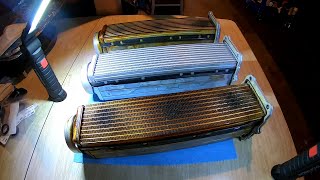
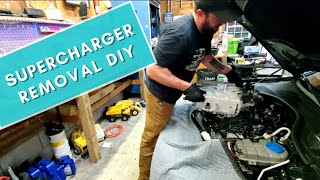
- Process: The job requires draining the cooling system, removing the intake, disconnecting fuel lines, and lifting the entire supercharger assembly off the engine. Special care must be taken to avoid dropping debris into the open engine intake ports. 🎬 See this step-by-step guide on removing the supercharger assembly. The intercoolers are then unbolted from inside the supercharger housing. 🎬 Watch: How to swap the intercooler bricks once the charger is off.
Cost Comparison
Prices can vary, but this provides a general estimate for a pair of intercoolers.
| Part Type | Estimated Cost (Pair) |
|---|---|
| New OEM (Dealer) | $950 - $1300 |
| New Aftermarket | $900 - $1100 |
| Used OEM | $200 - $400 |
| Shop Labor | $600 - $900 |
Frequently Asked Questions (FAQ)
Can I drive my Audi with a leaking intercooler?
It is strongly advised not to. A minor leak will cause poor performance and fuel economy. A major leak risks hydrolocking the engine, where a non-compressible liquid (coolant) fills a cylinder, potentially causing catastrophic engine damage like bent connecting rods when the piston tries to compress it.
Is there a recall for the 3.0T intercooler?
No, there are no NHTSA recalls for this specific internal intercooler failure. There was a Technical Service Bulletin (TSB 2034439/2) for some 2010-2013 models concerning damage to the *front auxiliary radiator* (also part of the intercooler system) from road debris, which involved adding a protective grille, but this is a separate issue from the internal cores leaking.
Should I replace one or both intercoolers?
It is highly recommended to replace both intercoolers at the same time. They have been subjected to the same age and thermal cycles, so if one has failed, the other is likely not far behind. Given the high labor cost to access them, replacing both is cost-effective insurance against having to do the job again.
Could my coolant loss be the PCV valve instead?
Yes, that is another possibility. The PCV valve on the 3.0T engine also has coolant passages and can fail internally, mixing coolant with engine oil. A key difference is that a failed PCV valve typically results in a milky, 'milkshake' appearance on the oil cap or dipstick, whereas a leaking intercooler sends coolant into the combustion chamber to be burned. Since the supercharger must be removed to replace the PCV valve, it's wise to inspect the intercoolers and replace the PCV valve simultaneously.
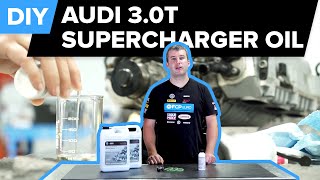
Helpful Videos


Technical Specifications
OEM Part Numbers: 06E145621S 06E145621R 06E145621F 06E145621E
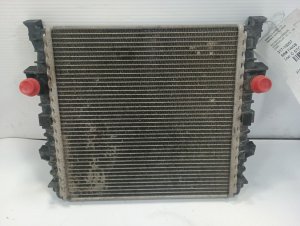
Air-to-water intercooler core located inside the supercharger assembly. Two are used per engine.
We Have This Part in Stock





The information in this article is provided for general reference and educational purposes only. Vehicle specifications, procedures, and part compatibility can vary by production date, trim level, and region. Always consult your vehicle's factory service manual and verify part numbers before purchasing or performing repairs. Safety-critical components such as airbags, seat belts, and braking systems should be installed by a qualified professional.
- Audi Q7:
- Audi A8:
- Audi SQ5:
- Audi A6:
- Audi A7:
- Audi S4:
- Audi S5:
- Audi Q5:
- Audi A6 Quattro:
- 🎬 Helpful Videos
- 🛍️ Shop This Part
- Identifying the Audi 3.0T Supercharger Intercooler
- Symptoms of a Failing 3.0T Intercooler
- Diagnosing a Leaky Intercooler
- Buying a Used Audi 3.0T Intercooler
- What to Check Before Purchase:
- Replacement Difficulty & Cost
- Cost Comparison
- Frequently Asked Questions (FAQ)
- 🎟️ Get 5% Off