

2003-2009 Audi A4 & A4 Quattro Intercooler: Diagnosing Leaks, Fitment & Replacement
A complete guide to diagnosing boost leaks and navigating the critical part differences for B6 1.8T and B7 2.0T models.
- Fitment is complex; you must verify if your car is a B6 (1.8T) or B7 (2.0T) chassis, as the parts are not interchangeable.
- The most common failure is a crack in the plastic end tanks, causing a boost leak with symptoms like power loss, hissing noises, and a P0299 code.
- When buying a used intercooler, inspect for cracks and ensure there isn't a large amount of pooled oil inside, which could signal a failing turbo.
- Replacement requires removing the front bumper cover, making it a moderately difficult DIY job (Difficulty: 3/5).
Critical Fitment Differences: B6 vs. B7 Chassis
Before diagnosing or purchasing an intercooler for a 2003-2009 Audi A4 or A4 Quattro, you must identify your vehicle's specific chassis and engine. These models span two distinct generations, the B6 and B7, which use different engines and intercoolers. Using the wrong part will result in fitment issues.
| Chassis | Model Years | Engine | Key Identifiers |
|---|---|---|---|
| B6 | 2003–2005 | 1.8L Turbo (1.8T) | Typically has a more rounded body style. Intercoolers are specific to the 1.8T engine. |
| B7 | 2005.5–2009 | 2.0L Turbo (2.0T) | Features a large, single-frame front grille. The 2009 model year is typically the B7 chassis Cabriolet (convertible) only. |
Warning: The 2005 model year is a split year. Vehicles produced in the first half of the year are often B6 models, while later models are the B7. Always verify your chassis and engine before ordering parts.
Symptoms of a Failing Intercooler
Intercooler failures are almost always due to leaks, which allow pressurized air from the turbo to escape. This is known as a "boost leak." The symptoms are a direct result of the engine not receiving the correct amount of air.
- Loss of Power and Sluggish Acceleration: The most common symptom. The car will feel noticeably slower because the turbo cannot produce the required boost pressure.
- Hissing or Whistling Sounds: A distinct hissing sound from the front of the engine bay during acceleration is a classic sign of air escaping from a crack in the intercooler or a loose hose.
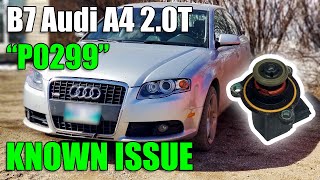
- Check Engine Light with Code P0299: The code P0299 (Turbocharger/Supercharger Underboost Condition) is frequently triggered by a significant boost leak. The engine's computer detects that the actual boost pressure is lower than what it requested and turns on the light. 🎬 Watch: Diagnosing a P0299 code and checking the N249 valve
- Poor Fuel Economy: The engine's computer may try to compensate for the lack of air by injecting more fuel, leading to a noticeable drop in MPG.
- Black Smoke from Exhaust: In some cases, an incorrect air-fuel ratio caused by a boost leak can lead to unburnt fuel being expelled, appearing as black smoke.
How to Diagnose a Leaking Intercooler
The most effective way to confirm a leaking intercooler is with a boost leak test. This involves pressurizing the intake system and listening for leaks.
- Visual Inspection: Start by inspecting the intercoolers and all connected hoses. Look for obvious cracks in the plastic end tanks, loose clamps, or separated hoses. Oil residue around a connection is often a sign of a leak.
- Soapy Water Test: With the engine running, carefully spray a solution of soapy water on the intercooler bodies, end tanks, and hose connections. If a leak is present, you will see bubbles forming as air escapes.
- Pressurized Leak Test: The most definitive method is to use a dedicated boost leak tester. This tool connects to the turbo inlet and allows you to pressurize the entire system with an air compressor (to about 15-20 PSI). 🎬 Watch: How to perform a boost leak test on a 1.8T With the system pressurized, you can easily hear air escaping from any leaks.
Buying a Used OEM Intercooler: What to Inspect
A used OEM intercooler can be a cost-effective solution, but careful inspection is key to avoid buying a faulty part.
- Inspect the Plastic End Tanks: The most common failure point is cracks in the plastic end tanks where they are crimped to the aluminum core. Carefully examine the entire seam for hairline cracks.
- Check for Excessive Oil Inside: Remove the hoses and look inside. A light film of oil is normal due to the PCV (Positive Crankcase Ventilation) system. However, if a significant amount of oil pours out, be cautious. This could indicate a failing turbocharger, which is a much more severe problem.
- Examine the Cooling Fins: A few bent fins from road debris are cosmetic and won't impact performance. However, avoid units with large areas of crushed or damaged fins, as this can restrict airflow.
- Verify Part Numbers: These Audis have a driver's side (Left) and passenger's side (Right) intercooler, and they are not interchangeable. The part numbers are also different for 1.8T and 2.0T engines. Double-check that the part number on the used unit matches what your vehicle requires.
Pro Tip: When replacing an intercooler, it's a good idea to also replace the rubber O-rings on the connecting hoses to ensure a perfect seal and prevent future leaks.
Known Issues and Fitment Warnings
Fitment for these vehicles can be very specific. Pay close attention to your model year, engine, and chassis.
B7 Chassis (2005.5-2009) - 2.0T Engine
Fitment Warning: These intercoolers are for the 2.0T engine only. The passenger side (RH) unit is part number 8E0145806M or 8E0145806Q. The driver side (LH) unit is 8E0145805N or 8E0145805Q. For the 2009 model year, these parts typically only fit the Cabriolet (convertible) models which retained the B7 chassis.
B6 Chassis (2003-2005) - 1.8T Engine
Fitment Warning: For 2003 Audi A4 models that are not convertibles, the intercoolers may only fit vehicles with a VIN ending in 300001 or higher. All 2003 Convertible models with the 1.8L engine use these parts. Always verify fitment with a VIN if you have a 2003 model.
Replacement Overview & Difficulty
Replacing the side-mount intercoolers on a B6 or B7 Audi A4 requires removing the front bumper cover. While not overly complex, it involves many steps and can be time-consuming for a first-timer.
- Difficulty: 3 out of 5
- Estimated Time: 2-3 hours
- Process Summary:
- Safely jack up the front of the vehicle and place it on jack stands.
- Remove screws from the front of both wheel well liners to gain access to the bumper bolts.
- Remove several Torx screws at the top of the grille and along the bottom edge of the bumper.
- Remove the two 10mm nuts on each side that secure the bumper to the fenders.
- Carefully pull the bumper cover away from the car, being ready to disconnect fog light and headlight washer electrical connectors.
- With the bumper removed, the intercoolers are accessible. Loosen the hose clamps, disconnect the hoses, and unbolt the intercooler from its mounting points.
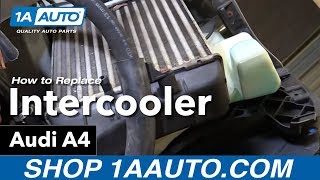
- Installation is the reverse of removal. 🎬 See this step-by-step intercooler replacement walkthrough
Cost Comparison
| Part Type | Estimated Cost (per side) |
|---|---|
| New OEM | $430 - $480 |
| New Aftermarket | $100 - $170 |
| Used OEM | $50 - $120 |
| Shop Labor | $290 - $430 |
Frequently Asked Questions
Can I drive with a leaking intercooler?
Yes, but it is not recommended for long. The vehicle will have significantly reduced power, which can be a safety issue in traffic. Continued driving can also put extra strain on the turbocharger as it tries to compensate for the lost pressure.
What causes an intercooler to fail?
The most common cause of failure is age and heat cycles causing the plastic end tanks to become brittle and crack. Road debris can also physically damage the aluminum core, and hose connections can loosen or fail over time.
Is an aftermarket intercooler better than OEM?
For a stock or lightly modified vehicle, a quality used or new OEM intercooler is perfectly adequate. High-performance aftermarket intercoolers are larger and more efficient, but are only necessary for vehicles with significant power upgrades. Cheap aftermarket units may not fit as well or be as durable as OEM parts.
What's the difference between the left and right intercoolers?
The left (driver's side) and right (passenger's side) intercoolers are mirror images of each other and have different shapes and part numbers. They are not interchangeable. The part numbers for the right side typically end in '806', while the left side ends in '805'.
Helpful Videos
Technical Specifications
OEM Part Numbers: 8E0145805D 8E0145805L 8E0145805N 8E0145805Q 8E0145806M 8E0145806Q
System Type: Dual side-mount air-to-air intercoolers. Construction: Aluminum core with plastic end tanks.
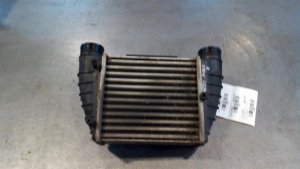
We Have This Part in Stock





The information in this article is provided for general reference and educational purposes only. Vehicle specifications, procedures, and part compatibility can vary by production date, trim level, and region. Always consult your vehicle's factory service manual and verify part numbers before purchasing or performing repairs. Safety-critical components such as airbags, seat belts, and braking systems should be installed by a qualified professional.
- Audi A4:
- Audi A4 Quattro:
- 🎬 Helpful Videos
- 🛍️ Shop This Part
- Critical Fitment Differences: B6 vs. B7 Chassis
- Symptoms of a Failing Intercooler
- How to Diagnose a Leaking Intercooler
- Buying a Used OEM Intercooler: What to Inspect
- Known Issues and Fitment Warnings
- B7 Chassis (2005.5-2009) - 2.0T Engine
- B6 Chassis (2003-2005) - 1.8T Engine
- Replacement Overview & Difficulty
- Cost Comparison
- Frequently Asked Questions
- 🎟️ Get 5% Off