

2019-2024 Kia Forte 2.0L IVT: Problems, Identification, and Used Replacement
Learn how to identify the 2.0L Nu MPI Intelligent Variable Transmission, what causes premature chain-belt failure, and when to swap it for a used OEM unit.
- A mandatory TCM software update and post-installation calibration are required to prevent repeat failure of a replacement unit.
- This specific IVT is not interchangeable with any other transmission, including those from Forte GT trims or other Kia/Hyundai models like the Soul or Elantra.
- When replacing the transmission, the integrated cooler and lines must be thoroughly flushed to remove metal debris from the previous failure.
- Only Kia Genuine SP-CVT1 fluid or a certified equivalent must be used; incorrect fluid will cause catastrophic damage.
- Early failures under 70,000 miles are common, often linked to a software logic flaw covered by service campaigns SC199 and FL301.
Identifying the Correct Forte IVT

This guide covers the specific transmission used in 2019–2024 Kia Forte sedans equipped with the 2.0L Nu MPI (Multi-Point Injection) 4-cylinder engine. This transmission is a continuously variable transmission, or CVT, that Kia calls the Intelligent Variable Transmission (IVT). It is a front-wheel drive (FWD) transaxle that uses a steel chain instead of a more common push belt.
Pro Tip: To confirm your Forte has the 2.0L engine this transmission pairs with, check the 8th digit of your vehicle's Vehicle Identification Number (VIN). It should be a 'C' or 'D'.
The most reliable way to identify the unit is by the manufacturer's part number. Look for a white barcode/QR sticker on the top or side of the transmission case near the starter motor and bellhousing, or check the metal VIN plate over the studs nearest the QR codes. Common part numbers for this assembly include 48000-2H300, 48000-2H300R, 48000-2H300QQK, and 480002H300.
Warning: This transmission is NOT interchangeable with units from other models. It will not fit Forte GT trims with the 1.6L Turbo engine, which use a dual-clutch transmission (DCT) or manual transmission. It also cannot be swapped with IVT units from other Hyundai or Kia models like the Soul, Seltos, Accent, Venue, or Elantra due to different mounting points, wiring harnesses, and internal software calibrations.
What is Included and Excluded
When purchasing a used replacement IVT assembly based on standard auto recycler (ARA) guidelines, you should expect specific components to be included or excluded.
| Status | Components |
|---|---|
| Included | The main transmission case, all internally lubricated parts, steel chain-belt and pulleys, extension/tail housings, lower oil pan, torque converter, valve body, internal solenoids, and the integrated transmission-mounted cooler/heater block. |
| Not Included | External sensors, external wiring harness, Transmission Control Module (TCM), shifter assembly, shifter linkage/cables, flexplate/flywheel, external coolant hoses, and transmission cooler lines. Turbochargers or superchargers are not applicable to this powertrain. |
Note that the lower oil pan is an integral part of the transmission case assembly and cannot be replaced separately. The integrated cooler/heater block is included, but external coolant supply hoses are not.
Common Failure Symptoms
A failing IVT in the Kia Forte often gives distinct warning signs before a complete breakdown. Many owners report these symptoms appearing between 25,000 and 70,000 miles. If you experience any of the following, the transmission may be at fault:
- Hesitation or Delay: A noticeable lag in acceleration when pulling away from a stop.
- Surging or Shuddering: The vehicle jerks or shakes as it gains speed.
- Loss of Power: The engine RPMs may spike, but the car fails to accelerate, sometimes described as a "rubber band" feeling. 🎬 Watch: Diagnosing Kia IVT slipping and power loss
- Whining or Grinding Noises: Unusual mechanical noises coming from the engine bay that change with engine speed.
- Check Engine Light: The Malfunction Indicator Lamp (MIL) may illuminate, often with transmission-specific Diagnostic Trouble Codes (DTCs).
Diagnostic Flowchart
Known Issues, Recalls, and Technical Service Bulletins (TSBs)

Several official service campaigns and bulletins have been issued for this transmission and related components. A Technical Service Bulletin (TSB) is a document issued by the manufacturer with instructions for dealers on how to fix a known, common problem.
TCM Software Logic and Chain-Belt Slippage (SC199 / SA424 / TRA102_R1 / FL301)
This is the most significant issue affecting these transmissions. The original software for the Transmission Control Module (TCM) could improperly manage hydraulic pressure, causing the internal chain-belt to slip. This leads to hesitation, power loss, and eventually, catastrophic internal damage.
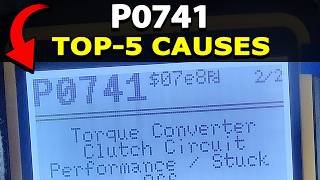
- Issue: Lack of acceleration, transmission slippage, and illumination of the check engine light with DTCs like P0730, P0731, P0741, and P0867.
- Affected Vehicles: 2019–2021 Kia Forte models produced between July 9, 2018, and April 2, 2020.
- Remedy: Dealers will perform a software update for the TCM. If slippage is already detected or damage has occurred, a complete transmission replacement is required. This work is covered under Voluntary Emissions Service Campaigns SC199 and FL301 (which superseded TSB SA424 and TRA102_R1).
Premature Internal Failure on Early Production Models (TSB SA364)
A small batch of early-production 2019 models was subject to a service action due to manufacturing defects that could cause premature failure.
- Issue: Check engine light with DTCs P073000 (Incorrect Gear Ratio) and P073100 (Gear 1 Incorrect Ratio).
- Affected Vehicles: 2019 Kia Forte models produced between July 24, 2018, and August 7, 2018.
- Remedy: Complete replacement of the IVT assembly. This was handled as a service action performed by dealers.
Improperly Heat-Treated Axle Driveshaft (NHTSA Recall 20V459000)
While not a transmission defect, this safety recall involves a critical drivetrain component connected to it. A faulty axle can cause a sudden loss of power, mimicking a transmission failure.
- Issue: The left front axle driveshaft may not have been properly heat-treated, which can cause it to break under load.
- Affected Vehicles: Certain 2019 Kia Forte vehicles.
- Remedy: Dealers will inspect the driveshaft for a verification code and replace it free of charge if the code is missing.
Class-Action Litigation
Due to premature failure, hesitation, surging, and sudden loss of power in 2019–2021 Kia Forte models, class-action litigation (such as Donadio v. Hyundai Motor America) has been pursued by owners seeking compensation for out-of-pocket repairs and diminished vehicle value.
What Fails at Every Mileage Band
Pro Tip: The mileage bands below describe the typical condition of USED REPLACEMENT units at that mileage. The checklists provided are things to do WHILE INSTALLING the purchased engine, not maintenance for your current vehicle.
Under 60,000 Miles
Transmissions in this range often fail due to early manufacturing defects or software flaws rather than wear and tear. Known failures include complete transmission failure due to internal chain-belt slippage (often caused by faulty TCM software logic), sudden loss of power, and erratic RPM behavior. Failures can occur at extremely low mileages, sometimes below 20,000 miles.
- ✓Do during install (required): Ensure the mandatory TCM software reflash (related to TSB SA424 / SC199) has been performed on the vehicle to prevent a repeat failure.
- ✓Do during install (required): Perform a complete flush of the integrated transmission cooler/heater block and lines to remove any metal debris from the previous failure.
- ✓Do during install (required): Replace the internal transmission filter (Part #48148-2H000) and external cartridge filter.
- ✓Do during install (required): Use only Kia Genuine SP-CVT1 fluid or a certified equivalent.
- ✓Do during install (required): Perform the mandatory TCM Adaptive Value Reset and Oil-Pressure Characteristics Input after installation.
- ✓Cheap insurance while the engine is out: Replace axle seals and the torque converter hub seal as preventative measures.
60,000 - 100,000 Miles
Failures in this band often happen if the initial TCM software updates were not performed or if fluid changes have been neglected. Symptoms include hesitation, surging, or shuddering during acceleration. Many second owners experience failures just outside of the 60,000-mile basic warranty.
- ✓Do during install (required): Flush the integrated cooler and lines to remove old fluid and potential contaminants.
- ✓Do during install (required): Ensure the vehicle's TCM has the latest software updates.
- ✓Do during install (recommended): Perform a transmission fluid drain-and-fill, as the fluid is likely degraded.
- ✓Do during install (recommended): Replace both the internal pan filter/strainer and the external cartridge filter.
- ✓Cheap insurance while the engine is out: Replace axle seals, input shaft seal, and inspect the front wheel bearings for any signs of wear.
100,000 - 150,000 Miles
There is an increased likelihood of wear-and-tear failure here, especially if fluid service has been inconsistent. Interestingly, reports of transmission issues are less common than in lower mileage bands, suggesting that units surviving past 100k miles may be more robust, possibly due to having received earlier software updates or better maintenance.
- ✓Do during install (required): Perform a complete fluid exchange (drain/fill or flush) with new filters.
- ✓Do during install (required): Thoroughly flush the cooler and lines, as accumulated debris is more likely.
- ✓Cheap insurance while the engine is out: Replace all accessible seals, including axle seals and the input shaft seal. Inspect related drivetrain components like CV axles and wheel bearings for wear.
Over 150,000 Miles
Failures here are typically due to general wear and tear. Electrical issues and component wear (like sensors or solenoids) may become more prevalent than catastrophic mechanical failure if the unit has been well-maintained. Many owners report reaching this mileage and beyond with proper care and regular fluid changes.
- ✓Do during install (required): Assume all consumables are at the end of their life. A full fluid exchange and filter replacement is non-negotiable.
- ✓Do during install (required): A meticulous cooler and line flush is critical to protect the replacement unit from any contamination from the high-mileage core.
- ✓Cheap insurance while the engine is out: Replace all external seals (axle, input shaft) as a standard procedure. Consider replacing the front wheel bearings while the subframe and axles are out for easier access.
Real Owner Experiences
| Source | Mileage | What Happened | Cost |
|---|---|---|---|
| CarComplaints.com | 19,200 (average) | The site reports an average failure mileage of 19,200 miles for transmission failure on the 2019 Forte. | N/A (Often covered by warranty) |
| CarComplaints.com | 11,200 | An owner reported their car would not accelerate without redlining; the transmission was replaced for a second time at 11,000 miles. | N/A (Warranty) |
| 16,800 | A 2019 Forte EX stalled and the check engine light came on. The dealer informed the owner of an open recall and the potential need for a new transmission. | N/A (Warranty) | |
| Cars.com | 40,000 | A 2020 Forte owner's check engine light came on, and the dealer diagnosed that a new transmission was needed, noting it was a known problem for the model year. | N/A (Warranty) |
| YouTube/NHTSA Complaints | 17,500 | A 2019 Forte failed while using cruise control; the engine RPM spiked to 7,000 while the car lost all power. | N/A (Warranty) |
| 75,000 | A 2020 Forte's CVT transmission failed. The dealer quoted $7,000 for a replacement. | $7,000 | |
| 73,000 | A 2020 Forte started showing multiple transmission codes. | Not specified | |
| 82,000 | The IVT transmission failed on a 2019 Forte. | Not specified | |
| 75,000 | Front wheel bearings went out and were replaced under warranty. While not a transmission failure, it is a relevant drivetrain component failure in this mileage band. | N/A (Warranty) | |
| 105,000 | An owner of a 2021 Forte proactively sought a transmission fluid change. One dealer was hesitant, stating the fluid is 'lifetime,' while another quoted $170 for the service. | $170 (quoted for service) | |
| 150,000 | A 2021 Forte LXS owner reports no transmission issues but notes the engine burns oil at this mileage. | N/A | |
| Orléans Kia / Real-World Experiences | 97,000 | A 2020 Forte owner reported reaching this mileage with no major mechanical issues. | N/A |
| 208,000 | A 2018 Forte (pre-IVT, but relevant for platform longevity) is reported to drive wonderfully with regular oil changes and transmission fluid changes every 75k-90k miles. | N/A | |
| Various | 150,000-200,000+ | Multiple sources suggest that with proper care, the Kia Forte as a platform can readily exceed 150,000 or even 200,000 miles. | N/A |
| 130,000 | Owner was seeking options after a transmission flush did not solve a slipping issue. | $5,000 - $6,000 for a rebuilt CVT (parts only) | |
| YouTube (Commentary on Forums) | Varies | Many owners covered under warranty or service campaigns (SC199) received free replacements after experiencing hesitation and slipping. Those outside of warranty faced high replacement costs. | $0 (if under warranty/campaign), or $4,600+ |
Replacement Cost Comparison
When the IVT fails, replacement is often the only option. Costs can vary significantly based on the part source and labor rates.
| Part Type | Estimated Cost (USD) | Notes |
|---|---|---|
| New OEM | $3,500 - $4,500+ | Brand new from a Kia dealer. May be a revised part (e.g., ending in 'R' or 'QQK'). |
| Remanufactured | $1,450 - $3,300 | Rebuilt by a third party with updated components. Often includes a warranty. |
| Used OEM | $395 - $1,350 | A recycled unit from a donor vehicle. Mileage and condition vary. |
| Labor | $800 - $1,650 | Shop estimates range from 6 to 11 hours for the replacement. |
Repair or Replace?
Deciding whether to repair or replace the IVT depends entirely on the type of failure.
- When Repair Makes Sense: If you catch a TCM Software Logic Fault early (before any internal damage or slipping occurs), a dealer can perform a TCM software reflash for roughly $150 to $300. Additionally, if the transmission is functioning perfectly but has external leaks from axle seals or gaskets, repairing those leaks for $200 to $600 is far more economical than replacing the unit.
- When Replacement is Smarter: Replacement is the only viable option when internal failure has occurred. Symptoms like chain-belt slippage, hesitation, shuddering, surging, or a sudden loss of power indicate mechanical damage. Due to the complexity of the IVT and the lack of available internal components for rebuilds, the entire unit must be swapped. This applies to failures from the known TCM logic issue, manufacturing defects in early models, and general wear-related breakdowns.
Installation and Programming: Critical Steps

Professional Installation Recommended
Replacing this transmission is an advanced job requiring specialized tools, including an engine support bar/brace, a subframe jack or heavy-duty transmission jack, and a professional-grade bi-directional scan tool (such as Kia KDS/GDS, Autel MaxiSys, or Launch). The labor time is estimated between 6 and 11 hours.
Warning: A mandatory calibration procedure is required after installing a replacement IVT. A dealer-level scan tool must be used to perform a "TCM Adaptive Value Reset" and input the new transmission's oil-pressure characteristics. Skipping this step will cause immediate harsh shifting, slipping, and potential internal damage.
Installation Gotchas (Avoid These Mistakes)
Warning: Even for experienced technicians, this unit has specific quirks that can lead to failure if ignored:
- Torque Converter Seating: Ensure the torque converter is fully seated (three distinct drops/clicks) before bolting to the engine to avoid cracking the oil pump. Forcing the bellhousing bolts when the torque converter is not fully seated is a common and costly mistake.
- Fragile Lower Oil Pan: The lower oil pan is an integrated part of the transmission case and is fragile. Never place a jack directly under the oil pan to support or tilt the transmission.
- Coolant Bleeding: Bleed the engine cooling system thoroughly after installation due to coolant loss from the integrated cooler/heater block.
- Subframe Alignment: Use alignment dowels when raising the subframe back into place to prevent steering wheel or suspension misalignment.
- Cooler Flush: Thoroughly flush the integrated cooler block and lines with professional transmission cooler flush solvent/equipment to remove metal shavings from the previous failed unit. Reusing a dirty cooler will destroy the new transmission.
- Fluid Fill Procedure: Check final fluid level via the fill plug on the side of the case at a specific operating temperature; there is no dipstick. Using the wrong fluid (generic CVT or standard ATF) instead of Kia Genuine SP-CVT1 is a fatal mistake.
- Wiring Harness: Wiring harness routing and connections are specific to the Forte 2.0L application; do not attempt to use harnesses from other models.
Questions to Ask Your Installer
Before handing over your vehicle, ask your mechanic these questions to ensure they are prepared for this specific job:
- Have you installed a Kia IVT before and do you have the Kia-specific (KDS/GDS) or an equivalent high-level scan tool?
- Will you be performing the mandatory TCM adaptive value reset and oil-pressure characteristics input after installation?
- Does your quote include flushing the integrated transmission cooler and lines to remove debris from the old unit?
- What brand of SP-CVT1 fluid will you be using, and is it certified to meet Kia's specification?
- How will you verify the torque converter is fully seated before bolting the transmission to the engine?
- Does the warranty on the used or remanufactured transmission cover both parts and labor?
- Can you provide a detailed breakdown of the parts and labor costs in the quote?
Freight and Delivery Reality

If you are ordering a used replacement IVT online, it is important to understand how it will arrive. This assembly weighs approximately 165 lbs and measures roughly 32" x 28" x 24" before crating. Because of its size and weight, it ships as LTL (Less Than Truckload) freight on a wooden pallet—it will NOT arrive as a standard parcel via regular mail carriers.
If you are having the transmission delivered to a residential address, you must request liftgate service so the driver can safely lower the pallet to the ground. Always inspect the transmission thoroughly for any shipping damage—especially to the fragile integrated lower oil pan and electrical connectors—before signing the delivery receipt.
Frequently Asked Questions (FAQ)
What fluid does the 2019-2024 Forte IVT use?
It requires Kia Genuine SP-CVT1 transmission fluid or a fluid certified to meet that specific specification. Using generic CVT fluid or standard automatic transmission fluid (ATF) will cause severe internal damage.
Is the transmission computer (TCM) included with a used transmission?
No. The TCM is a separate module external to the transmission. You will reuse your vehicle's original TCM, which must be reprogrammed and reset to work with the replacement transmission.
Are all Kia CVTs the same?
No. Kia calls its modern continuously variable transmissions "IVT" for Intelligent Variable Transmission. They use a steel chain rather than a more common push-belt. Furthermore, the IVT from a Forte is not interchangeable with the IVT from a Soul, Seltos, Accent, Venue, or Elantra, even if they look similar.
Can I replace the lower oil pan if it cracks during installation?
No. The lower oil pan is an integral part of the transmission case assembly on this specific unit and cannot be replaced separately. If it cracks, the entire case is compromised.
What happens if I skip the TCM calibration after installing a used IVT?
Skipping the TCM Adaptive Value Reset and Oil-Pressure Characteristics Input using a professional scan tool will cause immediate harsh shifting, slipping, and potential catastrophic internal damage to your replacement transmission.
Does the used transmission come with the torque converter?
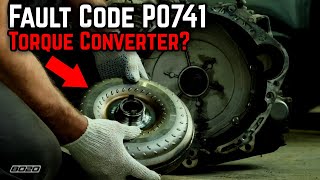
Yes, standard auto recycler guidelines dictate that the torque converter is included with the transmission assembly. However, you must ensure it is fully seated (three distinct drops/clicks) into the oil pump before bolting the transmission to the engine.
Helpful Videos


Technical Specifications
OEM Part Numbers: 48000-2H300 48000-2H300R 48000-2H300QQK 480002H300
Type: Intelligent Variable Transmission (IVT); Drive Type: Front-Wheel Drive (FWD); Belt Type: Steel Chain; Engine Compatibility: 2.0L Nu MPI 4-cylinder; Vehicle Compatibility: 2019-2024 Kia Forte Sedan (non-GT); Fluid Type: Kia Genuine SP-CVT1; Weight: Approx. 165 lbs
We Have This Part in Stock


The information in this article is provided for general reference and educational purposes only. Vehicle specifications, procedures, and part compatibility can vary by production date, trim level, and region. Always consult your vehicle's factory service manual and verify part numbers before purchasing or performing repairs. Safety-critical components such as airbags, seat belts, and braking systems should be installed by a qualified professional.
- Kia Forte:
- 🎬 Helpful Videos
- 🛍️ Shop This Part
- Identifying the Correct Forte IVT
- What is Included and Excluded
- Common Failure Symptoms
- Diagnostic Flowchart
- Known Issues, Recalls, and Technical Service Bulletins (TSBs)
- TCM Software Logic and Chain-Belt Slippage (SC199 / SA424 / TRA102_R1 / FL301)
- Premature Internal Failure on Early Production Models (TSB SA364)
- Improperly Heat-Treated Axle Driveshaft (NHTSA Recall 20V459000)
- Class-Action Litigation
- What Fails at Every Mileage Band
- Under 60,000 Miles
- 60,000 - 100,000 Miles
- 100,000 - 150,000 Miles
- Over 150,000 Miles
- Real Owner Experiences
- Replacement Cost Comparison
- Repair or Replace?
- Installation and Programming: Critical Steps
- Professional Installation Recommended
- Installation Gotchas (Avoid These Mistakes)
- Questions to Ask Your Installer
- Freight and Delivery Reality
- Frequently Asked Questions (FAQ)
- 🎟️ Get 5% Off