

2011-2017 Nissan Quest IPDM: Solving No-Start and Electrical Glitches
This guide covers the common failure points, symptoms, and replacement requirements for the Integrated Power Distribution Module in the 2011-2017 Nissan Quest.
- A failing IPDM is a common cause for crank-no-start conditions and random electrical problems in the 2011-2017 Nissan Quest.
- For this vehicle, a used IPDM with an identical part number is often a plug-and-play replacement and does not require programming for basic functions.
- The correct replacement part number is 284B7-1JA3A, which supersedes the earlier 284B7-1JA0A.
- Before replacing, perform the IPDM self-test using the driver's door switch to help diagnose the issue without special tools.
Symptoms of a Failing 2011-2017 Nissan Quest IPDM

A failing IPDM can cause a wide range of confusing and seemingly unrelated electrical problems. Because it controls so many different components, symptoms can vary greatly. Here are the most common issues owners report:
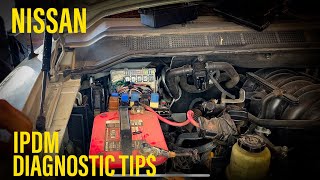
- Crank, No Start: The engine turns over but refuses to start. This is often caused by the IPDM failing to power the fuel pump or the Engine Control Module (ECM). 🎬 Watch: How to diagnose a Nissan no-start IPDM issue
- Sudden Stalling: The engine may shut off unexpectedly while driving, sometimes accompanied by chugging or a loss of power. This can be due to an intermittent failure of the internal ECM power relay within the IPDM.
- Multiple Unrelated Electrical Failures: You may notice that several electrical components stop working at once. This could include headlights, windshield wipers, the radio, power windows, or the air conditioning system.
- Battery Drain: A faulty IPDM can cause a parasitic draw that drains the battery even when the vehicle is turned off.
- Cooling Fans Run Constantly or Not at All: The IPDM controls the engine's cooling fans. A failure can cause them to run at full blast even with the engine off, or not turn on when needed, leading to overheating.
- Warning Lights on Dash: Various warning lights, such as the battery light or check engine light, may illuminate.
Diagnostic Tip: The IPDM Self-Test
Nissan has a built-in self-diagnostic routine for the IPDM that you can activate without any special tools. This test cycles through many of the components it controls, which can help confirm if the IPDM is sending power correctly. To perform the test:
- Turn the ignition off and close all doors.
- Turn the ignition ON (do not start the engine).
- Within 10-20 seconds, press the driver's side door jamb switch (the button the door presses when closed) 10 times.
- Turn the ignition OFF.
- Turn the ignition back ON. The horn should honk once to signal the start of the test. 🎬 Watch: Step-by-step Nissan IPDM self-test demonstration
The vehicle will then begin to cycle the wipers, headlights, A/C compressor, and other components. If a component works during this test but not during normal operation, it points to a problem with the control signal to the IPDM, not the IPDM itself. If a component does NOT work during the test, it helps confirm a potential issue with the IPDM, the component itself, or the wiring between them.
Warning: While some older Nissan models had issues with specific, replaceable relays inside the IPDM, Nissan generally considers the entire IPDM a non-serviceable unit. Attempting to replace individual internal relays can damage the module's sensitive terminals, leading to intermittent connections and more problems down the road.
Known Issues, Recalls, and TSBs

As of this writing, there are no specific recalls issued by the National Highway Traffic Safety Administration (NHTSA) for the IPDM on the 2011-2017 Nissan Quest. However, the electrical system is a commonly reported problem area for this vehicle generation. A Technical Service Bulletin (TSB), NTB21-072A, addresses an issue where the A/C is inoperative and stores a DTC B20C8-14 in the IPDM. The prescribed fix is to replace and configure the IPDM.
Does the IPDM Need to be Programmed?

This is a critical question for anyone replacing this part. The answer is mixed and depends on the specific circumstances.
- Simple Replacement: For many common failures, a used IPDM with the exact same part number can be installed and may function without any special programming, often referred to as "plug and play". This is especially true if the failure is related to a simple relay or power distribution fault.
- Configuration/Programming: However, official Nissan service procedures and some TSBs indicate that a new IPDM must be configured to the vehicle using the Nissan CONSULT diagnostic tool. This process "marries" the module to the vehicle's specific options and VIN. A failure to configure a new module can result in certain features not working correctly. For example, TSB NTB21-072A explicitly requires configuration after replacement.
There is no direct link between the IPDM and the vehicle's immobilizer or key fobs for this model year. A replacement IPDM will not prevent the car from recognizing its keys. Programming is related to vehicle configuration, not anti-theft.
Pro Tip: If you are replacing your IPDM with a used unit, the safest bet is to find one from a vehicle with the exact same trim and options. Always match the OEM part number exactly. The primary part number for the 2011-2017 Quest is 284B7-1JA3A, which supersedes the older 284B7-1JA0A.
Buying a Used Integrated Power Module
Purchasing a used IPDM is a cost-effective way to solve electrical issues, but careful inspection is key. Here’s what to look for:
- Part Number Match: This is the most important step. Ensure the part number on the used module is an exact match for your original (e.g., 284B7-1JA3A). Using the wrong module can cause unpredictable electrical behavior.
- Check for Corrosion: Carefully inspect all the electrical pins and connectors for any signs of green or white corrosion. Water intrusion is a common cause of failure, and a corroded unit is likely to fail again.
- No Physical Damage: Inspect the plastic housing for cracks, melting, or signs of being pried open. The case should be sealed and intact.
- Intact Fuses and Relays: While you can replace fuses, a module with multiple blown fuses may indicate a severe internal short. Ensure all fuses are present.
- Source Vehicle Information: If possible, get the VIN of the donor vehicle. This can sometimes help verify compatibility or check for TSBs that may have applied to that vehicle.
Cost of Replacement
Replacing the IPDM can have a wide price range depending on the source of the part and who performs the labor.
| Part / Service | Estimated Cost |
|---|---|
| New OEM (Dealer) | $830 - $1,355 |
| New Aftermarket | Not commonly available |
| Used OEM (Recycled) | $75 - $200 |
| Shop Labor Cost | $100 - $200 |
Frequently Asked Questions (FAQ)
Can I drive my Quest with a bad IPDM?
It is not recommended. Depending on the failure, you could experience sudden stalling, which is a major safety hazard, or a no-start condition that could leave you stranded. Electrical issues can also potentially damage other components.
Is replacing the IPDM a DIY job?
Yes, for a mechanically inclined person. The IPDM is typically located in the engine bay near the battery and is held in by clips or small bolts. The main challenge is carefully disconnecting the multiple electrical connectors without damaging them. It usually requires no special tools for the physical replacement.
Will a used IPDM from a junkyard work?
Often, yes, provided you match the part number exactly. Many sellers advertise these as "plug and play." However, there is a small risk that some vehicle-specific configurations might not work perfectly without a dealer visit. For the 2011-2017 Quest, this risk is relatively low compared to other modules.
What's the difference between the IPDM and the BCM?
The IPDM (Integrated Power Distribution Module) is primarily a "smart" fuse and relay box in the engine bay that switches power on and off for major components like the fuel pump, headlights, and fans. The BCM (Body Control Module) is usually inside the cabin and controls body-related functions like interior lights, power locks, and security systems. They communicate with each other, but perform different jobs.
Helpful Videos

Technical Specifications
OEM Part Numbers: 284B7-1JA0A 284B7-1JA3A
Integrated fuse and relay module with an internal CPU for CAN bus communication. Located in the engine compartment.
We Have This Part in Stock





The information in this article is provided for general reference and educational purposes only. Vehicle specifications, procedures, and part compatibility can vary by production date, trim level, and region. Always consult your vehicle's factory service manual and verify part numbers before purchasing or performing repairs. Safety-critical components such as airbags, seat belts, and braking systems should be installed by a qualified professional.
- Nissan Quest: