

2012-2023 Porsche Panamera Instrument Cluster: Swaps, Programming & Compatibility Guide
This guide covers the critical programming requirements, immobilizer issues, and option-matching needed when replacing a Panamera instrument cluster.
- Replacement requires mandatory programming by a dealer or specialist with a Porsche PIWIS diagnostic tool.
- The instrument cluster is a key part of the immobilizer system; the car will not start without correct programming.
- Compatibility is complex. You must match the part number and vehicle options like Night Vision, Hybrid, and trim level.
- Clusters for the 970 (2012-2016) and 971 (2017-2023) generations are not interchangeable.
Key Differences: 970 vs. 971 Generations

The 2012-2023 Panamera range spans two distinct generations, the 970 (2010-2016) and the 971 (2017-2023), each with a fundamentally different instrument cluster design. These parts are not interchangeable.
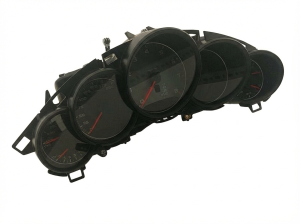
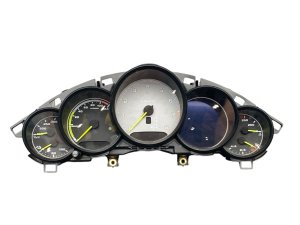
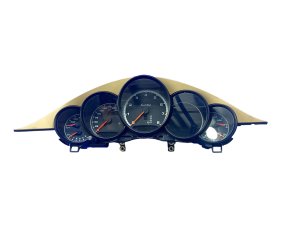
- Panamera 970 (2012-2016): This generation features a traditional five-dial layout with a prominent analog tachometer in the center, flanked by a mix of other analog gauges and a digital multi-function display screen.
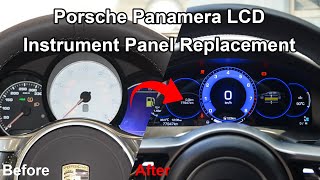
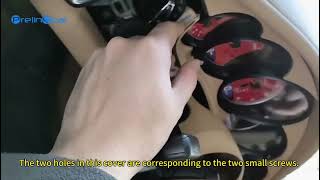
- Panamera 971 (2017-2023): This generation introduced the Porsche Advanced Cockpit. It retains a central analog tachometer but is flanked by two large, 7-inch configurable digital displays. The overall design is much more modern and integrated. 🎬 Watch: Installation walkthrough for a modified digital dashboard upgrade.
Symptoms of a Failing Instrument Cluster

A failing Panamera instrument cluster can manifest in several ways, ranging from minor annoyances to critical failures that make the vehicle unsafe to operate.
- Inaccurate or Dead Gauges: The speedometer, tachometer, fuel, or temperature gauges may provide incorrect readings, fluctuate wildly, or stop working altogether.
- Flickering or Blank Displays: The digital screen(s) may flicker, display random characters, or go completely blank. This can be intermittent at first and worsen over time.
- Warning Light Malfunctions: Critical warning lights may stay on constantly without a valid reason, or fail to illuminate when there is a genuine problem.
- Total Power Failure: In severe cases, the entire cluster may lose power and fail to light up when the car is started.
- Associated Error Messages: A failing gateway control unit, which communicates with the cluster, can cause various error messages to appear on the display.
Warning: The instrument cluster is a critical security component. A replacement, whether new or used, will not function until it is programmed to the vehicle by a qualified technician with Porsche-specific diagnostic tools.
Known Issues, Recalls, and Technical Service Bulletins (TSBs)

Several recalls and TSBs have been issued that involve the Panamera's instrument cluster, primarily requiring software updates.
- NHTSA Campaign ID 19V115000 (Superseded by 19V735000/AKB8): This recall affects certain 2017-2018 Panamera models. The instrument cluster software may fail to provide a continuous visual warning when the brake pads are worn out. The remedy is a software update performed by a dealer.
- NHTSA Campaign ID 19V180: While not a direct cluster failure, a recall for defective gateway control units on some 2018 models can cause an interruption of communication between control units, leading to various error messages being displayed in the instrument cluster.
- General TSBs: Porsche has issued various TSBs related to instrument cluster software updates to fix issues like implausible service reminders or display failures. TSBs also exist for messages like "engine control fault" appearing in the cluster.
The Critical Role of Programming

Replacing a Porsche Panamera instrument cluster is not a simple plug-and-play operation. The physical swap may be straightforward, but the electronic integration is complex and mandatory for the part to function.
Immobilizer and Anti-Theft
The instrument cluster is a core part of the vehicle's immobilizer system. It stores security information that is matched with the vehicle's keys and Engine Control Unit (ECU). If a used cluster is installed without proper programming, the car will not start because the security handshake between the components will fail.
Programming Requirements
Programming must be done using Porsche's proprietary diagnostic tool, the PIWIS (Porsche Integrated Workshop Information System) Tester. This process involves:
- Online Coding: The technician connects the PIWIS tool to Porsche's servers to download vehicle-specific data.
- VIN Matching: The new cluster's identity is coded to match the vehicle's VIN.
- Immobilizer Adaptation: The security keys and immobilizer data are synchronized with the replacement cluster.
- Mileage Correction: The vehicle's true mileage, which is stored in other modules like the ECU, is written to the replacement cluster. Some specialized third-party services also offer mileage correction and data cloning from the original cluster.
Due to the need for the PIWIS tool and access to Porsche's network, this work is typically performed by a Porsche dealership or a highly specialized independent shop with the proper equipment and subscriptions.
🎬 See a demonstration of advanced coding using the PIWIS tool.Pro Tip: Before starting any programming, the technician must connect a high-amperage battery charger/power supply to the vehicle. A voltage drop during programming can corrupt the control unit, causing permanent damage.
Buying a Used Panamera Instrument Cluster

Purchasing a used OEM instrument cluster can offer significant savings over a new part. However, careful verification is essential to ensure you get a compatible and functional unit.
1. Match the Generation (970 vs. 971)
First and foremost, ensure the cluster is from the correct generation of Panamera. A 970 cluster (2012-2016) will not work in a 971 vehicle (2017-2023), and vice-versa. Part numbers starting with "970" are for the first generation, while those starting with "971" are for the second.
2. Verify the Part Number
Always match the OEM part number from your original cluster to the replacement. Porsche uses many variations for different vehicle configurations, and even a single digit difference can mean incompatibility.
3. Crucial Option Compatibility
You must match the cluster to your vehicle's specific options. Installing a cluster with the wrong configuration will result in non-functional features and persistent error messages.
- Night Vision Assist: Clusters for vehicles with this option are different and will not work in cars without it.
- Hybrid vs. Non-Hybrid: E-Hybrid models have specific displays for battery status and power flow that standard clusters lack.
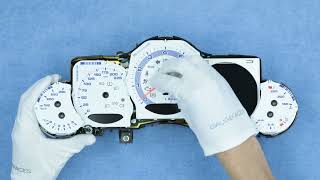
- Trim Level (Sport Chrono): High-performance trims like GTS or Turbo may have unique features, such as a red or colored tachometer face. 🎬 Watch: How to disassemble the cluster and swap gauge faces.
- Units (MPH vs. KPH): Ensure the cluster is for the correct market (e.g., MPH for the US).
4. Physical Inspection
When you receive the part, inspect it carefully:
- Lens Condition: Check for deep scratches, hazing, or delamination of the clear plastic lens.
- Connectors: Ensure the electrical connectors on the back are clean and free of corrosion or bent pins.
- Mounting Tabs: Verify that all plastic mounting tabs are intact and not cracked or broken.
Cost Comparison
| Part Type | Estimated Cost |
|---|---|
| New OEM | $4,600 - $6,100 |
| New Aftermarket | Not Generally Available |
| Used OEM | $150 - $750+ |
| Remanufactured / Repair Service | $500+ |
| Shop Labor (Physical Swap) | $111 - $162 |
| Shop Labor (Programming) | $200 - $500+ (Varies by dealer/shop) |
Frequently Asked Questions (FAQ)
Do I have to go to a Porsche dealer for programming?
While a Porsche dealer is the most common option, some high-end independent European auto repair shops may have the necessary PIWIS diagnostic tool and expertise to program a replacement instrument cluster. It is crucial to confirm they have this specific capability before purchasing a part or scheduling service.
Will the mileage be wrong if I install a used cluster?
Yes, initially the used cluster will display the mileage from its donor vehicle. During the mandatory programming process, a qualified technician will use the PIWIS tool to write your vehicle's correct mileage (stored in other modules) to the replacement cluster. Some specialized services also offer to clone all data, including mileage, from your old cluster to the replacement one.
What happens if I install a cluster from a car with different options, like Night Vision?
The cluster will not function correctly. You will likely get error messages on the display related to the missing feature, and other gauges or functions may not work at all. It is essential to match the part number and features of the replacement cluster to your car's original configuration.
Can I just repair my existing instrument cluster?
Yes, for certain issues like dead pixels on the LCD screen or faulty backlighting, specialized electronics repair services can often fix the original cluster. This can be a cost-effective option that avoids the need for programming, as the original security data is retained.
Helpful Videos
Technical Specifications
OEM Part Numbers: 970641166 97064116609 97064116609A05 97064116610 97064116655 97064116657 970641197 97064119709 97064119710A05 971920905 971920905E 971920905E6N3 971920905F 971920905G 971920905G6N3
Varies by vehicle generation (970 vs. 971) and specific options (Night Vision, Hybrid, etc.).
We Have This Part in Stock




The information in this article is provided for general reference and educational purposes only. Vehicle specifications, procedures, and part compatibility can vary by production date, trim level, and region. Always consult your vehicle's factory service manual and verify part numbers before purchasing or performing repairs. Safety-critical components such as airbags, seat belts, and braking systems should be installed by a qualified professional.
- Porsche Panamera:
- 🎬 Helpful Videos
- 🛍️ Shop This Part
- Key Differences: 970 vs. 971 Generations
- Symptoms of a Failing Instrument Cluster
- Known Issues, Recalls, and Technical Service Bulletins (TSBs)
- The Critical Role of Programming
- Immobilizer and Anti-Theft
- Programming Requirements
- Buying a Used Panamera Instrument Cluster
- 1. Match the Generation (970 vs. 971)
- 2. Verify the Part Number
- 3. Crucial Option Compatibility
- 4. Physical Inspection
- Cost Comparison
- Frequently Asked Questions (FAQ)
- 🎟️ Get 5% Off