

2005-2015 Nissan Altima Instrument Cluster: Failure, Replacement, and Programming Guide
This guide covers common instrument cluster failures in the 2005-2015 Nissan Altima, and explains the critical details of replacement, including part matching and mileage programming.
- The vehicle's mileage is stored in the instrument cluster; swapping it will display the donor car's mileage.
- A replacement cluster, especially on 2007 and newer models, MUST be programmed to the car to function and to allow the engine to start.
- Part numbers must be matched EXACTLY. Compatibility depends on engine, transmission, body style, and other options.
- Repairing your original cluster is often the simplest option, as it avoids mileage and programming issues.
Symptoms of a Failing Instrument Cluster


A failing instrument cluster in a 2005-2015 Nissan Altima can manifest in several ways, ranging from minor annoyances to critical failures that make the vehicle unsafe to drive. Common symptoms include:
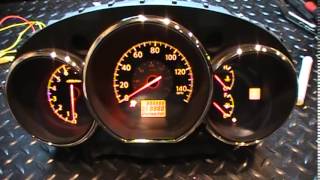
- Erratic or Dead Gauges: The speedometer, tachometer, fuel gauge, or temperature gauge may read incorrectly, fluctuate wildly, or stop working altogether. An inaccurate fuel gauge is a known issue, particularly in 2005-2006 models, which may be caused by the cluster or the fuel sending unit in the tank.
- Flickering or Dim Backlighting: The lights that illuminate the gauges may flicker, dim, or go out completely, making the cluster difficult to read at night.
- Warning Light Issues: Critical warning lights (like ABS, Airbag, or Check Engine) may stay on constantly or fail to illuminate during the vehicle's initial self-check.
- LCD Display Failure: The digital screen showing the odometer, trip meter, or other information may become unreadable, show missing pixels, or fail entirely.
- Complete Cluster Failure: In some cases, the entire cluster may lose power and go completely blank. This can sometimes be caused by a simple blown fuse, but it can also indicate a more serious internal failure of the cluster itself. A total failure may also cause a no-throttle response issue, as the cluster is a key node in the vehicle's data network.
Known Issues, Recalls, and Technical Service Bulletins (TSBs)

While there have been no direct, widespread recalls specifically for instrument cluster failure on the 2005-2015 Altima, several related issues and service bulletins are important to know.
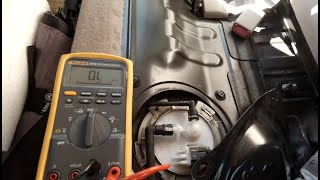
- Fuel Gauge Inaccuracy (2005-2006): Many owners of the L31 generation Altima report the fuel gauge reading incorrectly, often showing 1/4 or 1/2 a tank when it is actually empty. This can be caused by a faulty fuel sending unit in the gas tank or an internal fault in the instrument cluster. A diagnostic trouble code P0462 🎬 See more details on 2005-2006 fuel gauge issues may be stored when the cluster is at fault.
- ECM Reprogramming TSBs: Nissan has issued service bulletins, like NTB12-051j, that involve reprogramming the Engine Control Module (ECM) to address issues like an illuminated check engine light with a P0101 (Mass Air Flow sensor) code. While not a direct cluster issue, it highlights the interconnected nature of the vehicle's electronics. After any ECM reprogramming, a Calibration Verification Number (CVN) needs to be recalculated, which can require idling the engine for up to 22 minutes.
- No Direct Recalls for Cluster Failure: Searches of the National Highway Traffic Safety Administration (NHTSA) database did not reveal any recalls for the instrument cluster itself within this model year range. Most Altima recalls in this period pertain to other issues like airbags, steering, and latches.
Warning: The 2005-2015 year range covers three distinct generations of the Nissan Altima (L31, L32, and L33). Instrument clusters are NOT interchangeable between these generations, and often not even within the same generation without an exact part number match.
Buying a Used Instrument Cluster
Purchasing a used OEM instrument cluster is a cost-effective solution, but careful attention to detail is required to ensure compatibility and avoid future headaches.
- Match the Part Number Exactly: This is the most critical step. The OEM part number is printed on a sticker on the cluster's housing. Do not rely on visual similarity alone. A cluster for a 2.5L engine will not work correctly in a 3.5L model, and vice-versa. The same applies to transmission type (Automatic/CVT vs. Manual), body style (Sedan vs. Coupe), and special models (Hybrid).
- Verify Vehicle Options: Confirm the donor vehicle had the same options as yours. This includes details like MPH vs. KPH display, presence of a trip computer, and compatibility with ABS or navigation systems. The warnings in the vetted data highlight how specific these configurations can be.
- Inspect for Physical Damage: When you receive the part, check the clear plastic lens for deep scratches or cracks. More importantly, inspect the rear of the cluster. Ensure the electrical connector ports are clean and free of bent or broken pins. Look for broken mounting tabs, as these are common when parts are removed carelessly from salvage vehicles.
- Understand the Mileage Issue: The vehicle's mileage is stored inside the instrument cluster's memory chip. When you install a used cluster, it will display the mileage from the donor vehicle, not your car's actual mileage. This is a significant issue that cannot be ignored.
Programming, Mileage, and Anti-Theft Considerations

This is the most complex part of replacing a modern instrument cluster. Unlike older cars where you could simply swap gauges, newer Altimas require electronic programming.
Mileage Correction
Because the mileage is stored in the cluster, installing a used one will create a mileage discrepancy. You have a few options:
- Live with the discrepancy: This is not recommended, as it can cause issues with vehicle registration, insurance, and future resale value.
- Use a Mileage Correction Service: You can send your newly purchased used cluster to a specialized service before installation. They will reprogram the odometer on the replacement cluster to match your vehicle's true mileage. You will need to provide proof of your vehicle's actual mileage.
- Dealer Programming: A Nissan dealership can sometimes program a new cluster, but they are often unwilling or unable to program a used one or adjust its mileage.
Pro Tip: The easiest and most reliable path is often to have your original cluster repaired. A repair service can fix common issues like faulty gauges or backlighting without affecting the stored mileage or requiring any programming upon reinstallation.
Programming and Immobilizer
For many Altimas in this year range, especially 2007 and newer, the instrument cluster is linked to the Nissan Anti-Theft System (NATS). Swapping the cluster may prevent the car from starting. The new cluster needs to be programmed to the vehicle's Body Control Module (BCM) and ECM to synchronize security information. This process, sometimes called a VIN relearn, typically requires specialized diagnostic tools like Nissan's CONSULT or advanced professional-grade scan tools. It is not something that can be done with a basic OBD-II code reader.
Cost Comparison
| Part Type | Estimated Cost |
|---|---|
| New OEM | $800 - $1,200+ |
| New Aftermarket | $130 - $340 |
| Used OEM | $50 - $150 |
| Remanufactured / Repair Service | $180 - $300 |
| Shop Labor (Installation Only) | 🎬 Watch: Step-by-step removal and installation for 2005 models$80 - $150 |
| Shop Labor (Programming) | $100 - $250 |
Frequently Asked Questions (FAQ)
Will my car's mileage be correct if I install a used instrument cluster?
No. The mileage is stored in the cluster itself. A used cluster will show the mileage of the vehicle it came from. You will need to use a specialized mileage correction service to have the odometer set to your vehicle's actual mileage.
Does a replacement cluster need to be programmed?
Yes, in most cases, especially for 2007-2015 models. The cluster needs to be programmed to the vehicle's other computers to ensure all gauges work and that the anti-theft system allows the car to start. This requires professional diagnostic equipment.
Can I just swap the clear plastic lens if mine is cracked?
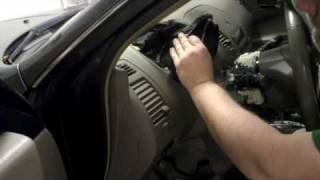
Yes. In many cases, the front plastic lens can be carefully removed and swapped onto a new or used cluster. This involves releasing a series of plastic tabs 🎬 Watch this tutorial on removing the 2008-2013 dash cluster around the perimeter of the cluster housing. Be very careful not to touch or damage the delicate gauge needles underneath.
My fuel gauge is wrong, but all other gauges work. Is it the cluster?
It could be, but for the 2005-2006 Altima, this problem is often caused by a faulty fuel level sending unit located in the fuel tank. It's recommended to diagnose the sending unit and its wiring before replacing the entire instrument cluster for a fuel gauge-only issue.
Helpful Videos
Technical Specifications
OEM Part Numbers: 24810-3TA0A 24810-3TA0B 24810-3TA0C 24810-9HM0A 24810-ZB002 24810-ZB003 24810-ZB007 24810-ZB103 24810-ZB107 24810-ZD82D 248103TA0A 248103TA0B 248103TA0C 248103TA0D 248109HM0A 24810-JA00A 24810-JA02A 24810-JA02B 24810-ZB114
Compatibility is highly specific and determined by part number. Key variations include: Engine (2.5L I4 vs 3.5L V6), Transmission (Manual vs Automatic/CVT), Body Style (Sedan vs Coupe), Display Units (MPH vs KPH), and special models (Hybrid vs Gasoline).
We Have This Part in Stock



The information in this article is provided for general reference and educational purposes only. Vehicle specifications, procedures, and part compatibility can vary by production date, trim level, and region. Always consult your vehicle's factory service manual and verify part numbers before purchasing or performing repairs. Safety-critical components such as airbags, seat belts, and braking systems should be installed by a qualified professional.
- Nissan Altima:
- 🎬 Helpful Videos
- 🛍️ Shop This Part
- Symptoms of a Failing Instrument Cluster
- Known Issues, Recalls, and Technical Service Bulletins (TSBs)
- Buying a Used Instrument Cluster
- Programming, Mileage, and Anti-Theft Considerations
- Mileage Correction
- Programming and Immobilizer
- Cost Comparison
- Frequently Asked Questions (FAQ)
- 🎟️ Get 5% Off