

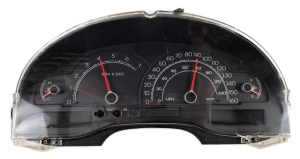
2000-2005 Lincoln LS Instrument Cluster: Decoding Failures, Swaps, and Critical PATS Programming
This in-depth guide covers the common failures, compatibility differences, and essential anti-theft programming required when replacing the instrument cluster in your 2000-2005 Lincoln LS.
- A replacement cluster MUST be programmed to the vehicle's anti-theft system (PATS) to start the car.
- There are two incompatible generations of clusters: 2000-2002 and 2003-2005. You must buy the correct one.
- The mileage is stored in the cluster; swapping in a used part will display the donor car's mileage.
- Failures often present as intermittent power loss, which can cause a no-start condition due to the PATS link.
Symptoms of a Failing Lincoln LS Instrument Cluster
A failing instrument cluster in a Lincoln LS can manifest in several ways, ranging from minor annoyances to issues that prevent the vehicle from starting. Due to its integration with the car's anti-theft system, what seems like a simple gauge problem can be more complex.
Intermittent or Total Power Loss
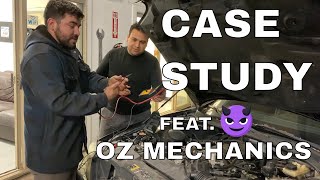
The most common and severe symptom is the cluster losing power intermittently or failing completely. You may notice all gauges drop to zero, and all lights go out for a moment before coming back on. When the cluster loses power, it can interrupt the security handshake with the engine computer, potentially causing the engine to stall or preventing it from starting. 🎬 Watch: Troubleshooting a short circuit causing a no-start condition. This is often caused by cracked solder joints on the internal circuit board, a common issue on aging electronics.
Erratic or Non-Functioning Gauges
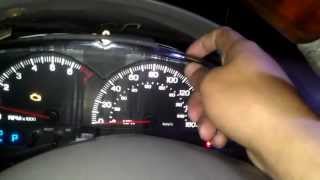
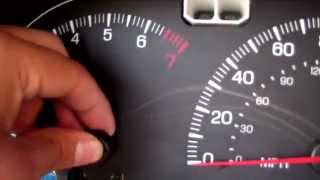
Individual gauges may behave erratically, get stuck, or stop working altogether. This can include the speedometer, tachometer, fuel gauge, or temperature gauge providing inaccurate readings. Sometimes, a simple gauge calibration issue can be fixed by removing and resetting the needle, but often it points to a failure in the gauge motor or the cluster's internal circuitry.
🎬 See this guide on fixing stuck or erratic cluster gauges.Flashing Anti-Theft Light & No-Start Condition
If the cluster has an internal failure related to the PATS security system, you may see the theft light on the dashboard flashing rapidly when you try to start the car. The engine will crank but will not start. This happens because the instrument cluster is unable to validate the security code from the key and communicate it to the engine computer.
Other Electrical Gremlins
Because other modules communicate through the cluster, its failure can sometimes lead to other strange electrical issues. A repair service notes that a faulty LS cluster can cause loss of horn operation, warning indicator lamps, and the steering wheel power adjustment feature.
Associated Diagnostic Trouble Codes (DTCs)
While a failing cluster may not always set a specific code for itself, it can cause communication codes to be stored in other modules. Codes to look for include:
- U-series codes (U0155, U1900, U2510): These indicate a loss of communication with the instrument cluster on the vehicle's data network.
- P1260: Theft Detected, Vehicle Immobilized. This code is a strong indicator that the PATS system has been triggered, often due to a cluster or key problem.
Variant Differences: 2000-2002 vs. 2003-2005
The Lincoln LS underwent a significant refresh for the 2003 model year, which included changes to the instrument cluster. It is critical to purchase a cluster from the correct year range for your vehicle.
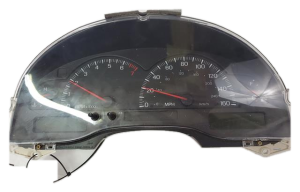
- 2000-2002 Models: These early clusters have a distinct layout. Notably, some V6 models came with a cluster that does NOT have an integrated Transmission Gear Position Indicator (PRNDL) display. You must verify if your original unit has this feature.
- 2003-2005 Models: The refreshed LS received updated cluster graphics and electronics. These clusters are not interchangeable with the earlier 2000-2002 models. They also have different part number series, often starting with '4W4F' instead of '1W4F' or 'XW4F'.
Additionally, there are differences between clusters for V6 and V8 engine models. You must match the cluster to your vehicle's original engine type.
Warning: You cannot simply swap a used instrument cluster into your Lincoln LS. Due to the PATS anti-theft system, the car will not start until the replacement cluster is properly programmed to the vehicle.
Programming and Anti-Theft Requirements
This is the most critical part of replacing a Lincoln LS instrument cluster. The cluster is not a plug-and-play part.
- PATS Integration: The cluster stores part of the vehicle's security information. When you install a used cluster, its security data does not match the data in your vehicle's keys and engine computer (PCM), and the car will be immobilized.
- Parameter Reset: To make a replacement cluster work, a "PATS Parameter Reset" or "Module Initialization" procedure must be performed using specialized diagnostic tools. This procedure teaches the vehicle's modules to accept the new cluster.
- Key Programming: After the parameter reset, all existing keys must be reprogrammed to the system. You typically need at least two working keys to complete this process.
- Who Can Program It?
- Ford/Lincoln Dealership: They have the factory tools (IDS) and can perform the programming.
- Advanced DIY / Independent Shops: It is possible to perform the programming without going to a dealer using software like FORScan (for PC) and a compatible OBD-II adapter. This requires obtaining an extended license for FORScan to access the necessary security functions. This is a complex procedure not recommended for beginners.
Buying a Used Lincoln LS Instrument Cluster
Given the high cost and limited availability of new clusters, a used OEM part is often the only practical option. Here’s what to look for:
- Match the Year Range: Ensure the donor cluster is from the same generation as your car (2000-2002 or 2003-2005).
- Match the Engine: Get a cluster from a car with the same engine (V6 or V8).
- Verify Part Numbers: Match the OEM part number on the back of your cluster to the replacement unit if possible. Part numbers often start with XW4F, 1W4F for early models and 4W4F for later models.
- Check the Lens: Inspect for deep scratches, hazing, or cracks in the clear plastic lens.
- Ignore the Mileage: The mileage displayed on a used cluster is the mileage from the donor vehicle. It will NOT automatically adjust to your car's mileage. You will need to either document the mileage discrepancy for your records or use a specialized service to correct the mileage on the replacement cluster.
Pro Tip: Before removing your old cluster, take a clear photo of the odometer reading. If you sell the vehicle, you may be legally required to disclose the mileage discrepancy if the replacement cluster's mileage is not corrected.
Cost Breakdown
Prices can vary based on your location and the specific part required.
| Item | Estimated Cost |
|---|---|
| New OEM | $900+ (if available) |
| Remanufactured | $189 - $450 |
| Used OEM | $70 - $150 |
| Shop Labor (Installation) | $110 - $165 (approx. 1-1.5 hours) |
| Shop Labor (Programming) | $100 - $250 (approx. 1-2 hours) |
Frequently Asked Questions (FAQ)
Will my car's mileage change if I install a used cluster?
Yes. The mileage is stored in the cluster itself. When you install a used unit, it will display the mileage of the car it came from. You must either live with the incorrect mileage (and disclose it if you sell the car) or pay for a mileage correction service.
Can I just swap the circuit board from my old cluster to a new one to avoid programming?
For some Ford vehicles, this is a viable trick. However, it depends on what part of the cluster has failed. If the failure is on the main circuit board that holds the PATS information, this will not work. If the failure is with the gauges or lighting board, it might be possible for a skilled technician, but it is a delicate operation.
Do I have to go to the dealer for programming?
Not necessarily. While a dealer is a guaranteed option, a well-equipped independent shop or an advanced DIY mechanic can use software like FORScan to perform the PATS module initialization and key relearn procedure.
My whole cluster is dead. What should I check first?
Before buying a new cluster, check the simple things. Inspect the fuses related to the instrument panel in the fuse boxes. Also, check for loose or corroded ground wires, as these can cause intermittent power issues.
Helpful Videos

Technical Specifications
OEM Part Numbers: 1W4F10849AA 1W4F10849AB 1W4F10849AC 1W4Z10849AA 4W4F10849BA 4W4F10849BB 4W4Z10849BB XW4F10849BH XW4F10849BJ XW4F10849BK XW4F10849BL XW4F10849BM XW4F10849BN
Integrally linked with the vehicle's Passive Anti-Theft System (PATS). Stores vehicle mileage. Communicates on the vehicle's CAN bus network.
We Have This Part in Stock



The information in this article is provided for general reference and educational purposes only. Vehicle specifications, procedures, and part compatibility can vary by production date, trim level, and region. Always consult your vehicle's factory service manual and verify part numbers before purchasing or performing repairs. Safety-critical components such as airbags, seat belts, and braking systems should be installed by a qualified professional.
- Lincoln LS:
- 🎬 Helpful Videos
- 🛍️ Shop This Part
- Symptoms of a Failing Lincoln LS Instrument Cluster
- Intermittent or Total Power Loss
- Erratic or Non-Functioning Gauges
- Flashing Anti-Theft Light & No-Start Condition
- Other Electrical Gremlins
- Associated Diagnostic Trouble Codes (DTCs)
- Variant Differences: 2000-2002 vs. 2003-2005
- Programming and Anti-Theft Requirements
- Buying a Used Lincoln LS Instrument Cluster
- Cost Breakdown
- Frequently Asked Questions (FAQ)
- 🎟️ Get 5% Off