

2007-2014 Mustang Instrument Cluster: A Guide to Swaps, PATS, and Programming
This guide covers the common failures, mandatory programming, and critical compatibility checks for the S197 Mustang instrument cluster.
- Programming is NOT optional. A replacement cluster MUST be programmed to the car's anti-theft system (PATS) or the engine will not start.
- You must match the cluster to your Mustang's year range (2007-09 vs 2010-14), engine (V6/V8), and gauge count (4/6) for it to work correctly.
- The vehicle's mileage is stored in the cluster. A used cluster will display the donor car's mileage, requiring a separate, specialized service to correct.
- Repairing your original cluster is the easiest solution, as it avoids all programming and mileage correction issues.
Understanding the 2007-2014 Mustang Instrument Cluster Variants

The S197 platform Mustang saw a significant refresh in 2010, which included the instrument cluster. It is critical to understand that clusters from the 2007-2009 and 2010-2014 model years are not interchangeable. When sourcing a replacement, you must match it to your vehicle's specific year range and options.
2007-2009 Models
These clusters feature a more traditional design with two large gauges for the speedometer and tachometer, and two smaller gauges for fuel and coolant temperature. Variations include:
- Base (4-Gauge): Standard cluster without the central digital message center.
- Premium (6-Gauge): Adds two smaller gauges in the center for oil pressure and battery voltage, along with a digital message center.
- Engine: Clusters are specific to the 4.0L V6 or 4.6L V8 engine due to different tachometer redlines.
2010-2014 Models
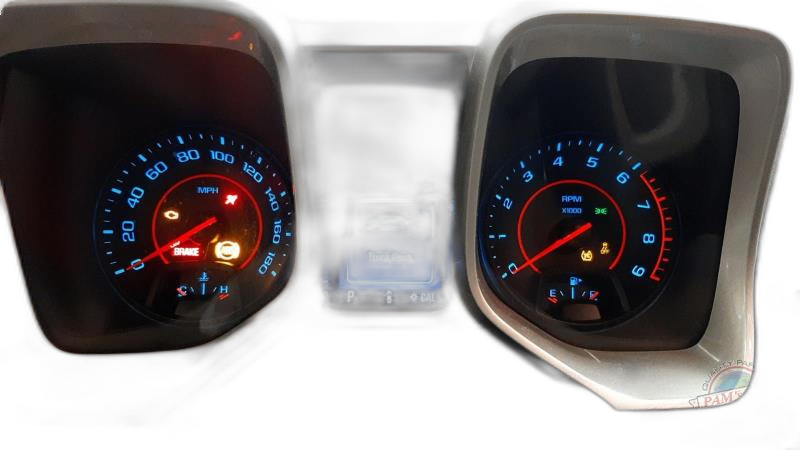
The 2010 refresh brought a redesigned cluster with a more modern look and enhanced features. The speedometer and tachometer are in their own binnacles. Variations include:
- Base (4-Gauge): Features two large analog gauges and a small digital information screen.
- Premium (6-Gauge): Includes two additional analog gauges for fuel and temperature, plus a more advanced central screen.
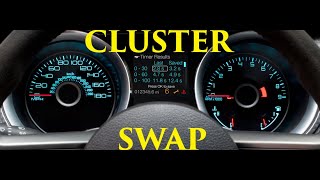
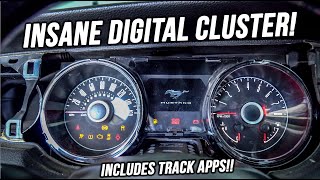
- Premium with 4.2" LCD (2013-2014): The highest trim level features a large color LCD screen between the gauges, offering access to 'Track Apps' and more detailed vehicle information.
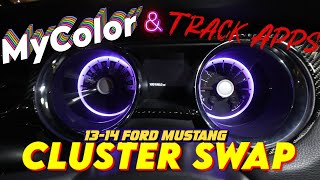
- MyColor: An optional feature on premium clusters that allows the driver to customize the color of the backlighting.
- Engine: Clusters are specific to the 3.7L V6 or the 5.0L/4.6L V8 engines.
Symptoms of a Failing Instrument Cluster

A failing Mustang cluster can cause a wide range of confusing issues. Because it's a central communication hub, its failure can mimic problems in other systems.
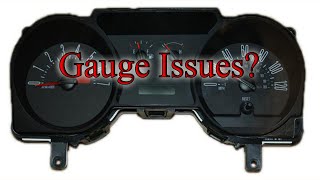
- Erratic or Dead Gauges: 🎬 Watch this guide on how to repair faulty gauges yourself. The speedometer, tachometer, or fuel gauge may stick, jump around, or stop working entirely.
- Intermittent Power Failure: The entire cluster may shut off and turn back on while driving, with all gauges dropping to zero and warning lights flashing.
- No-Start with Flashing Theft Light: This is the classic sign of a PATS security system fault. If the cluster is not communicating correctly, it will prevent the engine from starting.
- Blank Digital Display: The odometer or message center screen may go dim, flicker, or show only dashes (---).
- Warning Lights On: Multiple warning lights (ABS, Airbag, Check Engine) may illuminate due to communication errors, even if the underlying systems are fine.
- OBD-II Codes: A scan tool may reveal communication codes like U0155 (Lost Communication With Instrument Panel Cluster Control Module) or theft-related codes like P1260 (Theft Detected Vehicle Immobilized).
Warning: A 2014 recall (NHTSA ID: 14V-709) was issued for some Mustangs due to an improperly adjusted brake pedal switch. The primary symptom was the 'Advanced Trac' warning light illuminating on the instrument cluster. While this is not a cluster failure, it shows how other vehicle faults can present as a cluster warning.
The #1 Challenge: Programming and Anti-Theft (PATS)

You cannot simply swap a used instrument cluster into a 2007-2014 Mustang and expect it to work. The cluster is a key component of the Passive Anti-Theft System (PATS). The vehicle's keys are programmed to the cluster, and the cluster is paired with the engine computer (PCM). If you install a new or used cluster without programming, the PATS system will not recognize the keys, and the car will not start.
Who Can Program a Replacement Cluster?
- Ford Dealership: This is the most reliable, though often most expensive, option. They use the official Ford Integrated Diagnostic System (IDS) to perform the PATS initialization and program the keys to the new cluster. Labor for this service typically costs between $120 and $200.
- Automotive Locksmith: Many modern locksmiths have advanced tools that can access the PATS system to program new keys and modules. This can be a more affordable option than the dealer.
- DIY with FORScan: For the technically savvy DIYer, it is possible to program a new cluster using FORScan software, a compatible OBD-II adapter (like an OBDLink EX), and a laptop. This process requires an extended license for FORScan and you MUST have at least two original keys for the vehicle. 🎬 See a step-by-step walkthrough of the FORScan programming process. This is an advanced procedure that can render the vehicle inoperable if done incorrectly.
Pro Tip: If your original cluster is still partially functional, having it repaired is the easiest option. A repaired original cluster requires no reprogramming—you can simply reinstall it and it will work, as it retains all of its original security information.
Buyer's Guide: What to Know Before Buying a Used Cluster

Buying a used instrument cluster can save you hundreds of dollars, but you must get the right one. Use this checklist to ensure compatibility:
- Verify the Year Range: Is your Mustang a 2007-2009 or a 2010-2014? The clusters are physically different and electrically incompatible.
- Match the Engine: Ensure the cluster comes from a vehicle with the same engine (V6 or V8). This guarantees the tachometer's redline is correct.
- Match the Gauge Count: Did your car come with the base 4-gauge cluster or the premium 6-gauge cluster? While upgrades are possible, they can be complex. For a straightforward replacement, match the original configuration.
- Check the Part Number: If possible, match the OEM part number on the back of your original cluster to the replacement. This is the best way to guarantee a match.
- Understand Mileage: The mileage displayed on a used cluster is from the DONOR vehicle. It will NOT show your car's actual mileage. After installation and programming, you may need to use a specialized odometer correction service to have the mileage legally and accurately set to match your vehicle's true reading. This is a separate service with legal requirements.
- Plan for Programming: Do not buy a used cluster without having a plan for who will program it. Factor the cost of dealer, locksmith, or DIY programming into your total budget.
Replacement Cost Comparison
| Part Type | Estimated Cost | Notes |
|---|---|---|
| New OEM | $400 - $720 + $300 Core Charge | Purchased from a Ford dealership. Guarantees compatibility but is the most expensive option. |
| Used OEM | $100 - $350 | Sourced from salvage yards or online (eBay, etc.). Offers significant savings but requires careful matching and mandatory programming. |
| Remanufactured / Repair Service | $160 - $280 | Your original cluster is sent out, rebuilt with upgraded components, and returned. This avoids all programming and PATS issues. |
| Shop Labor (Installation) | $50 - $100 | Physical replacement is simple (approx. 0.5-1.0 hours). 🎬 Watch: How to physically swap the cluster in your dashboard. This does NOT include programming. |
| Shop Labor (Programming) | $100 - $200 | Typically 1.0-1.5 hours of labor at a dealer or specialist shop to program PATS and keys. |
Frequently Asked Questions (FAQ)
Will my car's mileage be wrong if I install a used cluster?
Yes. The odometer reading is stored inside the instrument cluster. A used cluster will display the mileage from the vehicle it was removed from. To correct this, you will need to use a professional mileage correction service after the cluster is installed and programmed.
Why is the red theft light blinking after I installed my new cluster?
A blinking theft light and a car that won't start means the PATS security system is active. The new cluster has not been programmed to your vehicle's keys and engine computer. The vehicle is immobilized and will not start until the PATS system is properly initialized by a dealer or a qualified technician.
Can I install a premium 6-gauge cluster in my base model Mustang?
This is a popular but complex upgrade. While it is physically possible, it requires more than just swapping the cluster. You may need to add wiring, sensors (like for oil pressure), and change configuration settings using a tool like FORScan. For 2013-2014 models, upgrading to the Track App cluster may also require a new ABS module. It is not a simple plug-and-play swap.
Is it better to repair my old cluster or buy a used one?
Repairing your original cluster is often the best choice. It completely avoids the cost and hassle of PATS programming, key matching, and mileage correction. If your cluster is physically destroyed or missing, buying a used one is the next most cost-effective option, but you must budget for programming.
Helpful Videos

Technical Specifications
OEM Part Numbers: 7R33-10849-AB 7R33-10849-AC 7R3Z-10849-JB AR33-10849-TB AR3Z-10849-TA AR3Z-10849-GB DR33-10849-AA DR33-10849-AB DR33-10849-AC DR33-10849-AD DR33-10849-DA DR3Z-10849-AA 7R3Z-10849-EB
Varies by model year, engine, and trim level. Must be matched to vehicle configuration. Integrated with CAN bus and PATS anti-theft system.
We Have This Part in Stock





The information in this article is provided for general reference and educational purposes only. Vehicle specifications, procedures, and part compatibility can vary by production date, trim level, and region. Always consult your vehicle's factory service manual and verify part numbers before purchasing or performing repairs. Safety-critical components such as airbags, seat belts, and braking systems should be installed by a qualified professional.
- Ford Mustang:
- 🎬 Helpful Videos
- 🛍️ Shop This Part
- Understanding the 2007-2014 Mustang Instrument Cluster Variants
- 2007-2009 Models
- 2010-2014 Models
- Symptoms of a Failing Instrument Cluster
- The #1 Challenge: Programming and Anti-Theft (PATS)
- Who Can Program a Replacement Cluster?
- Buyer's Guide: What to Know Before Buying a Used Cluster
- Replacement Cost Comparison
- Frequently Asked Questions (FAQ)
- 🎟️ Get 5% Off