

2011-2020 Ford Fusion Instrument Cluster: Decoding Failures, Part Numbers, and Programming
This guide covers common blank screen issues, critical part number matching, and the mandatory programming required when replacing your Fusion's instrument cluster.
- A replacement cluster MUST be programmed to the vehicle's VIN and anti-theft system, or the car will not start.
- Compatibility is critical. You must match the Engineering ID number from your original cluster, not just the year and model.
- Symptoms like a blank screen can be caused by other faulty modules, not just the cluster. Proper diagnosis is essential.
- Repairing your original cluster is often a better choice than replacing it, as it avoids the cost and hassle of programming.
Known Issues, Recalls, and Technical Service Bulletins (TSBs)

Before assuming your instrument cluster has failed, be aware of related issues that can mimic a bad cluster. Diagnosing these first can save you significant time and money.
Is It Really the Cluster? Check These First.
Many owners report a blank instrument panel or flickering gauges, but the cause is often an external module, not the cluster itself. The instrument cluster acts as a central communication hub, and if it loses signal from another part of the car, it can go dark. A common diagnostic trouble code associated with this is U0155 (Lost Communication With Instrument Panel Cluster Control Module). This code means another module on the car stopped receiving a signal from the cluster, or the cluster itself has an internal fault.
- Power and Ground Issues: Always check the basics first. A weak battery, failing alternator, or corroded ground wire can cause a wide range of electrical problems, including a malfunctioning instrument cluster.
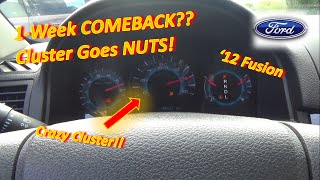
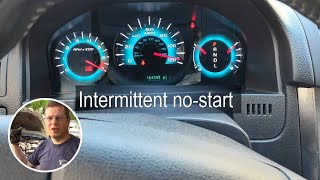
- Related Module Failures: In some cases, particularly on 2011-2012 models, a failing Power Steering Control Module (PSCM) or a fault in the ABS module can interrupt communication and cause the cluster to go blank or display error messages. Technicians have traced intermittent no-start and cluster communication issues to problems on the vehicle's CAN bus network, which can be caused by a number of different modules. 🎬 See how a faulty module can make your cluster go crazy
Relevant Technical Service Bulletins (TSBs)
Ford has issued several TSBs that relate to the instrument cluster's function:
- TSB 13-11-18: For some 2013 models, this TSB addresses an intermittently blank information display. The fix is to reprogram the Instrument Panel Cluster (IPC) with updated software, which must be done at a dealership or a properly equipped shop.
- TSB 11-11-3: On 2011-2012 Fusion models, this bulletin notes that a high-friction condition in a front lower control arm could cause the stability/traction control warning light to illuminate on the cluster. This is a chassis issue, not a cluster failure.
- SSM 46870: For some 2017-2018 Fusion SE "fleet" vehicles, a blank right-side instrument cluster display is considered a normal condition and not a fault.
Symptoms of a Failing Ford Fusion Instrument Cluster


When the instrument cluster itself is the source of the problem, you may experience one or more of the following symptoms:
- Blank or Flickering Screens: The entire cluster or the central digital display may go dark, flicker, or work intermittently. Sometimes, slapping the top of the dashboard can temporarily restore function, which strongly suggests an internal bad solder joint or loose connection.
- Erratic or Dead Gauges: The speedometer, tachometer, fuel gauge, or temperature gauge may provide incorrect readings, get stuck in one position, or not move at all.
- Persistent or Incorrect Warning Lights: Airbag, ABS, check engine, or other warning lights may stay on even when there is no underlying issue with those systems.
- Backlight Failure: The illumination behind the gauges may be dim, flicker, or fail completely, making the cluster difficult to read at night.
- No-Start Condition: Because the cluster is tied into the Passive Anti-Theft System (PATS), a complete cluster failure can prevent the vehicle from starting and may cause the theft light to blink rapidly.
- Associated DTCs: A failed cluster will almost always set communication codes, most commonly U0155. You may also see codes like P1602 (Immobilizer/ECM Communication Error) or B1600 (PATS Signal Not Received).
Pro Tip: If your screen is blank or pixelated but the rest of the cluster works, the internal LCD screen may have failed. This screen can often be replaced by a specialist without replacing the entire cluster, which avoids the need for programming.
Buying a Used 2011-2020 Ford Fusion Instrument Cluster
Buying a used instrument cluster is a great way to save money, but it requires careful attention to detail to ensure you get the right part. A mismatched cluster will not work and could prevent the car from starting.
The #1 Rule: Match the Engineering ID Number
The most important step is to match the Engineering ID Number printed on the sticker of your original cluster. Do not rely on the vehicle's year, model, or trim level alone. This number is different from the Ford Service Part Number found on the box. The Engineering ID is what identifies the specific hardware and software configuration of the part itself.
- For 2011-2012 models, the ID will typically start with BE5T- (e.g., BE5T-10849-GD).
- For 2013-2020 models, the ID will typically start with DS7T-, ES7T-, or similar prefixes.
You must remove the original cluster from the dashboard to find this number on its label.
🎬 Watch: How to remove your Fusion's instrument clusterCompatibility by Drivetrain and Market
You must also match the cluster to your vehicle's specific configuration:
- Gas vs. Hybrid vs. Energi: These models have completely different instrument clusters. Hybrid and Energi (Plug-in Hybrid) versions include special gauges for battery charge, power flow, and efficiency coaching that are not present on standard gasoline models. They are not interchangeable.
- MPH vs. KPH: Clusters are built for specific markets. A US-market cluster will display speed in Miles Per Hour (MPH), while clusters from Canada or Mexico will display in Kilometers Per Hour (KPH). Ensure you are buying a cluster that matches your vehicle's original market.
Physical Inspection
When inspecting a used cluster, check for:
- A clear, unscratched plastic lens.
- No cracks or damage to the rear housing.
- Clean, straight, and undamaged electrical connector pins.
- Intact mounting tabs.
Programming and Installation: This is NOT a Plug-and-Play Part

Warning: A replacement instrument cluster, whether new or used, MUST be programmed to your vehicle. Failure to do so will result in a no-start condition and incorrect mileage display.
Why Programming is Required
The instrument cluster is a secure electronic module that is paired to your car's Vehicle Identification Number (VIN). Programming is necessary to:
- Sync with the Immobilizer (PATS): The cluster is a key component of Ford's Passive Anti-Theft System. The programming procedure syncs the replacement cluster with your vehicle's keys and the Powertrain Control Module (PCM) to allow the engine to start. 🎬 Watch: How to reprogram keys after replacing the instrument panel
- Correct the Odometer: A used cluster will display the mileage from the donor vehicle. Federal law prohibits odometer tampering. A qualified technician must use specialized tools to adjust the mileage on the replacement cluster to match your vehicle's true mileage.
- Configure Vehicle Options: The cluster needs to be programmed with your vehicle's "As-Built" data. This data tells the cluster about the car's specific features, such as engine size, tire size, and trim-specific functions.
Who Can Program a Replacement Cluster?
- Ford Dealership: This is the most straightforward and reliable option. Dealers have the proprietary Ford IDS software required to perform all aspects of the programming.
- Qualified Independent Shop: Many independent auto repair shops that specialize in electronics have advanced scan tools (like Autel or Snap-on) with the capability to program Ford modules.
- DIY with FORScan: For advanced DIY mechanics, the FORScan software provides a powerful, low-cost alternative. Using a compatible OBD-II adapter, you can save the "As-Built" data from your original cluster and write it to the replacement. However, be aware that FORScan can typically only increase the mileage, not decrease it. This makes it challenging to correct the odometer on a used cluster with higher mileage than your vehicle.
Cost Comparison for Replacement
Prices can vary based on your location and the specific part number required. Programming costs are separate from the part and labor.
| Part Type | Estimated Cost (Part Only) |
|---|---|
| New OEM | $500 - $700 |
| New Aftermarket | $130 - $350 |
| Used OEM | $75 - $250 |
| Remanufactured / Repair Service | $150 - $300 |
| Shop Labor (Installation & Programming) | $150 - $300 |
Frequently Asked Questions (FAQ)
Will my car start after I install a used cluster without programming?
Almost certainly not. The replacement cluster is not synced with your vehicle's anti-theft system (PATS). The engine will crank but will not start, and the theft light will likely flash on the dash.
Can I fix my original cluster instead of replacing it?
Yes, and this is often a great option. Many companies specialize in repairing instrument clusters. Common failures like bad solder joints causing intermittent power or faulty LCD screens can be repaired. The main benefit is that a repaired original cluster requires no programming—you simply reinstall it.
The mileage on my used cluster is wrong. How do I fix it?
The odometer reading must be corrected by a professional with specialized equipment. This is a critical step to ensure legal compliance. Be prepared to provide proof of your vehicle's actual mileage (e.g., a photo of the old odometer before it failed, or service records).
Can I install a cluster from a Lincoln MKZ for a digital speedometer upgrade?
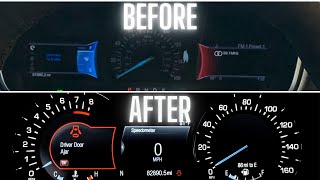
This is a popular modification within the Fusion community. While physically possible, it requires extensive programming using tools like FORScan to enable all the features and ensure compatibility. It is an advanced project and not recommended for beginners.
Helpful Videos
Technical Specifications
OEM Part Numbers: BE5T-10849-GD BE5T10849GD BE5Z10849GB DS7T-180849-JJ DS7T10849AA DS7T10849AB DS7T10849AC DS7T10849AD DS7T10849AE DS7T10849AF DS7T10849AG DS7T10849AH DS7T10849JA DS7T10849JB DS7T10849JC ES7Z-10849-AA LS7Z-10849-JA KS7Z-10849-GC
The instrument cluster communicates via the vehicle's Medium Speed (MS-CAN) and High Speed (HS-CAN) networks. It serves as a gateway module, routing diagnostic and operational data between various vehicle systems. It is integrated with the Passive Anti-Theft System (PATS).
We Have This Part in Stock



The information in this article is provided for general reference and educational purposes only. Vehicle specifications, procedures, and part compatibility can vary by production date, trim level, and region. Always consult your vehicle's factory service manual and verify part numbers before purchasing or performing repairs. Safety-critical components such as airbags, seat belts, and braking systems should be installed by a qualified professional.
- Ford Fusion:
- 🎬 Helpful Videos
- 🛍️ Shop This Part
- Known Issues, Recalls, and Technical Service Bulletins (TSBs)
- Is It Really the Cluster? Check These First.
- Relevant Technical Service Bulletins (TSBs)
- Symptoms of a Failing Ford Fusion Instrument Cluster
- Buying a Used 2011-2020 Ford Fusion Instrument Cluster
- The #1 Rule: Match the Engineering ID Number
- Compatibility by Drivetrain and Market
- Physical Inspection
- Programming and Installation: This is NOT a Plug-and-Play Part
- Why Programming is Required
- Who Can Program a Replacement Cluster?
- Cost Comparison for Replacement
- Frequently Asked Questions (FAQ)
- 🎟️ Get 5% Off