

2015-2024 Ford F-150 Instrument Cluster: Swaps, Programming, and Failure Guide
This guide covers common failures, symptoms, and the critical programming steps required when replacing the instrument cluster in your 2015-2024 Ford F-150.
- A replacement instrument cluster MUST be programmed to the vehicle. A simple swap will not work and may prevent the truck from starting.
- When buying a used cluster for a DIY swap with FORScan, you must choose one with mileage LOWER than your truck's actual mileage.
- Compatibility is critical. Match the new cluster to your truck's features like screen size, paddle shifters (SelectShift), and measurement units (MPH/KPH).
- Common failure symptoms include a blank screen, stuck gauges, and flickering displays. Always check the fuse before replacing the cluster.
Key Versions of the F-150 Instrument Cluster (2015-2024)

The Ford F-150 from this generation came with several different instrument clusters, and compatibility is crucial. The primary differences are based on trim level and optional features. Swapping between types is possible but requires advanced programming.
🎬 Watch this 4-inch to 8-inch cluster upgrade walkthrough- XL / Base Trim: Typically features a small 2.3-inch monochrome display, often called a "productivity screen."
- XLT Trim: The most common configuration, equipped with a 4.2-inch color LCD productivity screen. This cluster has variations for trucks with and without paddle shifters (Ford's SelectShift transmission).
- Lariat, King Ranch, Platinum, and Limited Trims: These higher trims feature a large 8-inch digital productivity screen, offering more customization and display options.
- MPH vs. KPH: Clusters are built for different markets, with speedometers primarily in Miles Per Hour (MPH) for the US or Kilometers Per Hour (KPH) for Canada and other regions. Ensure you get the correct type for your location.
Symptoms of a Failing Instrument Cluster

A failing instrument cluster can cause a wide range of issues, from minor annoyances to critical safety problems. Look out for these common symptoms:
- Complete Blackout: The entire cluster, including all gauges and screens, goes dark and is unresponsive. This can be intermittent or permanent.
- Flickering Gauges or Backlighting: Gauges may flicker, or the background illumination may flash on and off.
- Stuck or Inaccurate Gauges: The speedometer, tachometer, fuel, or temperature gauges may freeze, provide incorrect readings, or not move at all.
- Information Screen Failure: The central digital display may go blank, show garbled text, or freeze.
- Persistent Warning Lights: Airbag, brake, or check engine lights may stay on even when there is no underlying issue with those systems.
- Electrical Issues: Since the cluster is a network module, its failure can sometimes cause other strange electrical problems. In some cases, a complete shutdown of interior electronics can be traced back to the Body Control Module (BCM) or a related ground fault.
A common diagnostic trouble code (DTC) associated with a cluster communication failure is U0155 (Lost Communication With Instrument Panel Cluster Control Module). Other network codes (U-codes) may also be present.
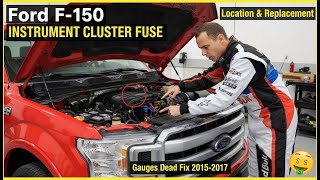
Pro Tip: Before assuming the cluster has failed, always check the fuses first. A simple blown fuse can cause the entire cluster to lose power. 🎬 Watch: How to find and replace your cluster fuse The fuse is typically located in the interior fuse panel (Body Control Module) in the passenger-side kick panel area.
Known Issues, Recalls, and Technical Service Bulletins (TSBs)

While there haven't been widespread recalls for the 2015-2024 F-150 instrument cluster itself, Ford has issued related software updates and addressed specific problems.
- NHTSA Campaign Number 24V140 (Ford 24C01): Issued in February 2024, this recall addresses an issue where the instrument panel cluster may not properly illuminate gauges or warning lights, increasing a crash risk. The remedy is a software update performed by a dealer.
- NHTSA Campaign Number 25V-540 (Ford 25S88): This recall affects some 2025 model year F-150s for a blank instrument cluster screen on startup caused by a software memory fault. While this applies to the next model year, the underlying technology is similar and highlights potential software vulnerabilities.
- General TSBs: Ford has released various TSBs for related issues, such as SSM 52232 for certain 2024 models and SSM 53223 for a "Reverse Brake Assist Not Available" message on some 2021-2023 trucks. These are typically resolved with software updates.
The Most Important Step: Programming and Configuration

Warning: You cannot simply swap an instrument cluster in a 2015-2024 F-150. The new or used cluster must be programmed to your truck's VIN, mileage, and specific configuration. Failure to do so will result in incorrect functionality, warning lights, and a potential no-start condition due to the immobilizer system.
The instrument cluster stores critical data. When a replacement is installed, this data must be transferred or configured correctly. Here are the options:
- Ford Dealership: The dealer uses the Ford Integrated Diagnostic System (IDS) to program the new cluster. They will configure it with your truck's original "as-built" data, set the correct mileage, and pair the immobilizer keys. This is the most reliable, albeit most expensive, method.
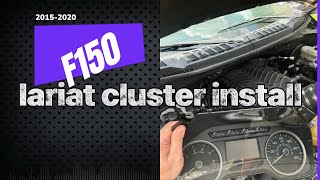
- DIY with FORScan: For the tech-savvy DIYer, FORScan is a powerful software tool that can program Ford modules. The process involves connecting a laptop to the truck via a compatible OBD-II adapter. You must save the "as-built" data from your original cluster and then write it to the replacement cluster. 🎬 See how to install and program a Lariat cluster with FORScan FORScan can also be used to adjust the odometer reading, but it can only be increased, not decreased. Therefore, you must buy a used cluster with mileage lower than your truck's actual mileage.
- Independent Repair Shop / Locksmith: A well-equipped independent shop or an automotive locksmith may have the tools to perform the programming. Some services specialize in repairing and programming clusters by mail.
Buying a Used 2015-2024 F-150 Instrument Cluster
Buying a used OEM cluster is an excellent way to save money, provided you follow these critical guidelines.
- Verify Compatibility: The most important step is to match the cluster to your truck's features. Does your truck have paddle shifters? What size engine? What size fuel tank? All these parameters are programmed into the cluster. While FORScan can change many of these, starting with the closest possible match is best.
- Check the Part Number: Match the OEM part number as closely as possible. The numbers often start with `FL3T-10849-Bxx`. While different ending letters can sometimes be compatible, it's best to research the specific part number on forums like F150forum.com.
- Mileage is Key: The mileage on the donor cluster MUST be lower than your vehicle's current mileage. This is because programming tools can typically only roll the mileage forward, not backward, to prevent odometer fraud. The mileage on the used part is irrelevant as it will be changed during programming.
- Physical Inspection: Check the clear plastic lens for deep scratches or hazing. Inspect the rear casing and connectors for any signs of damage or water intrusion. Ensure all mounting tabs are intact.
- Why Used OEM is Better: A used OEM cluster, once programmed, will function exactly like the original. Aftermarket units can be of questionable quality and may lack certain features or display information incorrectly. Repairing your existing unit is also a great option, as it avoids the need for programming.
Cost Comparison
| Part Type | Estimated Cost |
|---|---|
| New OEM | $700 - $1,500+ (plus programming) |
| New Aftermarket (Dorman) | $400 - $800 (often requires programming) |
| Used OEM | $100 - $450 (depending on trim and condition) |
| Remanufactured / Repair Service | $150 - $400 (your original unit is repaired, no programming needed) |
| Shop Labor (Physical Swap) | $100 - $200 |
| Shop Labor (Programming) | $150 - $300 |
Frequently Asked Questions (FAQ)
Can I install a replacement instrument cluster myself?
Yes, the physical replacement is straightforward for a DIYer. It involves removing a few trim panels and screws. However, the vehicle will not operate correctly until the cluster is electronically programmed to your truck, which is the most difficult part of the job.
What happens if I just plug in a used cluster without programming it?
The truck may not start due to the PATS immobilizer. If it does start, you will likely see numerous warning lights for features your truck doesn't have, incorrect gauge readings (fuel, temp, etc.), and the odometer will display the mileage from the donor vehicle, which is illegal in most areas.
Can I upgrade from the basic XL cluster to the 4.2-inch or 8-inch screen?
Yes, this is a very popular and well-documented upgrade among F-150 owners. It requires purchasing the higher-trim cluster and performing extensive programming with FORScan to enable all the features and match it to your truck's configuration.
Does the mileage on the used cluster I buy have to match my truck?
No. In fact, it's better if it doesn't. The mileage on the used cluster must be reprogrammed to match your vehicle's true mileage. To do this with tools like FORScan, the mileage on the replacement cluster must be lower than your truck's actual mileage.
Helpful Videos
Technical Specifications
OEM Part Numbers: FL3T10849BAA FL3T10849BAB FL3T10849BAC FL3T10849BAD FL3T10849BAE FL3T10849BAF FL3T10849BAG FL3T10849BAH FL3T10849BBA FL3T10849BBB FL3T10849BBC FL3T10849BBD FL3T10849BBE FL3T10849BBF FL3T10849BBG
Display options include a 2.3-inch monochrome screen, a 4.2-inch color LCD, and an 8-inch color LCD. The cluster is an integrated module on the vehicle's CAN bus network and is part of the PATS immobilizer system.
We Have This Part in Stock



The information in this article is provided for general reference and educational purposes only. Vehicle specifications, procedures, and part compatibility can vary by production date, trim level, and region. Always consult your vehicle's factory service manual and verify part numbers before purchasing or performing repairs. Safety-critical components such as airbags, seat belts, and braking systems should be installed by a qualified professional.
- Ford F-150:
- 🎬 Helpful Videos
- 🛍️ Shop This Part
- Key Versions of the F-150 Instrument Cluster (2015-2024)
- Symptoms of a Failing Instrument Cluster
- Known Issues, Recalls, and Technical Service Bulletins (TSBs)
- The Most Important Step: Programming and Configuration
- Buying a Used 2015-2024 F-150 Instrument Cluster
- Cost Comparison
- Frequently Asked Questions (FAQ)
- 🎟️ Get 5% Off