

2010-2016 Camaro Instrument Cluster: Programming, Swaps, and Common Failures
This guide covers the critical programming requirements, common failure symptoms, and model-specific differences for the fifth-generation Chevrolet Camaro instrument cluster.
- Programming is mandatory. A replacement cluster must be programmed to the vehicle's VIN and have the correct mileage set by a dealer or specialist.
- Part numbers and vehicle options must match exactly. V6, V8, automatic, manual, and different display types use different clusters.
- The vehicle's true mileage is stored in the Body Control Module (BCM), not the cluster itself. A used cluster's displayed mileage is irrelevant.
- Common failures include erratic gauges, intermittent power loss due to internal power supply issues, and dead backlighting.
Symptoms of a Failing Instrument Cluster

A failing instrument cluster in a 2010-2016 Camaro can present a range of issues, from minor annoyances to serious safety concerns. It's important to distinguish between a faulty cluster and a problem with a sensor sending it bad information. If multiple gauges or lights fail simultaneously, the cluster itself is often the culprit.
- Erratic or Dead Gauges: The speedometer, tachometer, fuel, or temperature gauges may provide incorrect readings, fluctuate wildly, get stuck in one position, or stop working altogether. This can be caused by failing internal stepper motors that control the needles. 🎬 Watch: How to diagnose and fix Camaro speedometer issues
- Intermittent Power Failure: The entire cluster may shut off and turn back on randomly while driving. Forum users have reported the cluster going completely blank for a few seconds before returning to normal. This can be a sign of a failing internal power supply on the cluster's circuit board.
- Dim, Flickering, or Dead Backlighting: The illumination for the gauges may become dim, flicker, or go out completely, making it difficult to see the display at night.
- Malfunctioning Warning Lights: Critical warning lights like the check engine light, oil pressure light, or airbag light may stay on when there's no issue, or fail to illuminate when there is a real problem.
- Odometer and DIC Display Issues: The digital display for the odometer or Driver Information Center (DIC) might show garbled text, missing pixels, or go completely blank.
- Associated OBD-II Codes: A common trouble code associated with a loss of communication to the cluster is U0155 (Lost Communication with Instrument Panel Control Module). This indicates that other modules in the car can no longer 'talk' to the instrument cluster.
Known Issues, TSBs, and Recalls

While there are no widespread recalls specifically for the instrument cluster on the 2010-2016 Camaro, some related issues have been noted.
- NHTSA Recall 19E064 (GM Recall N192223230): This recall was for the flip-key ignition switch, which could be bumped out of the 'run' position, causing the engine to shut off and disabling airbags. While not a cluster failure, this event would cause the instrument cluster to lose power and all gauges to drop to zero.
- NHTSA Campaign 16V084000 (GM Recall 15808): Affecting some 2016 models, this recall involved a radio software issue that could cause the audible chime for the key-in-ignition and seat belt warnings to fail. The instrument cluster relies on the radio for these audible alerts.
- Power Supply Failure: A common point of failure is the internal power supply on the cluster's main circuit board, leading to intermittent or total power loss. Some repair services specialize in rebuilding this part of the board.
Pro Tip: Before condemning the cluster, check for simple solutions. Some owners have temporarily resolved issues like a dead cluster by disconnecting the battery for a few minutes or pulling the specific fuse for the instrument panel to reset it.
Programming and Calibration: What You MUST Know

Replacing the instrument cluster in a 2010-2016 Camaro is not a simple plug-and-play procedure. The new or used cluster MUST be programmed to your vehicle for it to function correctly.
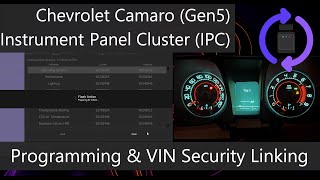
- VIN Matching: The cluster is a security-related part and must be programmed with your car's Vehicle Identification Number (VIN). This process, sometimes called a VIN relearn, links the cluster to the other modules in the car 🎬 See this walkthrough on programming and VIN security linking, like the Body Control Module (BCM).
- Mileage Programming: The vehicle's true mileage is stored in the Body Control Module (BCM), not just the instrument cluster. When a replacement cluster is installed, a GM dealer or a qualified automotive electronics specialist must use a scan tool to program the correct mileage from the BCM into the new cluster. Federal law regulates odometer programming, so this must be done professionally.
- Configuration & Setup: The cluster must also be configured for the specific options on your vehicle (e.g., V6 vs. V8 engine, manual vs. automatic transmission, display type). Failure to do this can result in non-functioning gauges or incorrect warning indicators.
Warning: If you install a used cluster without programming, the odometer will likely display dashes or an error message, and the car's anti-theft system may be triggered. The vehicle may not start, or certain features will not work.
Variant and Model Year Differences

It is critical to purchase the correct instrument cluster for your Camaro's specific sub-model and options. Clusters are not interchangeable between all models.
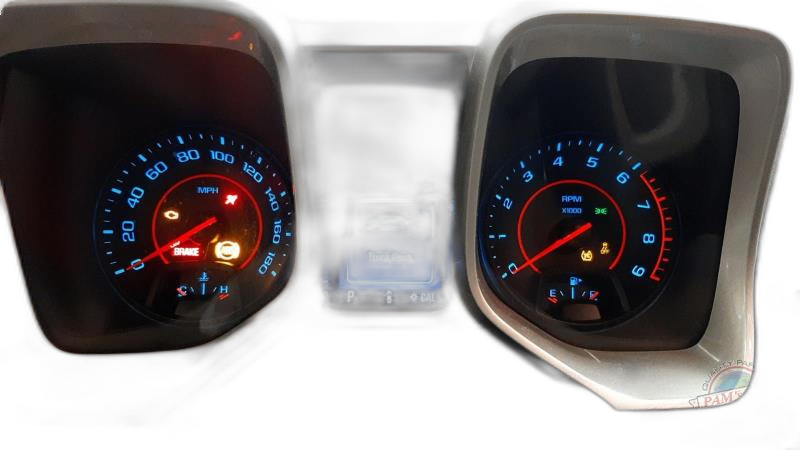
- Engine Type: V6 (LS, LT) and V8 (SS, ZL1) models have different redlines on the tachometer and may have different gauge layouts or information screens.
- Transmission: Clusters are specific to either automatic or manual transmissions.
- Display Type: There are different versions of the Driver Information Center (DIC). Lower-trim models may have a one-color graphic display (GM option code UDC), while higher-trim models feature a multi-color graphic display (option code UDD).
- Units: Clusters are built with either MPH or KPH as the primary speedometer reading. Some have dual displays.
Always match the OEM part number from your original cluster when sourcing a replacement. Using an incorrect part number, even if it looks identical, can lead to compatibility issues.
Buying a Used Instrument Cluster: A Step-by-Step Guide

A used OEM instrument cluster can be a cost-effective solution, but careful purchasing is key.
- Identify Your Exact Part Number: Before shopping, remove your original cluster to find the OEM part number printed on a sticker on the housing. This is the most reliable way to ensure compatibility.
- Verify Vehicle Options: Match the used part to your vehicle's year, model (LS, LT, SS), engine, and transmission type. Pay close attention to the display type (monochrome vs. color).
- Inspect the Lens and Housing: Check photos carefully for deep scratches, cracks, or hazing on the clear plastic lens. Ensure all mounting tabs on the housing are intact and not broken.
- Ignore the Mileage on the Used Cluster: The mileage displayed on a used cluster is irrelevant. It will be reprogrammed to match your car's actual mileage, which is stored in the BCM.
- Budget for Programming: Remember that the cost of the part is not the final cost. You must factor in the expense of having it professionally programmed, which can range from $100 to $200.
Cost Comparison
| Part Type | Estimated Cost |
|---|---|
| New OEM | $150 - $400+ (Part only) |
| New Aftermarket | $130 - $340 (May have compatibility issues) |
| Used OEM | $75 - $250 (Varies by model and condition) |
| Remanufactured / Repair Service | $120 - $300 (Your original unit is repaired) |
| Shop Labor (Installation & Programming) | $100 - $250 |
Frequently Asked Questions (FAQ)
Will my car's mileage change if I install a used cluster?
No, provided it is programmed correctly. The vehicle's true mileage is stored securely in the Body Control Module (BCM). A professional technician will transfer this correct mileage to the replacement cluster during the programming process.
Can I install an SS cluster in my V6 Camaro for an upgrade?
While physically possible, this requires advanced programming and potentially wiring modifications. The cluster must be correctly configured for the V6 engine's parameters. It is not a straightforward swap and should only be attempted by specialists familiar with GM vehicle electronics.
What happens if I just plug in a used cluster without programming it?
The car may not start due to the anti-theft system. The odometer will likely show an error or dashes instead of the mileage, and many gauges and warning lights will not function correctly because the cluster is not configured for your car's specific options.
Can I repair my existing instrument cluster?
Yes. Many companies specialize in repairing instrument clusters. This is an excellent option if you have issues like a dead power supply, faulty gauges, or bad backlighting. The main advantage is that a repaired original unit does not require VIN programming, as it already belongs to the car.
Helpful Videos
Technical Specifications
OEM Part Numbers: 22854710 22861796 22861797 22895036 23134056 23241692 23295405 23408100 92219953 92234469 92238813 92240634 92242410
Communicates via the vehicle's CAN bus network. Stores vehicle-specific configuration data. Requires professional programming with GM-compatible diagnostic tools.
We Have This Part in Stock




The information in this article is provided for general reference and educational purposes only. Vehicle specifications, procedures, and part compatibility can vary by production date, trim level, and region. Always consult your vehicle's factory service manual and verify part numbers before purchasing or performing repairs. Safety-critical components such as airbags, seat belts, and braking systems should be installed by a qualified professional.
- Chevrolet Camaro:
- 🎬 Helpful Videos
- 🛍️ Shop This Part
- Symptoms of a Failing Instrument Cluster
- Known Issues, TSBs, and Recalls
- Programming and Calibration: What You MUST Know
- Variant and Model Year Differences
- Buying a Used Instrument Cluster: A Step-by-Step Guide
- Cost Comparison
- Frequently Asked Questions (FAQ)
- 🎟️ Get 5% Off