

2018 Nissan Altima Rear Suspension Assembly: Noises, Failures, and Part Guide
This guide covers common clunks, pops, and premature tire wear related to the 2018 Altima's rear suspension, and clarifies the critical differences between parts.
- The most critical issue is the rear lower control arm, which can crack and corrode, especially in salt-belt states. Inspect this part carefully on any used assembly.
- A four-wheel alignment is mandatory after replacing the rear suspension assembly to prevent rapid tire wear and ensure safe handling.
- The SR trim has a different sport-tuned suspension (shocks, springs, stabilizer bar) than other trims. While the base knuckle may interchange, attached components must match your vehicle's trim level.
- When buying used, prioritize the condition of the rubber bushings on all control arms. Cracked or torn bushings mean the assembly is a poor value.
Symptoms of a Failing Rear Suspension Assembly

Failure in the 2018 Altima's rear suspension can manifest in several ways. Recognizing these signs early can prevent more significant issues, like premature tire wear or unsafe handling.
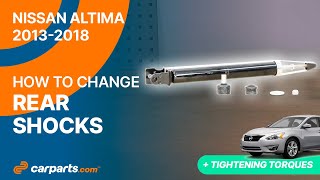
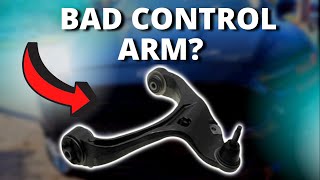
- Clunking or Knocking Noises: A distinct clunk, knock, or rattle from the rear of the car, especially over small bumps at low speeds, is a primary symptom. This is often caused by worn-out shock absorbers or failing control arm bushings. 🎬 Watch this guide on identifying bad control arm symptoms
- Uneven or Excessive Tire Wear: When suspension components wear out, they can no longer hold the wheel at the correct angle (alignment). This causes tires to wear rapidly on the inner or outer edges. This can be a sign of a failing control arm or bent knuckle.
- Poor Handling or Vehicle Wandering: A feeling that the rear of the car is unstable, swaying excessively in turns, or 'wandering' on the highway points to worn suspension parts. In severe cases of lower control arm failure, drivers may experience increased steering effort or a feeling of lost control.
- Visible Damage or Leaks: A visual inspection may reveal leaking fluid from a shock absorber, cracked and dry-rotted rubber bushings on the control arms, or one corner of the car sitting lower than the other.
Known Issues, TSBs, and Recalls

While there have been no formal recalls for the 2018 Altima's rear suspension, there are significant known issues acknowledged by Nissan and investigated by the National Highway Traffic Safety Administration (NHTSA).
Rear Lower Control Arm Corrosion and Cracking
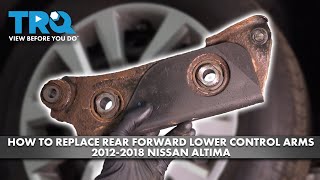
The most significant issue involves the rear lower control arms on 2013-2018 Altimas and 2016-2018 Maximas. These stamped steel arms are prone to developing stress cracks, which can be accelerated by corrosion from road salt in 'salt belt' states. This can lead to the arm separating from the chassis, causing a loss of wheel alignment and potentially affecting vehicle control.
🎬 See how to replace rear lower control arms step-by-step- NHTSA Investigation (EA19002): NHTSA conducted a multi-year investigation into this issue but ultimately closed it without a mandatory recall. They noted that Nissan had taken proactive steps.
- Nissan's Response: Nissan issued a customer service campaign and extended the warranty on these parts to 10 or 12 years with unlimited mileage for affected vehicles. They also introduced a redesigned, more durable control arm in January 2018.
- Technical Service Bulletin (NTB21-045): Nissan released this TSB providing technicians with procedures to diagnose and replace the rear lower links if a customer experiences knocking noises or sees excessive positive camber (top of the wheel tilted outward).
Pro Tip: Even if your vehicle wasn't part of the service campaign, if you experience symptoms, it's worth contacting a Nissan dealer with your VIN to see if the extended warranty applies to your car.
Buying a Used 2018 Altima Rear Suspension Assembly: What to Check

A used OEM assembly can be a cost-effective and reliable repair, provided you inspect it carefully. The term 'assembly' usually refers to the knuckle with the hub/bearing and control arms attached, but not the shock, spring, or main subframe.
- Inspect All Bushings: This is the most critical check. Look at every rubber bushing on the control arms. They should be intact, without major cracks, dry rot, or tearing. Replacing these bushings can be difficult and expensive, so a used assembly with bad bushings is a poor value.
- Check for Corrosion and Cracks: Especially on the lower control arm, look for heavy rust, scaling, or any visible cracks, particularly around welds and bends. Assemblies from 'salt-belt' states are at higher risk.
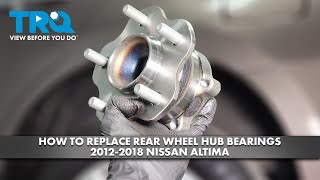
- Spin the Wheel Hub Bearing: The wheel hub should spin smoothly and silently by hand. Any grinding, roughness, or wobble indicates a bad bearing that will need to be replaced. 🎬 Watch: Rear wheel hub bearing replacement tutorial
- Verify Compatibility: This is crucial. The main knuckle/hub assembly is generally the same across 2.5L and 3.5L sedan models, and it also fits the 2016-2023 Nissan Maxima. However, there are key differences:
- SR vs. Non-SR Trims: The SR (Sport) trim has a sport-tuned suspension. While the main knuckle may be the same, components like the shock absorber, coil spring, and stabilizer bar are different and have unique part numbers. If you are buying an assembly with the shock/spring still attached, you MUST match it to your trim level.
- Part Number Verification: The core part numbers for the knuckle are 43018-9HS1A (Right/Passenger) and 43019-9HS1A (Left/Driver). These supersede older numbers like 43019-3TA0A. Always try to match part numbers stamped on the components.
- Check for Impact Damage: Look for scrapes, bends, or cracks on the knuckle and control arms that would indicate the donor car was in a collision. A bent assembly will make alignment impossible.
Replacement Overview & Cost
Replacing the entire rear knuckle assembly is a moderately difficult job that requires proper tools and safety precautions.
- Difficulty: 3 out of 5.
- Tools Required: Jack and jack stands, torque wrench, breaker bar, 18mm and 13mm sockets, and various wrenches.
- DIY Feasibility: Possible for experienced DIY mechanics. However, due to the need for a mandatory post-installation alignment, many owners opt for professional installation.
Warning: A four-wheel alignment is absolutely required after replacing any major suspension component like the knuckle assembly or control arms. Skipping this step will result in poor handling, unsafe driving characteristics, and rapid destruction of your tires.
Cost Comparison
Prices can vary based on location and the specific components included. The 'assembly' is typically the knuckle with arms.
| Part/Service | Estimated Cost |
|---|---|
| New OEM Knuckle Assembly | $360 - $450 per side (knuckle only) |
| New Aftermarket Knuckle Assembly | $150 - $300 per side |
| Used OEM Assembly (Knuckle, Hub, Arms) | $60 - $200 per side |
| Shop Labor (per side) | $250 - $540 |
| Four-Wheel Alignment | $171 - $251 |
Frequently Asked Questions (FAQ)
Do I need to replace both the left and right sides at the same time?
Not necessarily. If only one side is damaged or has a bad bearing, you can replace just that side. However, shocks and struts are typically replaced in pairs to ensure balanced handling. If you are replacing the assemblies due to high mileage and worn bushings, doing both sides at once is recommended for consistent performance.
Will replacing the rear suspension assembly fix my uneven tire wear?
It should, provided the new assembly is in good condition and a four-wheel alignment is performed immediately after installation. The worn components are what cause the misalignment, so replacing them and then correcting the angles is the complete solution.
Can I reuse my old shock absorber and coil spring?
Yes. The knuckle assembly is typically sold without the shock (damper) and spring. You can transfer your existing shock and spring to the replacement knuckle assembly, provided they are in good condition (not leaking or broken). Be sure to inspect the upper shock mount for wear as well.
Does the engine size (2.5L vs. 3.5L) matter for the rear suspension assembly?
For the core knuckle/hub assembly, the engine size does not matter; they are the same for the 2018 Altima sedan. However, the 3.5L V6 model may have different coil springs or shocks to handle the extra weight, so if you are swapping parts with those components attached, it's best to match the engine. The SR trim's sport suspension is a more significant difference than the engine size.
Helpful Videos
Technical Specifications
OEM Part Numbers: 43018-9HS1A (Right Knuckle Assembly) 43019-9HS1A (Left Knuckle Assembly) 43018-3TA0A (Right Knuckle Assembly, superseded) 43019-3TA0A (Left Knuckle Assembly, superseded) 551B0-3TA0D (Right Lower Control Arm) 551B1-3TA0D (Left Lower Control Arm) 55020-9HS0B (Coil Spring, standard) E6210-9HS0H (Shock Absorber, with sport suspension) 55400-4RA2C (Rear Crossmember/Subframe)
The rear suspension is a multi-link independent design. The core knuckle assembly (part # 43019-9HS1A and variants) fits 2013-2018 Nissan Altima sedans and 2016-2023 Nissan Maxima models.

The information in this article is provided for general reference and educational purposes only. Vehicle specifications, procedures, and part compatibility can vary by production date, trim level, and region. Always consult your vehicle's factory service manual and verify part numbers before purchasing or performing repairs. Safety-critical components such as airbags, seat belts, and braking systems should be installed by a qualified professional.
- Nissan Altima: