

2008 Ford Focus Rear Suspension: Solving Tire Wear, Rust, and Clunks
A deep dive into the common failures of the 2008 Ford Focus rear suspension, including subframe rust, tire cupping, and how to buy the right used assembly.
- The most critical failure is severe rust on the rear subframe; inspect it for corrosion before buying the car or a used part.
- Loud humming noises and cupped rear tires are a very common issue caused by worn shocks and/or bad alignment.
- When buying a used assembly, you must match it to your car's configuration: brake type (drum vs. disc), ABS, and presence of a rear stabilizer bar.
- A professional four-wheel alignment is absolutely required after replacing the assembly or any major suspension component to prevent handling problems and tire damage.
Known Issues for the 2008 Ford Focus Rear Suspension


While the 2008 Focus is known for its sharp handling, its rear suspension is prone to several well-documented issues. These problems can range from annoying noises to serious safety concerns.
Problem 1: Rear Subframe Corrosion
Warning: Severe subframe rust is a critical safety issue. A corroded subframe can fail, leading to a loss of vehicle control. Inspect this area carefully before buying a car or a used part.
The most serious issue affecting the 2008 Focus is severe rust on the rear subframe, also called the crossmember. This was a problem on the first-generation Focus and continued into the 2008 model year. The subframe is a large, steel structure that holds all the suspension components and bolts to the car's body. Due to inadequate rust protection from the factory, moisture and road salt get trapped, causing corrosion that can eat through the metal. The areas where the subframe mounts to the car's floor pan are especially vulnerable. If the rust is severe, the structural integrity of the suspension is compromised.
Problem 2: Premature and Uneven Rear Tire Wear
Many owners have reported their rear tires wearing out very quickly, often in a pattern called "cupping" or "scalloping," which creates a loud roaring or humming noise that gets worse with speed. This issue was so widespread that it led to a class-action lawsuit against Ford for 2005-2011 models. The problem is typically caused by a combination of factors:
- Worn Shock Absorbers: The original factory shocks can wear out prematurely, allowing the wheel to bounce excessively on the road, leading to cupped tires.
- Worn Control Arm Bushings: The rubber bushings in the various control arms can degrade, allowing for unwanted movement and throwing the rear alignment out of specification.
- Incorrect Alignment: The multi-link suspension is sensitive to alignment settings. Even a small deviation from the factory specs can cause accelerated tire wear. Many owners reported that dealerships struggled to correct the issue.
Symptoms of a Failing Rear Suspension Assembly

Diagnosing rear suspension issues can be tricky, as one symptom can have multiple causes. Here are the most common signs to watch for.
1. Abnormal Noises
Clunking, knocking, or rattling sounds from the rear of the car, especially when going over bumps, are a primary indicator of a problem. These sounds can be caused by:
- Worn or broken sway bar end links.
- Failed shock absorbers or broken shock mounts.
- Worn out control arm bushings. 🎬 Watch a cheap fix for Ford Focus suspension noises
2. Poor Handling and Instability
A feeling that the rear of the car is "stepping out" or feels loose when cornering or hitting bumps is a common complaint. This indicates that the suspension is no longer holding the wheel firmly in place. This can be caused by worn bushings, failing shocks, or in severe cases, a flexing, rusted subframe.
3. Excessive Bouncing
If your car continues to bounce up and down after hitting a dip or bump, your shock absorbers are likely worn out. They are no longer able to dampen the movement of the springs. A simple test is to push down firmly on the trunk; if the car bounces more than once, the shocks need replacement.
🎬 Watch this quick budget rear shock replacement guide4. Visible Rust and Damage
A visual inspection is crucial. Look for heavy flaking rust on the subframe, especially around the mounting bolts and weld seams. Also check for bent control arms, leaking fluid from the shock absorbers, and cracked or torn rubber bushings.
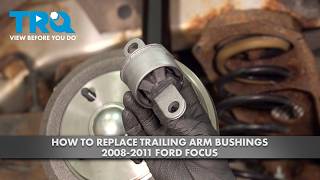
🎬 See how to replace trailing arm bushings step-by-stepBuying a Used Ind Rr Susp Assy: What to Check

A used rear suspension assembly can be a cost-effective solution, especially if your subframe is rusted or multiple components are damaged. However, you must get the correct one and inspect it thoroughly.
Step 1: Identify Your Car's Configuration
Not all 2008 Focus rear suspensions are the same. You must match the assembly to your car's specific setup. The three key variables are:
- Brake Type: Does your car have rear drum brakes or rear disc brakes? Base models (S, SE) typically have drums, while the higher-trim SES often has discs. Look through your wheel spokes to verify.
- Anti-Lock Brakes (ABS): Does your car have ABS? Assemblies for ABS-equipped cars have knuckles with a mounting hole for the wheel speed sensor. Non-ABS knuckles will not have this.
- Rear Stabilizer Bar: Does your car have a rear stabilizer bar (also called a sway bar)? The sportier SES trim usually has one, while S and SE trims may not. Look under the rear of your car for a thin metal bar connecting the left and right sides of the suspension via links. An assembly with a stabilizer bar will have mounting tabs on the subframe and control arms that a non-stabilizer assembly lacks.
Pro Tip: The easiest way to ensure compatibility is to get an assembly from a car with the exact same trim level (S, SE, or SES) as your own.
Step 2: Physical Inspection of the Used Assembly
Once you find a matching assembly, a detailed inspection is critical.
- Subframe Rust: This is the #1 priority. Bring a screwdriver or small hammer and tap firmly along the subframe, paying close attention to the mounting points, seams, and the area under the spring seats. If you find soft, spongy spots or the tool makes a dull thud instead of a sharp metallic ring, the part is likely rusted from the inside out. Walk away.
- Control Arm Bushings: Look at all the rubber bushings on the control arms. Check for major cracks, tearing, or if the rubber looks dry-rotted and brittle.
- Straightness: Look down the length of each control arm to check for any bends or kinks, which indicate the donor car was in an accident.
- Included Components: Verify what comes with the assembly. A good assembly should include the subframe, all control arms, and the knuckles/hubs. Shocks and springs may or may not be included.
Cost to Replace 2008 Ford Focus Rear Suspension
The cost can vary dramatically depending on whether you replace the entire assembly or individual components.
| Part/Service | Estimated Cost | Notes |
|---|---|---|
| Used OEM Assembly | $250 - $600 | Price depends on condition and what components are included. This is often the most economical route if the subframe is bad. |
| New Aftermarket Subframe | $300 - $500 | Part only. Companies like Dorman offer replacements. |
| New OEM Subframe | $500+ | May be discontinued or difficult to source. |
| New Aftermarket Components (Per Side) | $200 - $400 | Includes one shock (~$50), control arms (~$100-$200), and bushings. Price adds up quickly. |
| Shop Labor (Assembly Swap) | $400 - $700 | Estimated 4-6 hours of labor. Requires alignment afterward. |
| Shop Labor (Individual Parts) | $150 - $300 per side | Replacing just shocks or a single control arm is less labor-intensive. |
| Wheel Alignment | $100 - $150 | Mandatory after any suspension work. |
Frequently Asked Questions (FAQ)
Why are my 2008 Focus rear tires so loud and wearing unevenly?
This is a very common problem known as tire "cupping." It's almost always caused by worn-out rear shock absorbers that allow the tire to bounce as it rolls down the road. Worn control arm bushings and incorrect wheel alignment can also contribute. Replacing the rear shocks and getting a four-wheel alignment is the most common fix.
Can I upgrade my base model Focus with a suspension assembly from an SES model?
Yes, this is a popular upgrade. An assembly from an SES model will typically add a rear stabilizer bar and may include rear disc brakes if your car has drums. This is a direct bolt-on swap, but if you are converting from drum to disc brakes, you will also need the corresponding brake lines, parking brake cables, and potentially a proportioning valve for the system to work correctly.
Is the rust on my rear subframe a major problem?
It depends on the severity. Light surface rust can be treated by removing the loose flakes and applying a quality rust converter and undercoating. However, if the rust is causing the metal to become soft, spongy, or has created holes, the subframe is structurally compromised and must be replaced. It is a serious safety hazard and will not pass a safety inspection in many states.
How difficult is it to replace the entire rear suspension assembly?
For a DIY mechanic, this is a challenging job. It requires safely supporting the vehicle on jack stands, disconnecting brake lines, parking brake cables, and unbolting the entire assembly from the car. It requires a good set of tools, including breaker bars and a torque wrench. For most people, this job is best left to a professional. The difficulty is rated 4 out of 5.
Helpful Videos

Technical Specifications
OEM Part Numbers: 8S4Z-5035-A (Crossmember, supersedes 3S4Z-5035-AA) 3S4Z-5035-AA (Crossmember) 7S4Z-5500-A (Rear Upper Control Arm) 8S4Z-5A968-A (Rear Lower Control Arm, Right) 8S4Z-5A969-A (Rear Lower Control Arm, Left) 8S4Z-18125-C (Shock Absorber) 1M5Z-4A013-BA (Spindle/Knuckle, without ABS, without rear disc)
Multi-link 'Control Blade' independent rear suspension. Configurations vary by trim level, affecting brake type (drum/disc), ABS compatibility, and the presence of a rear stabilizer bar.

The information in this article is provided for general reference and educational purposes only. Vehicle specifications, procedures, and part compatibility can vary by production date, trim level, and region. Always consult your vehicle's factory service manual and verify part numbers before purchasing or performing repairs. Safety-critical components such as airbags, seat belts, and braking systems should be installed by a qualified professional.
- Ford Focus:
- 🎬 Helpful Videos
- Known Issues for the 2008 Ford Focus Rear Suspension
- Problem 1: Rear Subframe Corrosion
- Problem 2: Premature and Uneven Rear Tire Wear
- Symptoms of a Failing Rear Suspension Assembly
- 1. Abnormal Noises
- 2. Poor Handling and Instability
- 3. Excessive Bouncing
- 4. Visible Rust and Damage
- Buying a Used Ind Rr Susp Assy: What to Check
- Step 1: Identify Your Car's Configuration
- Step 2: Physical Inspection of the Used Assembly
- Cost to Replace 2008 Ford Focus Rear Suspension
- Frequently Asked Questions (FAQ)
- 🎟️ Get 5% Off