

2013-2017 Honda Accord Won't Start? Diagnosing the Ignition Switch vs. Starter
This guide explains how to tell if your push-button ignition switch is faulty and how to distinguish its failure from other common starting problems.
- The ignition switch does NOT require programming; it is a plug-and-play part.
- Many 'no-start' issues on V6 models are caused by a starter/torque converter problem (TSB 16-002), not the ignition switch.
- The most common symptom of a bad switch is needing to press the start button multiple times for the engine to crank.
- A used OEM switch is a very cost-effective and reliable repair option since programming is not a concern.
Is It Really Your Ignition Switch?

Many starting problems on the 2013-2017 Honda Accord are incorrectly blamed on the ignition switch. Before replacing the switch, it's crucial to rule out other more common culprits. A correct diagnosis will save you time and money.
1. Check for Starter-Related TSB 16-002 (V6 Models)
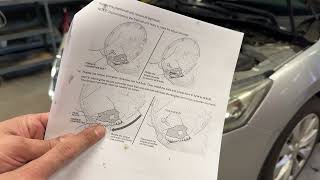
The most widespread starting issue for this Accord generation, particularly on V6 models with automatic transmissions, is a loud grinding or spinning noise when you press the start button. This is often an intermittent problem. This is caused by poor clearance between the starter motor gear and the torque converter ring gear. Honda issued Technical Service Bulletin (TSB) #16-002 🎬 Watch: See how this starter grinding issue is diagnosed and fixed. for this issue. The fix involves replacing the starter and rotating the torque converter one bolt hole to create a new wear surface. If you hear a loud grind, the ignition switch is likely NOT the problem; your vehicle may be affected by this TSB.
2. Test the Battery and Key Fob
Simple issues can mimic a bad switch. A weak car battery or a dead key fob battery can cause a no-start or intermittent start condition. If the car's accessories and lights come on but are dim, or you hear a rapid clicking sound, the main 12V battery is the likely suspect. If the car doesn't detect the key at all, try replacing the small battery inside the fob first.
3. Symptoms of a Failing Ignition Switch
If you've ruled out the issues above, you may have a faulty ignition switch. The symptoms are distinct from the starter grinding issue:
- Multiple Presses to Start: This is the most common sign. You press the button, and nothing happens, or only the accessories turn on. It may take two, three, or more presses for the engine to finally crank.
- "Keyless Start System Problem" Message: A warning may appear on the instrument cluster when the switch fails to make contact.
- No Response: You press the button and absolutely nothing happens—no click, no accessories, no crank.
- Sticking or Inconsistent Button Feel: The button may feel physically sticky or react differently depending on where you press it.
A diagnostic scan may reveal the trouble code B12C5 (Engine Start/Stop Switch Failure), which points directly to a faulty switch.
🎬 Watch: Learn more about diagnosing the B12C5 trouble code.Known Issues, TSBs, and Recalls

While there are common starting-related problems for this Accord generation, there are no specific recalls or warranty extensions from Honda for the push-button ignition switch on 2013-2017 models. Failures are typically due to normal wear of the internal contacts.
- TSB 16-002: As mentioned, this applies to V6 models with a grinding or spinning starter noise and is not a fault of the ignition switch.
- Recall 17V-418 (Honda TSB 17-057): This recall was for the battery management sensor on 2013-2016 Accords. Moisture could enter the sensor, causing an electrical short and a potential fire risk, regardless of the ignition position. This is not directly related to a no-start symptom but is an important safety recall for the vehicle's electrical system.
Buying a Used Ignition Switch

A used OEM ignition switch is an excellent choice for this repair, offering significant savings over a new part. Here’s what to look for:
Pro Tip: The single most important thing to know is that this part does not require programming. It is a simple plug-and-play switch. You will not need a dealer or locksmith to reprogram your keys or immobilizer system after installation.
- Verify Compatibility: There are several OEM part numbers for this generation, primarily differing by trim and model (standard vs. Hybrid). Match the part number from your original switch to the used one to ensure a perfect fit and correct button/bezel appearance.
- Physical Inspection: Check for any signs of damage to the connector pins or the plastic housing. Ensure the button has a crisp, clean clicking action and doesn't feel sticky or soft.
- Why Used OEM is a Good Choice: Unlike complex electronic modules, this is a relatively simple switch. An OEM part, even used, often has better build quality and a more precise feel than a cheap aftermarket alternative. Since no programming is needed, it's a low-risk, high-value repair.
Warning: This is a dash-mounted push-button ignition switch for vehicles equipped with the keyless Smart Entry system. It is not compatible with models that use a traditional turn-key ignition.
Cost to Replace a 2013-2017 Accord Ignition Switch
The cost can vary depending on the part source and who performs the labor. Labor at a professional shop is typically low, estimated at 0.5 to 1.0 hour.
| Part Type | Estimated Cost |
|---|---|
| New OEM (Standard) | $175 - $260 |
| New OEM (Hybrid) | $395 - $480 |
| New Aftermarket | $25 - $95 |
| Used OEM | $40 - $75 |
| Shop Labor | $100 - $150 |
Frequently Asked Questions (FAQ)
Does a new ignition switch need to be programmed?
No. For the 2013-2017 Honda Accord, the push-button ignition switch is a non-programmable part. It is a direct plug-and-play replacement that does not interface with the immobilizer system, which is handled by other modules in the car.
What's the difference between the ignition switch and the ignition lock cylinder?
This article covers the push-button ignition switch for keyless models. On cars with a traditional key, the ignition lock cylinder is the mechanical part you insert the key into, while the ignition switch is the electronic part on the back that it turns. If a traditional key is hard to turn or won't go in, the problem is the lock cylinder, not the switch.
Can I replace the ignition switch myself?
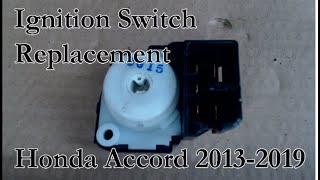
Yes, this is a DIY-friendly repair for most people. The process involves carefully removing the dash trim panels around the switch, undoing a couple of screws, and disconnecting a single electrical connector. The main challenge is working in a tight space without scratching the trim.
🎬 Watch: Follow this step-by-step guide to replace the switch yourself.What if I replace the switch and the car still won't start?
If a new switch doesn't solve the problem, your issue lies elsewhere in the starting system. Revisit the diagnostic steps: check for the starter grinding noise (TSB 16-002), test the 12V battery under load, check the starter relay, and ensure the brake pedal switch is working correctly (the car won't start if it doesn't detect the brake is pressed).
Helpful Videos
Technical Specifications
OEM Part Numbers: 35881-T2A-A01 35881-T2A-Y01 35881-T3V-A01 35881-T3V-A02
Dash-mounted push-button switch for Smart Entry keyless systems. Functions as a momentary contact switch to signal the Body Control Module (BCM).
We Have This Part in Stock



The information in this article is provided for general reference and educational purposes only. Vehicle specifications, procedures, and part compatibility can vary by production date, trim level, and region. Always consult your vehicle's factory service manual and verify part numbers before purchasing or performing repairs. Safety-critical components such as airbags, seat belts, and braking systems should be installed by a qualified professional.
- Honda Accord:
- 🎬 Helpful Videos
- 🛍️ Shop This Part
- Is It Really Your Ignition Switch?
- 1. Check for Starter-Related TSB 16-002 (V6 Models)
- 2. Test the Battery and Key Fob
- 3. Symptoms of a Failing Ignition Switch
- Known Issues, TSBs, and Recalls
- Buying a Used Ignition Switch
- Cost to Replace a 2013-2017 Accord Ignition Switch
- Frequently Asked Questions (FAQ)
- 🎟️ Get 5% Off