

1993-2002 Saturn S-Series Ignition Coil: Solving Misfires and Stalls
This guide covers common failure symptoms, diagnostic procedures, and how to choose a quality used ignition coil for your 1993-2002 Saturn SL, SC, or SW.
- A single ignition coil assembly fits all 1993-2002 Saturn S-Series models, making it easy to find a compatible used part.
- Camshaft position sensor codes (P0340/P0341) on these cars are frequently caused by a bad ignition coil or module, as there is no separate cam sensor.
- When buying a used coil, the most important checks are for cracks in the black epoxy and corrosion or arcing marks on the metal terminals.
- Replacement is very easy, requiring only basic hand tools and about 15-30 minutes, making it an ideal DIY repair.
Symptoms of a Failing Ignition Coil

A bad ignition coil on a Saturn S-Series will cause noticeable engine performance problems. Because each of the two coils fires two cylinders, a single coil failure will make the engine run on only two of its four cylinders, which is very rough. Here are the most common signs of failure:
- Rough Idle and Stalling: The engine will shake, vibrate, or sound uneven at idle. In severe cases, the engine may stall completely.
- Engine Misfires: You may feel a jerking or sputtering sensation while driving, especially under acceleration. This can feel like the engine is stumbling over itself.
- Check Engine Light: A failing coil will almost always trigger the check engine light. Common trouble codes include P0300 (Random/Multiple Cylinder Misfire), as well as codes for specific cylinders like P0301, P0302, P0303, or P0304.
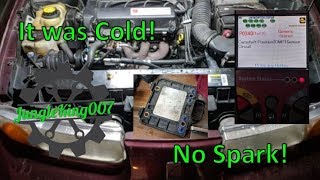
- Camshaft Position Sensor Codes (P0340, P0341): Uniquely, Saturn S-Series vehicles do not have a separate camshaft position sensor. The Powertrain Control Module (PCM) uses the ignition system to determine cam position. A faulty ignition coil or module can send a bad signal, incorrectly triggering a P0340 or P0341 code. 🎬 See how a P0340 code causes the engine to run on two cylinders.
- Reduced Power and Fuel Economy: With two cylinders not firing correctly, your car will be noticeably slower and will use more gasoline to compensate.
- Smell of Unburnt Fuel: If the spark plugs aren't firing, raw fuel is being sent into the exhaust system, which you may be able to smell. This can lead to backfiring.
Buying a Used Ignition Coil: What to Look For

A used OEM ignition coil can be a reliable and cost-effective replacement for your Saturn S-Series. The original GM parts are often more durable than inexpensive aftermarket alternatives. Here’s what to inspect before you buy:
- Check for Cracks: Carefully inspect the black epoxy body of both coils. Any cracks, even hairline fractures, are a major red flag. Cracks allow moisture to get inside, which can cause the coil to short out.
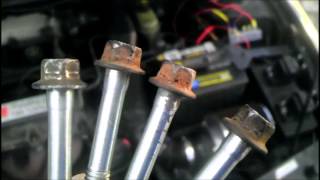
- Inspect the Terminals: Look at the four metal towers where the spark plug wires connect. They should be clean and free of rust or heavy white/green corrosion. 🎬 Watch: How to remove and clean your ignition coils and module. Corrosion indicates a poor connection and can lead to weak spark.
- Look for Arc-Tracking: Examine the plastic housing around the terminals for any thin, black, or white lines that look like lightning bolts. This is called carbon tracking or arcing, and it means high-voltage electricity has been leaking from the coil instead of going to the spark plug. Do not buy a coil with any signs of arcing.
- Verify Compatibility: The good news is that one ignition coil assembly fits all 1993-2002 Saturn S-Series models (SL, SC, SW) with the 1.9L engine, both SOHC and DOHC. This makes finding a compatible part very easy.
- Consider Mileage: While these coils are robust, lower mileage is always better. If possible, choose a part from a vehicle with under 150,000 miles for the best longevity.
Pro Tip: The ignition coils are mounted to a metal plate called the Ignition Control Module (ICM). While the coils are the most common failure point, the ICM can also fail. If you replace the coils and still have a no-spark or misfire issue on the same pair of cylinders, the ICM may be the culprit. Many used parts are sold as a complete assembly with the coils and module together.
Known Issues, TSBs, and Recalls

For the 1993-2002 model years, there are no specific recalls or Technical Service Bulletins (TSBs) directly targeting the ignition coils on the Saturn S-Series. However, some related issues are worth noting:
- Corrosion: The coil towers are susceptible to corrosion, especially in damp climates. This can cause a weak connection to the spark plug wires and lead to misfires.
- Engine Coolant Temperature Sensor (ECTS): A faulty ECTS can cause a variety of running issues on S-Series cars, including rough idle and misfires, which can sometimes be mistaken for an ignition problem.
- Ignition Switch Recalls: While not directly related to the coils, many General Motors vehicles from this era, including the 2003-2007 Saturn Ion that replaced the S-Series, were subject to major ignition switch recalls. No such recalls were issued for the 1993-2002 S-Series ignition switches themselves.
Replacement Difficulty and Cost
Installation
- Difficulty Rating: 1 out of 5 (Very Easy)
- Estimated Time: 15-30 minutes
- DIY Feasible: Yes, this is a great beginner-level repair. 🎬 Watch this fast and easy walkthrough for replacing your Saturn coil.
The ignition coil assembly is mounted directly to the engine block, making it very easy to access. The process involves disconnecting the negative battery terminal, unplugging one electrical connector, removing the four spark plug wires, and unbolting the assembly (typically with four 10mm bolts).
Pro Tip: When reinstalling the spark plug wires, apply a small amount of dielectric grease to the inside of the boots. This prevents them from getting stuck on the coil towers and ensures a good electrical connection.
Cost Comparison
Prices can vary by supplier, but this table provides a general estimate of what you can expect to pay for the part and labor.
| Part Type | Estimated Cost |
|---|---|
| New OEM (GM) | $150 - $200+ (for the assembly) |
| New Aftermarket | $30 - $80 (per pair of coils) |
| Used OEM | $25 - $50 |
| Shop Labor | $50 - $100 |
Frequently Asked Questions (FAQ)
Do I need to replace the spark plugs and wires with the ignition coil?
It is highly recommended. A failing ignition coil can damage spark plugs, and old, high-resistance spark plug wires can put extra strain on a new coil, causing it to fail prematurely. Replacing all three components at once is the best practice for a reliable repair.
How do I know which of the two coils is bad?
The front coil fires cylinders 1 and 4 (the outer two), and the rear coil fires cylinders 2 and 3 (the inner two). You can identify the failing coil by seeing which cylinders have misfire codes. You can also swap the positions of the two coils; if the misfire moves to the other pair of cylinders, you've confirmed the coil is bad.
Is the ignition coil the same as the Ignition Control Module (ICM)?
No, they are separate parts. The two ignition coils bolt onto the ICM, which is the metal plate that mounts to the engine. The ICM acts as the switch that tells the coils when to fire. While they are often replaced as an assembly, they are technically two different components.
Can a bad ignition coil cause a no-start condition?
Yes. If both coils fail simultaneously, or if the Ignition Control Module fails completely, you will have no spark on any cylinder and the engine will not start. However, it's more common for just one coil to fail, resulting in a very rough running engine rather than a complete no-start.
Helpful Videos
Technical Specifications
OEM Part Numbers: 1835536 19178836 19208545 25894654 28004439 16167763 21020180 818425 821589 21021523 21022444 21025043
System Type: Waste Spark, 2 dual-tower coils mounted to a single ignition control module.
We Have This Part in Stock



The information in this article is provided for general reference and educational purposes only. Vehicle specifications, procedures, and part compatibility can vary by production date, trim level, and region. Always consult your vehicle's factory service manual and verify part numbers before purchasing or performing repairs. Safety-critical components such as airbags, seat belts, and braking systems should be installed by a qualified professional.
- Saturn S-Series: