

2001-2003 Protege & Protege5 Ignition Coil Failure: Misfires, Diagnosis, and Replacement
This guide covers the common symptoms, diagnosis, and replacement of the ignition coils on the 2.0L engine found in the 2001-2003 Mazda Protege and 2002-2003 Mazda Protege5.
- This coil fits the 2.0L engine ONLY in the 2001-2003 Protege and 2002-2003 Protege5; it does not fit the 1.6L or Mazdaspeed models.
- Failure causes severe misfires (P0300-P0304 codes), rough idle, and significant power loss because each coil fires two cylinders.
- Replacement is extremely easy (1/5 difficulty) and requires only a 10mm socket, making it an ideal DIY repair.
- Before replacing, check for oil in the spark plug wells. A leaking valve cover gasket is a common cause of coil failure and must be fixed to prevent repeat failures.
Symptoms of a Failing Ignition Coil


A failing ignition coil on a 2001-2003 Mazda Protege or Protege5 will cause immediate and noticeable engine performance issues. Because each coil is responsible for firing two cylinders, a single coil failure has a dramatic effect.
- Engine Misfires and Rough Idle: This is the most common symptom. The engine will run unevenly, shake, or vibrate, especially when stopped at a light. It may feel like the car is about to stall.
- Check Engine Light: A failing coil will trigger the Check Engine Light. Common trouble codes include P0300 (Random Misfire), as well as cylinder-specific codes like P0301, P0302, P0303, or P0304.
- Hesitation and Loss of Power: The car will feel sluggish and weak, especially when you try to accelerate. This happens because the engine is effectively running on only half of its cylinders.
- Stalling: In severe cases, the engine may stall completely when coming to a stop or while idling.
- Burnt Smell: Some owners report a distinct burnt plastic or electrical smell when a coil overheats and fails.
- Backfiring: Unburned fuel from the misfiring cylinders can enter the exhaust system and ignite, causing a loud popping or banging sound from the tailpipe. This is a serious condition that can damage your catalytic converter.
Warning: Do not confuse ignition coil failure with the 2003 model year emissions recall (Campaign 3005C). This recall addressed loose screws on the intake manifold shutter valve, which could cause similar symptoms like rough idling and misfires. If you own a 2003 Protege, it's worth checking with a Mazda dealer to see if this recall was performed on your vehicle.
Diagnosing a Faulty Ignition Coil

Diagnosing a bad coil on this engine is relatively simple. The 2.0L engine has two identical coils located on the valve cover, making them easy to access.
- Read the Codes: Use an OBD-II scanner to read the trouble codes. A code like P0301 (Cylinder 1 Misfire) or P0304 (Cylinder 4 Misfire) points to a specific cylinder. Since the coils fire in pairs (1&4, 2&3), a failure on one coil will often cause misfires on its paired cylinder.
- Perform the "Coil Swap" Test: This is the most reliable method. Let's say your code is for cylinder 1 (P0301). Note which coil is connected to cylinder 1's spark plug wire. Swap that entire coil assembly with the other one. Clear the codes with your scanner and start the engine. If the misfire code now appears for the other coil's cylinder (e.g., P0302 or P0303), you have confirmed the coil is bad.
- Visual Inspection: Look for cracks, burn marks, or melted plastic on the coil housing. Also check the electrical connector for corrosion or damage.
- Night Test: In a dark environment, start the engine and have someone briefly rev it. Look and listen for a blue spark arcing from a crack in the coil body to the metal valve cover. This is a sure sign of a failed coil.
Buying a Used Ignition Coil: What to Check
A used OEM ignition coil can be a reliable and cost-effective alternative to expensive new parts or lower-quality aftermarket options. Here’s what to inspect before you buy:
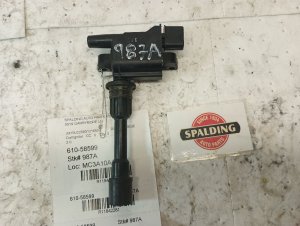
- Check for Physical Damage: Carefully inspect the entire plastic housing for cracks, especially around the mounting bolt holes and where the spark plug boot extends. A cracked coil will allow high voltage to escape, causing a misfire.
- Examine the Electrical Connector: Look inside the connector port. The pins should be clean, straight, and free of any green or white corrosion. The plastic locking tab should be intact to ensure a secure connection.
- Inspect the Spark Plug Boot: Check the rubber boot at the bottom of the coil. It should be flexible, without any tears, swelling, or oily residue. A boot that is contaminated with oil from a leaking valve cover gasket is a major red flag, as oil degrades the rubber and causes coil failure.
- Look for Heat Damage: Any signs of melting, discoloration, or a warped appearance on the plastic housing indicate the coil has been subjected to extreme heat and should be avoided.
- Verify Compatibility: Ensure the coil is from a 2001-2003 Protege or 2002-2003 Protege5 with the 2.0L engine. Coils from the 1.6L engine are different and will not work. The OEM part number should be FP85-18-100C or a similar variant.
Pro Tip: When replacing your ignition coil, it's the perfect time to inspect your spark plug wells for oil. If you see oil pooled around the spark plugs, your valve cover gasket is leaking. This leak MUST be repaired, as the oil will quickly destroy your new or used replacement coil.
Cost Comparison
| Part Type | Price Range (Per Coil) |
|---|---|
| New OEM | $104 - $150 |
| New Aftermarket | $30 - $80 |
| Used OEM | $20 - $50 |
| Shop Labor | $50 - $150 |
Ignition Coil Replacement Guide (DIY)

Replacing the ignition coils on the 2.0L Protege engine is a very easy job suitable for any beginner.
- Difficulty: 1/5 (Very Easy)
- Time: 15-20 minutes
- Tools Needed: 10mm socket with ratchet
Step-by-Step Instructions:
- Locate the Coils: Open the hood. The two ignition coils are mounted directly on top of the engine's valve cover.
- Disconnect the Electrical Connector: Press the release tab on the electrical connector plugged into the side of the coil and pull it straight off.
- Remove Spark Plug Wire (if applicable): The coil you are replacing may have a spark plug wire attached. Firmly grip the boot and twist as you pull to detach it from the coil.
- Unbolt the Coil: Use a 10mm socket to remove the two bolts securing the coil to the valve cover.
- Remove the Old Coil: Gently twist and pull the coil straight up to remove it from the spark plug well.
- Install the New Coil: Seat the new coil firmly onto the spark plug. Reinstall the two 10mm bolts and tighten them until they are snug—do not overtighten, as the valve cover is aluminum.
- Reconnect Everything: Reattach the spark plug wire (if removed) and plug in the electrical connector until it clicks into place.
Frequently Asked Questions
Should I replace both coils at the same time?
While not strictly necessary, it is often recommended. Ignition coils are wear items, and if one has failed due to age and mileage, the other may not be far behind. Since the job is so easy, replacing them as a pair provides peace of mind.
Do I need to replace the spark plugs and wires with the coils?
It is a very good practice to replace the spark plugs and wires when you replace the coils. Worn spark plugs force the coil to work harder, which can shorten its lifespan. New plugs and wires ensure the entire ignition system is healthy.
What are the OEM part numbers for the 2.0L Protege ignition coil?
The most common OEM part number is FP85-18-100C. Superseded or related numbers include FFY1-18-100, FP85-18-100B, FP85-18-100C-9U, and FPY1-18-100.
Will this ignition coil fit my Mazdaspeed Protege?
No. This ignition coil is only for the naturally aspirated (non-turbo) 2.0L engine. The turbocharged Mazdaspeed Protege uses a different ignition system.
Technical Specifications
OEM Part Numbers: FFY118100 FP8518100B FP8518100C FP8518100C9U FPY118100
System Type: Waste Spark, Coil-on-Plug. Two coils are used for the 4-cylinder engine.
We Have This Part in Stock

The information in this article is provided for general reference and educational purposes only. Vehicle specifications, procedures, and part compatibility can vary by production date, trim level, and region. Always consult your vehicle's factory service manual and verify part numbers before purchasing or performing repairs. Safety-critical components such as airbags, seat belts, and braking systems should be installed by a qualified professional.
- Mazda Protege:
- Mazda Protege5: