

2014-2019 Ford Fiesta Ignition Coil Failure: Misfires, Diagnosis, and Replacement
Your definitive guide to diagnosing, replacing, and buying a used ignition coil pack for the 1.6L non-turbo Ford Fiesta.
- This ignition coil pack fits ONLY the 2014-2019 Ford Fiesta with the 1.6L non-turbo engine; it does NOT fit the 1.6L Turbo ST model.
- Common failure symptoms include engine misfires, a rough idle, a flashing check engine light, and reduced power.
- Replacement is an extremely easy DIY job, rated 1 out of 5 for difficulty and taking less than 30 minutes with basic tools.
- Ignoring a failing ignition coil can lead to expensive damage to the catalytic converter due to unburned fuel entering the exhaust.
Symptoms of a Failing Ignition Coil Pack
When the ignition coil pack in your 2014-2019 Ford Fiesta begins to fail, the signs are usually hard to miss. Because it's responsible for creating the spark for all four cylinders, a failure can significantly impact engine performance. You'll likely experience one or more of the following symptoms:
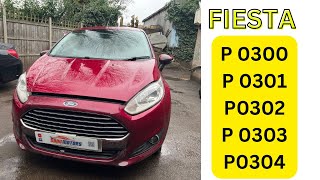
- Engine Misfires: This is the most common symptom. You may feel the engine stumble, jerk, or hesitate during acceleration. It can feel like a loss of power or a shudder from the engine bay. 🎬 Watch: Diagnosing a Fiesta misfire and loss of power
- Rough Idle: When the car is stopped, the engine may idle unevenly, causing the whole vehicle to vibrate or shake.
- Check Engine Light: A failing coil will almost always trigger the Check Engine Light. If the light is flashing, it indicates a severe misfire that could be dumping unburned fuel into the exhaust, risking damage to the catalytic converter.
- Reduced Power and Poor Acceleration: Your Fiesta may feel sluggish and slow to respond when you press the gas pedal.
- Decreased Fuel Economy: When the engine isn't burning fuel efficiently due to weak or inconsistent spark, your gas mileage will suffer.
- Stalling: In more severe cases, the engine may stall while idling or even while driving because it isn't getting enough power to keep running.
- Difficulty Starting: A weak or dead coil pack can make it difficult for the engine to turn over and start.
Common trouble codes associated with ignition coil failure include:
- P0300: Random/Multiple Cylinder Misfire Detected
- P0301, P0302, P0303, P0304: Misfire Detected in a specific cylinder (1, 2, 3, or 4).
- P0351, P0352, P0353, P0354: Ignition Coil Primary/Secondary Circuit Malfunction for a specific cylinder.
Compatibility Warning: This ignition coil pack is ONLY for the 1.6L non-turbocharged engine. It features a 3-pin connector. It will NOT fit the 1.6L turbocharged engine found in the Fiesta ST model, which uses individual coil-on-plug units. Always verify your engine type before purchasing.
Known Issues, TSBs, and Recalls
While there are no specific recalls for the ignition coil pack itself on the 2014-2019 Fiesta, Ford did issue a Technical Service Bulletin (TSB) that is relevant. TSB #SSM 45988 mentions that 2015-2016 Fiesta models with the 1.6L engine may show a Check Engine Light with codes P0351 and/or P0352, which can cause rough running. This indicates that Ford is aware of potential circuit malfunctions in the ignition system for these model years. Other major recalls for this Fiesta generation concern door latches, fuel pumps on some 2014-2015 models, and potential engine overheating on ST models, but none directly target the ignition coil on the non-turbo engine.
Buying a Used Ignition Coil: What to Inspect
A high-quality, low-mileage used OEM ignition coil can be a reliable and cost-effective alternative to new parts, especially when compared to cheap aftermarket options. Original Ford (Motorcraft) parts are built to a higher standard than many aftermarket replacements. Here’s what to check before buying a used coil pack:
- Inspect the Housing: Carefully check the black plastic housing for any cracks, hairline fractures, or signs of melting. Heat and vibration are the enemies of ignition coils, and any cracks can allow moisture in, leading to failure.
- Check the Electrical Connector: Look at the 3-pin connector port. The pins should be clean, straight, and free of any green or white corrosion. A corroded connector is a major red flag.
- Examine the Spark Plug Towers: Inspect the four towers where the spark plug wires connect. Look for any white, chalky residue or black carbon tracks. These are signs of arcing, where high-voltage electricity has escaped, indicating the coil is failing.
- Ask for Mileage and Vehicle History: If possible, choose a coil from a lower-mileage vehicle. An ignition coil from a car with 50,000 miles is a much better bet than one from a car with 150,000 miles.
- Why Used OEM is Often Better: The materials and winding techniques used in genuine Motorcraft coils are designed specifically for your Fiesta's engine management system. Many budget aftermarket coils use inferior materials that can't withstand engine bay temperatures, leading to premature failure and leaving you stranded. A used OEM part has already proven its durability.
Replacement Guide (Difficulty: 1/5)
Replacing the ignition coil pack on a 1.6L Fiesta is one of the easiest repairs you can perform. It is highly accessible at the top of the engine and requires only basic hand tools. The entire job can typically be done in less than 30 minutes.
- Disconnect the Battery: As a safety precaution, disconnect the negative terminal of the battery.
- Locate the Coil Pack: Open the hood and look at the top of the engine. The ignition coil pack is a rectangular block with four towers that the spark plug wires connect to.
- Disconnect the Electrical Connector: Press the tab on the 3-pin electrical connector and pull it straight off the coil pack.
- Remove the Spark Plug Wires: Gently twist and pull each of the four spark plug wires off the towers of the coil pack. It's helpful to label them 1-4 with masking tape so you can reconnect them in the correct order.
- Unbolt the Coil Pack: The coil pack is held onto the engine with four bolts, typically requiring a T25 Torx driver or a small socket. Remove these bolts.
- Install the New Coil Pack: Place the new or used coil pack in position and reinstall the four mounting bolts. Tighten them until they are snug, but do not overtighten to avoid cracking the plastic.
- Reconnect Wires and Connector: Push the spark plug wires firmly back onto their corresponding towers until they click into place. Reconnect the electrical connector.
- Reconnect the Battery: Reattach the negative battery terminal. Start the engine to confirm the repair. 🎬 See this step-by-step coil pack replacement walkthrough
Pro Tip: It is highly recommended to replace the spark plugs and spark plug wires at the same time you replace the ignition coil. A failing coil can damage plugs, and old plugs/wires can put extra strain on a new coil, causing it to fail prematurely.
Cost Comparison
Prices can vary by location and supplier, but this provides a general cost expectation.
| Part/Service | Estimated Cost |
|---|---|
| New OEM (Motorcraft DG-557) | $95 - $170 |
| New Aftermarket (Delphi, NGK, etc.) | $40 - $100 |
| Used OEM | $25 - $60 |
| Shop Labor | $37 - $54 |
Frequently Asked Questions (FAQ)
Do I have to replace my spark plugs with the ignition coil?
It is strongly recommended. A bad ignition coil can foul spark plugs, and old, worn spark plugs can put excessive strain on a new ignition coil, leading to premature failure. Replacing them together is cheap insurance and ensures the entire ignition system is healthy.
🎬 Watch: How to replace spark plugs, leads, and coil pack togetherCan I drive with a bad ignition coil?
You can, but it's not a good idea. Driving with a constant misfire will cause poor performance and terrible fuel economy. More importantly, it can allow unburned fuel to enter the exhaust system, which can quickly destroy the catalytic converter—a very expensive repair.
Is a Motorcraft coil really better than a cheaper aftermarket one?
Yes. Motorcraft is the Original Equipment Manufacturer (OEM) part. It's made with materials specified by Ford engineers to withstand the heat and vibration of your Fiesta's engine for a long time. While some premium aftermarket brands like Delphi are excellent, many cheaper online options use lower-grade epoxy and windings that can fail quickly, sometimes within months.
What is the difference between a coil pack and coil-on-plug?
The non-turbo Fiesta uses a single coil pack, which is one module containing all four ignition coils. Wires run from this pack to each spark plug. The Fiesta ST model uses a Coil-on-Plug (COP) system, where each spark plug has its own individual coil sitting directly on top of it, with no spark plug wires. The parts are not interchangeable.
Helpful Videos
Technical Specifications
OEM Part Numbers: CM5G-12029-FA CM5G-12029-FB CM5G-12029-FC CM5G12029F CM5G12029FC CM5Z-12029-F CM5Z12029F DG557 GN10449 UF740
Coil Style: Coil Pack, Connector Pins: 3, Voltage: 12V, Primary Resistance: ~0.55 Ohms, Secondary Resistance: ~11,300 Ohms.
We Have This Part in Stock



The information in this article is provided for general reference and educational purposes only. Vehicle specifications, procedures, and part compatibility can vary by production date, trim level, and region. Always consult your vehicle's factory service manual and verify part numbers before purchasing or performing repairs. Safety-critical components such as airbags, seat belts, and braking systems should be installed by a qualified professional.
- Ford Fiesta: