

Trailblazer, Trax, Encore GX & Envista 1.2L Ignition Coil: Misfire Diagnosis & Replacement
This guide covers diagnosing and replacing the ignition coils on the GM 1.2L turbo engine, including a critical compatibility warning and a key software recall that can mimic coil failure.
- This coil (GM part #55595166) is ONLY for the 1.2L engine; it will NOT fit the 1.3L engine.
- Before replacing coils, check if your vehicle is part of Emission Recall A242435780, as a software bug can mimic coil failure symptoms.
- Replacement is extremely easy for a DIYer, requiring only an 8mm socket and about 15-30 minutes.
- A flashing Check Engine Light means stop driving as soon as safely possible to prevent expensive catalytic converter damage.
Critical: 1.2L vs. 1.3L Engine Compatibility
Warning: These vehicles were available with two different three-cylinder engines: a 1.2L turbo and a 1.3L turbo. The ignition coils for these two engines are NOT interchangeable. This guide and the part numbers listed apply ONLY to vehicles equipped with the 1.2L (RPO code LIH) engine. The part number for the 1.3L engine coil is different (e.g., GM 12710878). Always verify your engine size before purchasing.
Is It Really a Bad Coil? Check for Emission Recall A242435780
Before you spend money on new parts, be aware of GM Voluntary Emission Recall #A242435780, issued in August 2024. This recall affects certain 2024 models of the Chevrolet Trax, Trailblazer, Buick Encore GX, and Buick Envista with the 1.2L engine. The engine's computer (ECM) may fail to control ignition timing correctly after the auto start/stop system restarts the engine.
The symptoms of this software issue — a Check Engine Light, rough running, and engine knock — are nearly identical to a failing ignition coil. The fix is a free software update performed by a GM dealer. Check with a dealer to see if your vehicle is affected by this recall before proceeding with a diagnosis.
Symptoms of a Failing Ignition Coil
When an ignition coil starts to fail, the signs are usually obvious. Because each coil is responsible for one of the engine's three cylinders, losing one is like losing a third of your engine's power.
- Check Engine Light: This is often the first sign. The onboard computer detects a misfire and stores a trouble code. A solid light means a fault has been recorded, but a flashing Check Engine Light signals a severe misfire that is actively dumping unburned fuel into the exhaust, which can quickly destroy the expensive catalytic converter.
- Engine Misfire (Rough Idle, Sputtering): The engine will shake, vibrate, or sound uneven, especially at idle or low speeds. It may feel like the car is stumbling or hesitating when you try to accelerate.
- Loss of Power: With one cylinder not firing, the vehicle will feel noticeably sluggish and weak, especially when climbing hills or accelerating.
- Poor Fuel Economy: The engine's computer tries to compensate for the misfire, often by using more fuel, causing your gas mileage to drop.
- Hard Starting: The engine may take longer than usual to start or may not start at all if multiple coils have failed.
- Engine Backfire: In some cases, unburned fuel can detonate in the exhaust pipe, causing a loud popping or banging sound.
Common Diagnostic Trouble Codes (DTCs)
Using an OBD-II scanner, you may find one or more of the following codes:
- P0300: Random/Multiple Cylinder Misfire Detected.
- P0301: Cylinder 1 Misfire Detected.
- P0302: Cylinder 2 Misfire Detected.
- P0303: Cylinder 3 Misfire Detected.
- P0351, P0352, P0353: Ignition Coil 'A', 'B', or 'C' Primary/Secondary Circuit Malfunction.
Diagnosing a Bad Coil: The Swap Test
The easiest way to confirm a bad coil without special tools is the 'swap test'. This is especially simple on this engine.
- Identify the misfiring cylinder using an OBD-II scanner (e.g., code P0302 points to cylinder 2).
- Label the coils with their cylinder numbers (1, 2, 3) with a marker.
- Swap the ignition coil from the misfiring cylinder with a coil from a known good cylinder. For example, swap the coils from cylinder 2 and cylinder 1.
- Clear the diagnostic codes with your scanner and start the engine. Let it run until the Check Engine Light comes back on.
- Re-scan for codes. If the code has 'moved' to the new cylinder (e.g., you now have a P0301 code), you have confirmed the ignition coil is bad. If the code stays on the original cylinder (P0302), the problem is likely the spark plug, fuel injector, or a mechanical issue with that cylinder.
Buying a Used Ignition Coil: What to Look For
Ignition coils are a simple and reliable part, making good, low-mileage used OEM coils an excellent value. They often outlast cheap aftermarket alternatives. Here's what to inspect before buying:
- Verify the Part Number: Ensure the part is a genuine GM 55595166 or an equivalent for the 1.2L engine. Do not buy a coil for the 1.3L engine.
- Check for Physical Damage: Inspect the hard plastic housing on top. Look for any cracks, melting, or swelling. A swollen top is a sign of internal overheating and failure.
- Inspect the Stem and Boot: Gently flex the rubber boot and stem. It should be pliable with no cracks or brittleness. Cracks can allow spark to escape to the engine block instead of going to the spark plug.
- Look for Corrosion: Check the electrical connector pins for any green or white corrosion. Look down into the spark plug boot and check the metal contact spring; it should be clean and free of rust.
- Consider Mileage and Source: A coil from a low-mileage, late-model vehicle is ideal. Purchase from a reputable seller that offers a warranty and a clear return policy.
Replacement Guide (DIY Difficulty: 1/5)
Replacing the ignition coils on the 1.2L engine is one of the easiest repairs you can perform. It requires only basic tools and about 15-30 minutes.
Pro Tip: It's a good idea to replace the spark plugs at the same time you replace the coils, especially if the vehicle has over 60,000 miles. A worn spark plug can put extra strain on the ignition coil, causing it to fail prematurely.
- Remove the Engine Cover: The plastic cover on top of the engine simply pulls straight up and off.
- Locate the Coils: The three ignition coils are in a row, right on top of the engine.
- Disconnect the Electrical Connector: Each coil has a connector with a red locking tab. Slide the red tab away from the coil to unlock it. Then, press down on the black release tab and pull the connector straight off.
- Remove the Retaining Bolt: Use an 8mm socket with a ratchet to remove the single bolt holding the coil in place.
- Remove the Coil: Gently twist and pull the ignition coil straight up and out of the spark plug tube. It may be seated snugly.
- Install the New Coil: Apply a small amount of dielectric grease to the inside of the new coil's boot. This prevents it from getting stuck to the spark plug and seals out moisture. Push the new coil firmly into place until it seats on the spark plug.
- Reinstall Bolt and Connector: Reinstall the 8mm bolt (do not overtighten) and reconnect the electrical connector, making sure to push the red locking tab back into place.
- Repeat for any other coils you are replacing, then put the engine cover back on.
Cost of Replacement
| Part Type | Price per Coil (Set of 3) | Notes |
|---|---|---|
| New OEM (GM) | $50 - $60 ($150 - $180) | Purchased from an online GM parts dealer. |
| New Aftermarket | $30 - $50 ($90 - $150) | Prices vary by brand (e.g., TRQ, Delphi, SMP). |
| Used OEM | $20 - $30 ($60 - $90) | From a reputable auto recycler or online marketplace. |
| Shop Labor | $50 - $100 | Includes diagnosis and replacement of one or all coils. |
Frequently Asked Questions (FAQ)
Do I need to replace all three ignition coils at once?
It is not strictly necessary, but it is often recommended. Ignition coils are subjected to the same heat and wear, so if one has failed, the others may not be far behind. Replacing them as a set provides peace of mind and can prevent another repair job in the near future. Given the low cost of the parts, many owners choose to replace all three along with the spark plugs.
Can I drive my car with a bad ignition coil?
You can, but it is not recommended for more than a short distance to a repair shop. Driving with a misfire causes unburned fuel to enter the exhaust system, which can rapidly overheat and destroy the catalytic converter—a very expensive repair. A flashing check engine light indicates this is actively happening. It also causes poor performance and fuel economy.
Is this the same ignition coil used in the 1.3L engine?
No. The 1.2L and 1.3L turbo engines use different ignition coils. The correct OEM part number for the 1.2L engine is 55595166. The part number for the 1.3L engine is 12710878. They are not interchangeable.
What is dielectric grease and do I need to use it?
Dielectric grease is a non-conductive, silicone-based grease that seals out moisture and prevents corrosion on electrical connectors. Applying a small amount to the inside of the ignition coil boot helps it seal around the spark plug and makes it easier to remove in the future. It is highly recommended for this job.
Technical Specifications
OEM Part Numbers: 55595166 (GM, for 1.2L) 12698941 (GM, for 1.2L) 55515867 (Previous GM number for 1.2L)
This is a Coil-on-Plug ignition coil for the GM 1.2L (LIH) 3-cylinder turbocharged engine. Three are required for a full engine set. Aftermarket equivalents include Delphi GN11147 and Standard Motor Products UF898.
We Have This Part in Stock
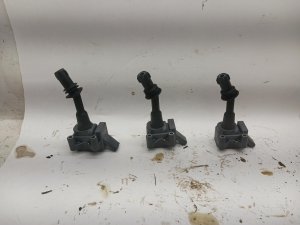
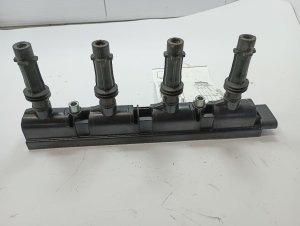
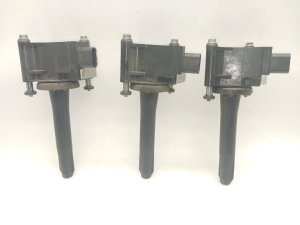


The information in this article is provided for general reference and educational purposes only. Vehicle specifications, procedures, and part compatibility can vary by production date, trim level, and region. Always consult your vehicle's factory service manual and verify part numbers before purchasing or performing repairs. Safety-critical components such as airbags, seat belts, and braking systems should be installed by a qualified professional.
- Chevrolet Trailblazer:
- Chevrolet Trax:
- Buick Encore GX:
- Buick Envista:
- 🛍️ Shop This Part
- Critical: 1.2L vs. 1.3L Engine Compatibility
- Is It Really a Bad Coil? Check for Emission Recall A242435780
- Symptoms of a Failing Ignition Coil
- Common Diagnostic Trouble Codes (DTCs)
- Diagnosing a Bad Coil: The Swap Test
- Buying a Used Ignition Coil: What to Look For
- Replacement Guide (DIY Difficulty: 1/5)
- Cost of Replacement
- Frequently Asked Questions (FAQ)
- 🎟️ Get 5% Off