

1988-1989 Corvette HVAC Programmer: Fixing C68 Climate Control Failures
Your definitive guide to diagnosing, replacing, and buying the correct HVAC programmer for the C68 electronic climate control system.
- This programmer is ONLY for 1988-1989 Corvettes with the C68 Electronic Climate Control; it will not work with manual A/C systems.
- The most common failure is the system getting stuck on full heat, which is often caused by cracked solder joints on the programmer's circuit board that can be repaired.
- This module is plug-and-play and does NOT require any dealer programming or VIN matching.
- Before replacing the programmer, check the dedicated A/C fuses in the passenger-side fuse panel and use the system's built-in diagnostics to check for fault codes.
Compatibility Warning: C68 Electronic Climate Control Required
Important: This HVAC Programmer is only for 1988-1989 Corvettes equipped with the RPO C68 Electronic Climate Control system. This system is easily identified by its digital display and push-button controls. It is not compatible with the standard, base-model manual A/C system that uses rotary knobs for temperature and fan speed.
Symptoms of a Failing HVAC Programmer
A failing HVAC programmer can cause a variety of frustrating issues. Because it controls both vacuum-operated doors and the electronic blend door, symptoms can be varied. Here are the most common signs that your programmer may be at fault:
- Stuck on Hot or Cold: The most frequent complaint is the system blowing only hot air, regardless of the temperature setting. This is often caused by failed solder joints or components on the programmer's circuit board that control the blend door motor.
- Incorrect Airflow Direction: Air may be stuck coming out of the defroster vents and won't switch to the dash or floor vents. This points to a failure in the vacuum solenoid section of the programmer.
- Intermittent or No Operation: The entire climate control system may seem dead or work sporadically. This can be caused by failing capacitors or bad solder joints within the programmer.
- Flashing or Blank Display on Control Head: While often a fault of the control head itself, a failing programmer can cause the head unit to receive bad data or lose power, resulting in a flashing or blank display.
How to Diagnose the HVAC Programmer
The C4 Corvette's C68 system has a built-in diagnostic feature that can help you identify fault codes without a special scan tool. This should be your first step in troubleshooting.
Reading C68 Diagnostic Codes (1989 Models)
For 1989 models, you can enter a diagnostic mode. While information for 1988 is less clear, the 1989 procedure is well-documented. If the "Ext Temp" light on your control panel flashes when you turn on the ignition, it is indicating a fault. A forum user details a more advanced diagnostic procedure for 1989 models:
- Turn the ignition on.
- The system will display various parameters. Mode 08 is the diagnostic trouble code display.
- If Mode 08 shows "00", there are no stored faults.
- Other codes indicate specific problems:
- 01: Open in the Temperature Door feedback circuit.
- 02: Open in the Outside Air Sensor circuit.
- 04: Short in the Outside Air Sensor circuit.
- 08: Open in the Inside Air Sensor circuit.
- 16: Short in the Inside Air Sensor circuit.
While these codes don't definitively condemn the programmer itself, they help narrow down the problem area. For example, a code 01 could be the programmer, the blend door motor, or the wiring in between.
Physical Inspection and Common Failures
The most common failure points for these programmers are electronic components breaking down due to age and heat. After removing the programmer, the circuit board can be inspected.
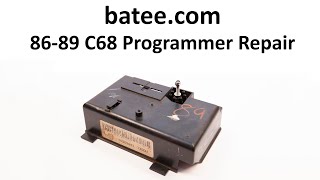
- Bad Solder Joints: Heat and vibration cause solder joints to crack, especially on two specific resistors on the board. This is a very common cause for the blend door to stop working, resulting in a "stuck on heat" condition. The board may look discolored or burnt in this area. 🎬 See how to rebuild your C68 HVAC programmer electronics
- Failed Capacitors: Electrolytic capacitors on the board can dry out and fail over time, leading to intermittent power or total failure.
Pro Tip: Before replacing the programmer, check the fuses. The C68 system has fuses for the A/C clutch and the programmer itself, typically located in the passenger-side fuse panel. A simple blown fuse can mimic a dead programmer.
Buying a Used 1988-1989 Corvette HVAC Programmer
Since new OEM programmers have been discontinued for many years, buying a used or remanufactured unit is your primary option. Here’s what to look for:
- Verify the Part Number: The most common part number for the 1988-1989 programmer is 16069591. An earlier number, 1571584, may also be seen. Ensure the part you are buying matches these numbers and is specified for 1988-1989 models.
- Inspect the Vacuum Port: The block of vacuum lines connects to a plastic port on the programmer. Check this area for cracks or damage, which can happen during removal from the donor vehicle.
- Ask About Functionality: When buying from a private seller or a recycler, ask if the part was tested or if the reason for the vehicle being salvaged is known. A part from a front-end collision is more likely to have a good programmer than one from a car that was scrapped for unknown electrical issues.
- Consider a Rebuilt Unit: Specialized Corvette electronics repair services like Batee.com offer rebuilt programmers or repair services for your existing unit. These are often the best option, as they have been gone through by an expert, common failure-prone components have been replaced, and they often come with a warranty.
Programming and Installation
Does the HVAC Programmer need to be programmed?
No. The 1988-1989 HVAC Programmer is a plug-and-play module. It does not need to be programmed, flashed, or coded to the vehicle's VIN. It has no link to the anti-theft or immobilizer system. Installation is a matter of swapping the electrical and vacuum connections.
Replacement Procedure Overview
The HVAC programmer is located in the driver's side footwell, above the gas pedal, mounted to the firewall.
- Disconnect the negative battery terminal.
- Remove the driver's side lower dash panel (hush panel) to gain access.
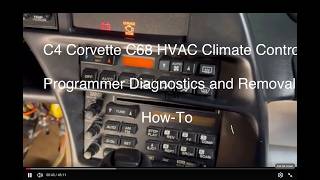
- The programmer is held in place by one 7mm screw. 🎬 Watch this step-by-step C68 programmer diagnostics and removal video
- Carefully disconnect the main electrical connector.
- Disconnect the block of vacuum lines. This is held on by a metal clip or a nut that can be tricky to remove.
- Installation is the reverse of removal.
Known Issues, TSBs, and Recalls
There are no official recalls or Technical Service Bulletins (TSBs) from GM or the NHTSA specifically addressing the failure of the HVAC programmer module for these model years. The known issues are primarily age-related electronic failures, such as cracked solder joints and failing capacitors, which are well-documented in owner forums.
| Part Type | Estimated Cost |
|---|---|
| New OEM | $0 (Discontinued) |
| New Aftermarket | Not Generally Available |
| Used OEM (Core for rebuild) | $60 - $120 |
| Remanufactured / Rebuilt Exchange | $375+ |
| Professional Repair Service (Your Unit) | $125 - $185 |
| Shop Labor for Replacement | $100 - $200 |
Frequently Asked Questions (FAQ)
Will a bad programmer make my A/C compressor not turn on?
Yes, it can. The HVAC programmer sends the request signal to the A/C compressor clutch. If the programmer has an internal failure, it may not send this signal, preventing the compressor from engaging.
What's the difference between the HVAC Control Head and the HVAC Programmer?
The Control Head is the unit in your dash with the buttons and display that you interact with. The Programmer is a separate module, typically hidden under the dash, that receives signals from the Control Head and physically controls the blend door and vacuum solenoids to make the system work.
My display is blank or flashing. Is that the programmer or the control head?
It can be either. A blank or flashing display is a very common symptom of a bad programmer, as it acts as the power supply for the system. However, the control head itself is also known to have internal connection problems that cause the same symptom. Often, the most reliable solution is to have both units tested and repaired.
Can I just re-solder the bad joints myself?
Yes. If you are comfortable with a soldering iron and can identify the cracked solder joints on the circuit board (most commonly on two large resistors), re-flowing the solder is a common and effective DIY repair that can fix a "stuck on heat" issue. Repair kits and guides are also available from specialists.
Helpful Videos
Technical Specifications
OEM Part Numbers: 16069591 1571584
Controls vacuum solenoids and an electric blend door motor for the C68 Electronic Climate Control system.
We Have This Part in Stock



The information in this article is provided for general reference and educational purposes only. Vehicle specifications, procedures, and part compatibility can vary by production date, trim level, and region. Always consult your vehicle's factory service manual and verify part numbers before purchasing or performing repairs. Safety-critical components such as airbags, seat belts, and braking systems should be installed by a qualified professional.
- Chevrolet Corvette:
- 🎬 Helpful Videos
- 🛍️ Shop This Part
- Compatibility Warning: C68 Electronic Climate Control Required
- Symptoms of a Failing HVAC Programmer
- How to Diagnose the HVAC Programmer
- Reading C68 Diagnostic Codes (1989 Models)
- Physical Inspection and Common Failures
- Buying a Used 1988-1989 Corvette HVAC Programmer
- Programming and Installation
- Does the HVAC Programmer need to be programmed?
- Replacement Procedure Overview
- Known Issues, TSBs, and Recalls
- Frequently Asked Questions (FAQ)
- 🎟️ Get 5% Off