

2015-2025 Toyota Camry HVAC Control: A Guide to Part Numbers, Failures, and Replacement
This guide covers the critical differences between Camry climate control units, common failures, and how to choose the correct used part for your vehicle.
- You must physically verify and match the part number on your original unit before buying a replacement; failure to do so will result in an incompatible part.
- For 2018-2025 models, compatibility is dependent on the infotainment screen size (7-inch vs. 8-inch). Most available used parts are for the 7-inch screen.
- Be prepared for programming. Most replacement units for 2018+ models will require programming by a dealer or qualified shop to sync with your vehicle's VIN.
- You cannot upgrade from a manual to an automatic climate system by simply swapping the control panel; the underlying vehicle wiring and sensors are different.
Generational Differences: 2015-2017 vs. 2018-2025

The Toyota Camry HVAC control units covered in this guide span two distinct vehicle generations. Understanding which generation you have is the first step in diagnosing issues or finding a replacement part.
- 2015-2017 (XV50 Generation): These models typically use more traditional control layouts. The primary distinction is between manual controls (with knobs for temperature and fan speed) and automatic single-zone climate control. Part numbers like 55900-06320 are common for this era.
- 2018-2025 (XV70 Generation): With the 2018 redesign, the HVAC controls became more integrated with the vehicle's infotainment system. The most significant compatibility factor for these models is the size of the central touch screen (7.0-inch vs. 8.0-inch) and the type of system (manual vs. single-zone automatic). Many parts for this generation may require programming to sync with the vehicle's VIN.
Common Symptoms of a Failing Camry HVAC Control

A failing HVAC control module can cause a range of frustrating issues. Because it's the brain of the system, problems can seem random or affect multiple functions at once. Here are the most common signs:
- Unresponsive Buttons or Knobs: You press a button or turn a dial, and nothing happens. The fan speed might be stuck, or you can't change the temperature.
- Incorrect Temperature Output: The system blows hot air when you want cold, or cold air when you want heat. This can happen if the module fails to command the blend doors correctly.
- Air Blows from the Wrong Vents: You select the dashboard vents, but air only comes out at the floor or defroster. This points to the module failing to control the mode door actuators.
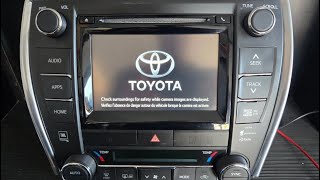
- Intermittent or No Function: The entire climate system may work one day and not the next. On some 2018 models, owners have reported the controls freezing up, especially on the first drive of the day, only to start working again later. 🎬 Watch a mechanic diagnose a 2018 Camry with AC issues.
- Fan Speed is Stuck or Erratic: The blower fan may be stuck on high, low, or not work at all, even if the blower motor itself is fine.
- A/C Compressor Won't Engage: The module is responsible for sending the signal to the A/C compressor clutch to engage. If this signal isn't sent, you won't get cold air.
Pro Tip: Some Toyota models have a built-in diagnostic mode for the climate control system. To activate it, you typically press and hold the 'AUTO' and 'Recirculation' buttons simultaneously while turning the ignition on. 🎬 Watch this video to see how to activate diagnostic mode. The display may then show diagnostic trouble codes that can help pinpoint the issue.
Known Issues, TSBs, and Recalls

As of early 2026, there are no widespread recalls specifically for the main HVAC control unit on 2015-2025 Toyota Camrys. However, some related issues and Technical Service Bulletins (TSBs) exist:
- Intermittent Freezing (2018 Models): Some owners of 2018 Camry Hybrids have reported the climate controls becoming completely unresponsive. Mechanics were often unable to duplicate the problem, and checking for software updates did not resolve it, suggesting an intermittent electronic fault within the unit itself.
- TSB for Blocked HVAC Drain Tube: TSB T-TT-0628-20 and T-TT-0468-17 address a blocked or clogged HVAC drain tube. While not a control module failure, this can cause water to back up into the HVAC case, potentially leading to moldy smells or water damage to nearby electronics.
No recalls directly targeting the HVAC control module were found during research. A 2019 recall for improper Occupant Classification System (OCS) calibration was noted, but this is unrelated to the climate control panel's function.
Buyer's Guide: How to Purchase a Used HVAC Control

Buying a used OEM HVAC control is a great way to save money, but it requires careful attention to detail to ensure you get the right part. Mismatched parts will not work.
The Golden Rule: Match Your Part Number
This is the single most important step. Before you buy, you must remove your original unit and find the manufacturer's part number printed on its label. It will typically be a number like 55900-06480 or 55900-06320. Do not buy a replacement unless the part number is an exact match or a verified superseded number from a Toyota dealer.
Key Compatibility Checks
- Manual vs. Automatic: The most basic difference. Manual controls have blue-to-red temperature dials and numbered fan speeds. Automatic Temperature Control (ATC) units have a specific temperature display (e.g., 72°F) and an 'AUTO' button. They are not interchangeable. A vehicle wired for manual controls lacks the necessary sensors and wiring for an ATC unit to function.
- Screen Size (2018+ Models): For the XV70 generation (2018-2025), the control unit is tied to the infotainment screen size. Many part numbers specify they are for vehicles with the 7.0-inch touch screen and will not work in vehicles with the larger 8.0-inch screen. For example, part number 55900-06480 is for models with the 7.0-inch screen.
- Single-Zone vs. Dual-Zone: While less common on the Camry, some higher trims may have dual-zone climate control, allowing the driver and passenger to set different temperatures. A single-zone controller cannot operate a dual-zone system.
Physical Inspection Checklist
- Buttons and Knobs: Check for excessive wear, sticking, or damage. Make sure all graphics are clear and not worn off.
- Connectors: Inspect the electrical connector ports on the back for any bent, corroded, or broken pins.
- Mounting Tabs: Ensure all plastic mounting tabs are intact and not cracked or broken.
Replacement Overview
Replacing the HVAC control unit on a 2015-2025 Camry is generally a straightforward task for a DIYer with basic tools.
Warning: Your vehicle is equipped with airbags. To prevent accidental deployment, always disconnect the negative battery terminal and wait several minutes before beginning work on the dashboard.
The basic process involves using plastic trim removal tools to carefully pry away the dash trim surrounding the unit. On most models, the control unit is held in by clips or a few screws. Once the trim is removed, you can unbolt the unit, disconnect the electrical connectors from the back, and swap in the new one. Installation is the reverse of removal.
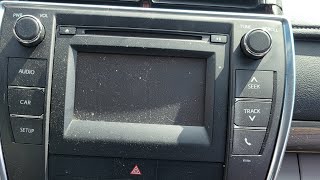
🎬 See this walkthrough for removing the 2015-2017 HVAC unit.Programming and Calibration Requirements
This is a critical consideration, especially for 2018 and newer models. While some swaps may be plug-and-play, many used HVAC control units will require programming by a Toyota dealer or a qualified technician with advanced scan tools. This process syncs the replacement module to your car's unique Vehicle Identification Number (VIN). Without this step, the unit may not function at all, or certain features may be disabled. There is no known self-programming procedure for these components.
Cost Comparison
| Part Type | Estimated Cost |
|---|---|
| New OEM | $600 - $1,500+ |
| New Aftermarket | Not commonly available |
| Used OEM | $50 - $150 |
| Shop Labor | $100 - $250 |
Frequently Asked Questions (FAQ)
Can I upgrade my manual A/C to automatic climate control by just swapping the panel?
No, this is not a simple plug-and-play swap. Automatic climate control systems use additional components that a manual system lacks, such as in-car temperature sensors, sunload sensors, and different wiring harnesses and control amplifiers. Attempting this conversion would be a very complex and expensive rewiring project.
Do I really need to have the replacement control unit programmed?
For 2018 and newer models, it is highly likely. These modern electronic modules are often tied to the vehicle's VIN for security and configuration purposes. While it might work without programming, you risk having a non-functional or partially functional unit. It's best to assume programming will be necessary.
Why are there so many different part numbers for the same car?
Part numbers vary based on the model year, trim level (L, LE, SE, XLE), whether the system is manual or automatic, the infotainment screen size (for 2018+), and whether the car is a hybrid or non-hybrid model. This is why physically matching the part number from your old unit is essential.
The lights behind my control knobs are out. Do I need to replace the whole unit?
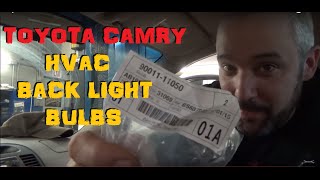
Not necessarily. On many models, especially the 2015-2017 generation, the backlighting is provided by small, replaceable incandescent bulbs. These bulbs can be accessed from the back of the control unit after it's removed from the dash. This is a much cheaper repair than replacing the entire module.
Helpful Videos
Technical Specifications
OEM Part Numbers: 55900-06300 55900-06320 55900-06470 55900-06480 55900-06490 55900-06500 55900-06510 55900-06730 55900-33L00 55900-33L40
Varies significantly by part number. Key differentiators include Manual vs. Automatic Temperature Control (ATC) and compatibility with 7.0-inch or 8.0-inch touch screens (2018+ models).
We Have This Part in Stock



The information in this article is provided for general reference and educational purposes only. Vehicle specifications, procedures, and part compatibility can vary by production date, trim level, and region. Always consult your vehicle's factory service manual and verify part numbers before purchasing or performing repairs. Safety-critical components such as airbags, seat belts, and braking systems should be installed by a qualified professional.
- Toyota Camry:
- 🎬 Helpful Videos
- 🛍️ Shop This Part
- Generational Differences: 2015-2017 vs. 2018-2025
- Common Symptoms of a Failing Camry HVAC Control
- Known Issues, TSBs, and Recalls
- Buyer's Guide: How to Purchase a Used HVAC Control
- The Golden Rule: Match Your Part Number
- Key Compatibility Checks
- Physical Inspection Checklist
- Replacement Overview
- Programming and Calibration Requirements
- Cost Comparison
- Frequently Asked Questions (FAQ)
- 🎟️ Get 5% Off