

2016 Dodge Challenger HVAC Control Module: Failures, Programming, and Replacement Guide
An in-depth look at common climate control problems in the 2016 Challenger, focusing on the HVAC module, programming requirements, and cost-effective repairs.
- A replacement HVAC Control Module (new or used) will almost certainly require a "Proxy Alignment" procedure from a dealer or equipped independent shop to function correctly.
- Match the part number exactly when buying a used module. The latest revision (e.g., part number ending in AC) can replace older versions (ending in AB).
- Symptoms like incorrect temperature, wrong airflow direction, and unresponsive controls point to a failing module.
- A clicking sound from the dash is typically a bad blend door actuator, not the module itself, though the two failures can be related.
Known Issues and Failure Symptoms
The HVAC Control Module in the 2016 Dodge Challenger can cause a range of frustrating climate control issues when it fails. Because it is the central command unit, a fault within the module can manifest in several ways. It's important to distinguish these symptoms from those of other failing components, like blend door actuators or the blower motor itself.
Common Symptoms of a Bad Module:
🎬 Watch: Common symptoms of a bad climate control module- Unresponsive or Intermittent Controls: The buttons or knobs on your climate control panel may stop working or only work sporadically.
- Incorrect Temperature Output: The system may blow hot air when set to cold, or vice-versa, because the module is failing to command the blend doors correctly.
- Airflow from Wrong Vents: You might set the air to blow from the dash vents, but it only comes out of the defrost or floor vents. This indicates the module is not properly directing the mode door actuators.
- Fan Speed Issues: The blower fan may be stuck on one speed (often high), not work at all, or change speed erratically, regardless of your setting.
- A/C Compressor Not Engaging: The module may fail to send the signal to turn on the A/C compressor, resulting in no cold air.
- Flashing Odometer: On FCA (Fiat Chrysler Automobiles) vehicles, a flashing odometer is a classic sign that a module on the vehicle's data network is not communicating correctly. This can be caused by a failed or improperly installed HVAC module and indicates the need for a "Proxy Alignment" procedure.
Pro Tip: Many symptoms, like clicking from the dash or air stuck in one position, can also be caused by a failed blend door actuator. A professional diagnosis with a scan tool that can read Mopar-specific body codes (B-codes) is the best way to determine if the module or an actuator is at fault.
Recalls and Technical Service Bulletins (TSBs)
As of this writing, there are no specific recalls for the HVAC control module itself on the 2016 Dodge Challenger. However, a Customer Satisfaction Notification (R62) was issued for some 2014-2015 Chrysler and Dodge vehicles for an issue where a blend door could bind, causing a loss of temperature control. The fix involved reprogramming the HVAC module. While not directly for the 2016 Challenger, it highlights that software updates can be critical for this system. Always check for any open recalls or TSBs using your vehicle's VIN.
Programming and Installation Requirements
This is the most critical consideration when replacing the HVAC control module on a 2016 Challenger. This part is generally NOT plug-and-play.
Warning: After installing a new or used HVAC control module, a procedure called a Proxy Alignment (or Proxi Alignment) is typically required.
A Proxy Alignment is a process that introduces the new module to the vehicle's Body Control Module (BCM) and allows it to communicate with all other electronic modules on the car's network. Without this procedure, you may experience a flashing odometer, persistent error codes, or a non-functional climate control system.
This procedure must be done with a compatible, high-level scan tool, such as the dealer's wiTECH software or certain 🎬 See a step-by-step tutorial on FCA Proxi Alignment advanced aftermarket tools from brands like Snap-on or Autel. Most DIY mechanics and many general repair shops will not have this capability, potentially requiring a visit to a dealership or a specialized electronics shop.
Buying a Used 2016 Challenger HVAC Module
Purchasing a used OEM module can be a great way to save money, provided you take the right steps to ensure compatibility.
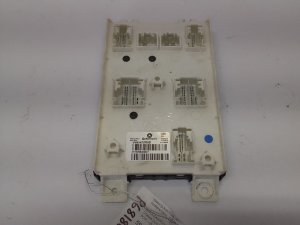
- Match the Part Number Exactly: This is the most important step. The part number is printed on a label on the module's housing. The initial part numbers for the 2016 Challenger include 68297707AB and 68334969AA. These have been superseded by newer revisions like 68297707AC and 68334969AC. It is generally safe and often recommended to use the latest revision (e.g., use 'AC' to replace an 'AB' part).
- Verify Vehicle Options: Ensure the donor vehicle had the same climate control options as yours (e.g., single-zone vs. dual-zone automatic temperature control). While the module may look identical, the internal software can differ based on the vehicle's original configuration.
- Inspect for Damage: Check the connectors for any bent, corroded, or damaged pins. Look for cracks in the plastic housing or any signs of water intrusion.
- Budget for Programming: Remember to factor in the potential cost of a Proxy Alignment procedure when buying a used module. Call local dealerships or specialty shops beforehand to get a quote for this service.
Cost Comparison
Prices can vary based on location and supplier, but here is a general breakdown of what to expect.
| Part Type | Estimated Cost (Part Only) |
|---|---|
| New OEM (Mopar) | $160 - $250 |
| Used OEM (Recycled) | $75 - $150 |
| New Aftermarket | Not widely available |
| Shop Labor (Replacement & Programming) | $125 - $250 |
Frequently Asked Questions (FAQ)
Does the 2016 Challenger HVAC module need to be programmed?
Yes, in most cases. After installation, the module needs to be synchronized with the rest of the vehicle's electronics via a "Proxy Alignment" procedure. Failure to do this can result in a flashing odometer and a non-functional HVAC system.
Can an independent shop or just the dealer perform the Proxy Alignment?
While dealerships can always perform this service using their proprietary wiTECH software, many well-equipped independent shops now have scan tools with this capability. It is best to call ahead and confirm that the shop can perform an FCA Proxy Alignment.
Is a clicking noise from my dash the HVAC module? 🎬 Watch: How to replace a clicking blend door actuator
A clicking noise is almost always a symptom of a failing blend door actuator, not the module itself. The actuator is a small motor that opens and closes the flaps inside your dashboard. However, a faulty module could be sending erratic signals causing the actuator to fail prematurely.
Where is the HVAC control module located on a 2016 Challenger?
The main HVAC control module is typically located in the center dash area, often behind the radio and the climate control button panel. The control panel itself is sometimes referred to as the module, but the actual processing unit is a separate box.
Helpful Videos



Technical Specifications
OEM Part Numbers: 68297707AB 68297707AC 68334969AA 68334969AC
Requires Proxy Alignment after installation for communication with the Body Control Module (BCM) and other vehicle systems.
We Have This Part in Stock





The information in this article is provided for general reference and educational purposes only. Vehicle specifications, procedures, and part compatibility can vary by production date, trim level, and region. Always consult your vehicle's factory service manual and verify part numbers before purchasing or performing repairs. Safety-critical components such as airbags, seat belts, and braking systems should be installed by a qualified professional.
- Dodge Challenger: