

2014-2024 Kia Sportage HVAC Control: Failures, Touch Screen Problems, and Used Buying Traps
This guide covers common failures, critical compatibility checks, and generation-specific issues for the Kia Sportage climate control unit, from faulty buttons to glitching touch screens.
- Compatibility is extremely complex; you MUST match the OEM part number from your original unit to ensure the replacement will work.
- Distinguish between Automatic and Manual climate controls. They are not interchangeable.
- For 2017-2019 models with A/C issues, investigate TSB CLI046 for other potential causes before replacing the control unit.
- On 2023+ models, touch screen issues are common and can be related to software or hardware failure.
Key Differences Across Sportage Generations

The 2014-2024 Kia Sportage spans three distinct generations, each with unique HVAC control systems. Understanding these differences is the first step in diagnosing problems or finding the correct replacement part.
- Third Generation (2014-2016): These models primarily use traditional control panels with physical knobs for temperature and fan speed, and push buttons for functions like A/C, recirculation, and defrost. They are generally reliable, but can suffer from mechanical wear on the knobs and internal circuit board issues.
- Fourth Generation (2017-2022): This generation offered both manual and automatic climate controls. Manual controls resemble the previous generation, while automatic systems feature a more advanced digital display and additional buttons for dual-zone temperature and auto functions. A key issue for this generation is a Technical Service Bulletin (TSB) related to poor A/C performance, which can sometimes be misdiagnosed as a control head failure.
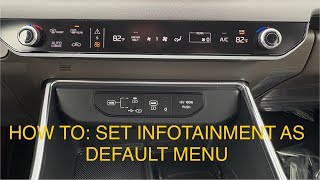
- Fifth Generation (2023-2024): The newest Sportage models feature a significant change to a multi-mode digital touch screen that combines controls for both infotainment and climate. This design has introduced new, technology-specific problems, such as software glitches, phantom touches, and unresponsiveness.
Common Symptoms of a Failing HVAC Control

When the HVAC control module begins to fail, it can cause a variety of confusing symptoms. It's important to distinguish between a bad control unit and a problem with another part of the system, like a blower motor or blend door actuator.
- Unresponsive Buttons or Knobs: You press a button or turn a knob, and nothing happens. The fan speed might be stuck on one setting, or you may be unable to turn the A/C on or off.
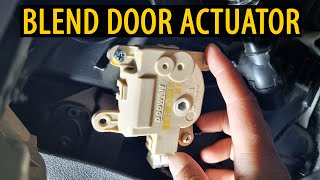
- Incorrect Temperature or Airflow: The unit sends incorrect signals, causing air to come out of the wrong vents or the temperature to not match the setting. For example, you set it to heat, but it only blows cold air. This can also be a symptom of a bad blend door actuator. 🎬 See how to replace a faulty blend door actuator on a Sportage
- Display is Blank or Flickering: The digital display or backlighting on the control unit may stop working, making it impossible to see your settings at night.
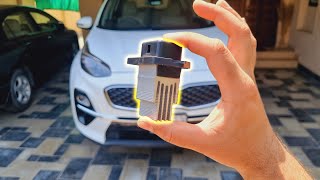
- Fan Speed Issues: In some cases, a failing control unit can cause the blower motor to work only on certain speeds or not at all. This can also be caused by a bad blower motor resistor.
- Glitching Touch Screen (2023+ Models): The screen may freeze, register "ghost touches," or fail to switch between the media and climate control menus. This can sometimes be due to a software issue or a faulty wiring connector.
- A/C Compressor Not Engaging: While often caused by low refrigerant or a bad compressor, a faulty control unit can fail to send the signal to turn the A/C compressor on.
Known Issues, TSBs, and Recalls

While there are no direct recalls for the HVAC control module itself across this year range, there are related service bulletins and recalls that are important to know.
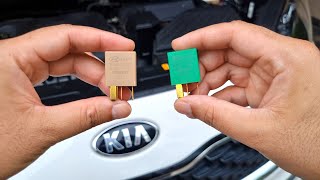
- TSB CLI046 (2017-2019 Sportage): Addresses intermittent poor A/C performance. The issue could be caused by a faulty A/C compressor, Evaporator Temperature Sensor (ETS), or External Control Valve (ECV). It's critical to follow the diagnostic flowchart in this TSB before assuming the control head is the problem. 🎬 Watch the top 5 reasons your Kia Sportage A/C stopped working
- NHTSA Campaign 26V046 & 25V874 (2023-2026 Sportage): These recalls concern software errors that can cause the entire instrument panel screen (which includes the HVAC display on some trims) to go blank. The remedy is typically a software update performed by the dealer.
- Touch Screen Failures (2023+): Owners report widespread issues with the new multi-mode touch screen, including unresponsiveness and "ghost touching." These problems are often caused by the degradation of the screen's digitizer layer due to heat and humidity.
Warning: Many HVAC symptoms, like incorrect air temperature or weak airflow, can be caused by other, more common failures. Always check the cabin air filter, blower motor resistor, and blend door actuators before condemning the control unit.
Buyer's Guide: How to Purchase a Used 2014-2024 Kia Sportage HVAC Control

Buying a used HVAC control can save you a significant amount of money, but it's full of potential pitfalls. The sheer number of variations makes getting the wrong part easy. Follow these steps to ensure you get a compatible unit.
The #1 Rule: Match Your Part Number
This is the most critical step. Different part numbers look identical but have different internal programming for various vehicle options. Before you remove your original unit, try to get the part number. If not, you MUST remove your original unit and match the OEM part number on the sticker to the one you are purchasing. Do not rely on visual appearance alone.
Automatic vs. Manual Climate Control: A Critical Distinction
You cannot swap a manual control unit for an automatic one, or vice-versa. The wiring harnesses and system logic are completely different.
- Manual Controls: Typically have blue and red graphics around the temperature knob and numbered fan speed settings.
- Automatic Controls: Have a digital screen showing the exact temperature, an "AUTO" button, and often a "DUAL" button for passenger-side temperature.
Compatibility Warning: The provided vetted data highlights numerous compatibility traps. For example, some parts only fit early 2017 models built before March 1, 2016. Others are specific to Korean-built hybrid models without navigation. Always double-check these details against the part number you are replacing.
Physical Inspection Checklist for Used Units
When you receive the used part, inspect it carefully before installation:
- Connectors: Check for any bent, corroded, or broken pins on the electrical connectors.
- Buttons and Knobs: Make sure all buttons press and return smoothly and that knobs turn without excessive wobble.
- Screen (if equipped): Look for deep scratches, cracks, or signs of delamination (bubbling) on the display.
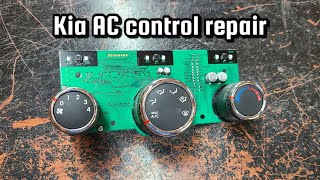
- Circuit Board: On older manual units, it's possible for the internal plastic tracks to melt or bubble from heat, causing poor contact. While hard to inspect without disassembly, be wary of units from extremely high-mileage vehicles from hot climates.
Replacement Overview
Replacing the HVAC control unit is generally a moderately difficult task for a DIYer, primarily involving careful removal of interior trim panels.
- Difficulty: 3 out of 5.
- Estimated Time: 1-2 hours.
- Tools: Plastic trim removal tools are essential to avoid scratching the dashboard, along with a Phillips head screwdriver.
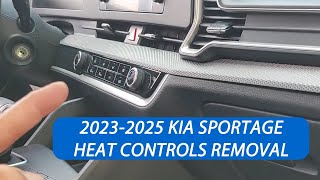
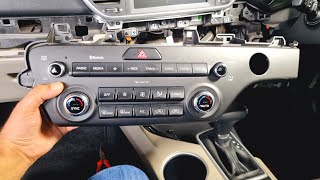
- Process (4th Gen Example): The process typically involves disconnecting the battery, prying off the center console and dashboard trim pieces in a specific order, removing four screws holding the unit, disconnecting the electrical connectors, and then swapping the module. The 5th generation models follow a similar, trim-intensive process. 🎬 Watch this step-by-step guide on removing 2023-2025 Sportage climate controls
- Programming: While most direct-replacement swaps do not require programming, some of the provided buyer warnings indicate that certain modules may require it. This is most likely if you are installing a unit with a slightly different part number or from a different trim level. It's always safest to match the original part number exactly to avoid this possibility.
Pro Tip: Before reassembling the entire dashboard, plug in the new control unit and reconnect the battery. Start the car and test all functions—fan speeds, temperature blend, mode doors, and A/C. It's much easier to troubleshoot a problem before all the trim is snapped back into place.
Cost Comparison
| Part Type | Estimated Cost |
|---|---|
| New OEM | $300 - $500+ |
| New Aftermarket | $150 - $300 |
| Used OEM | $50 - $200 |
| Shop Labor | $150 - $300 |
Frequently Asked Questions
Can I upgrade from a manual to an automatic climate control?
No, this is not a simple plug-and-play swap. The automatic system uses additional sensors (like in-car temperature sensors and sunload sensors) and a different wiring harness that your vehicle will not have. You must replace your unit with the same type that was originally equipped.
My A/C blows cold on the passenger side but not the driver's side. Is the control unit bad?
This is a classic symptom of a failed blend door actuator, not usually the control unit itself. On dual-zone systems, separate actuators control the temperature for the driver and passenger. When one fails, that side gets stuck on either full heat or full cold, regardless of the control setting.
The buttons on my control unit don't light up at night. Is the whole unit bad?
Not necessarily. The issue could be as simple as a burnt-out illumination bulb or a bad connection on the circuit board. However, on many modern units, the LEDs are soldered to the board and are not user-replaceable. In these cases, replacing the entire unit is often the most practical solution.
Why is my 2023+ Sportage's climate screen so unresponsive?
This is a known issue with the new capacitive touch panels. Causes range from software glitches that may be fixed with a dealer update to physical degradation of the touch-sensitive layer (digitizer). If your vehicle is under warranty, take it to the dealer. If not, a replacement unit is likely needed.
Helpful Videos
Technical Specifications
OEM Part Numbers: 97250-D9441FHV 972503W220 972503W330BLH 97250CH010FHL 97250D9020 97250D9020AK5 97250D9440 97250D9441 97250D9441AK5 97250D9AB0AK5 97250D9AB1AK5 97250P1220 97250P1220FHL 97250-D9130 97250D9FB1AK5 972503W130BLH 97255-CH020
Varies significantly by part number and vehicle options. Control units can be for manual A/C, automatic A/C, single-zone, or dual-zone systems. Features like heated seats, navigation, and build location (Korea vs. US) also affect compatibility.
We Have This Part in Stock



The information in this article is provided for general reference and educational purposes only. Vehicle specifications, procedures, and part compatibility can vary by production date, trim level, and region. Always consult your vehicle's factory service manual and verify part numbers before purchasing or performing repairs. Safety-critical components such as airbags, seat belts, and braking systems should be installed by a qualified professional.
- Kia Sportage:
- 🎬 Helpful Videos
- 🛍️ Shop This Part
- Key Differences Across Sportage Generations
- Common Symptoms of a Failing HVAC Control
- Known Issues, TSBs, and Recalls
- Buyer's Guide: How to Purchase a Used 2014-2024 Kia Sportage HVAC Control
- The #1 Rule: Match Your Part Number
- Automatic vs. Manual Climate Control: A Critical Distinction
- Physical Inspection Checklist for Used Units
- Replacement Overview
- Cost Comparison
- Frequently Asked Questions
- 🎟️ Get 5% Off