

2012-2015 Honda Civic Blower Motor: A Guide to Noises, Failure, and Replacement
This guide covers common failure symptoms, replacement costs, and crucial compatibility details for the HVAC blower motor in the 2012-2015 Honda Civic.
- Replacement is a very simple DIY job, located under the passenger dashboard and requiring only basic hand tools.
- If the fan only works on the highest speed setting, the problem is likely the blower motor transistor, not the motor.
- A clicking or rattling noise is a common failure symptom, often caused by worn motor bearings or debris in the fan cage.
- While no major recalls exist for this part, a TSB for 2012 models addresses a rattling dash noise that can be mistaken for a bad blower motor.
Symptoms of a Failing 2012-2015 Honda Civic Blower Motor

When the blower motor in a 9th generation Honda Civic begins to fail, the signs are usually hard to ignore. Because the motor is a simple fan, most failure symptoms are related to airflow and noise.
- No Air from Vents: The most obvious symptom is when no air comes out of the vents at any fan speed. If you can hear the motor running but there's no airflow, there might be a blockage, but typically this points to a dead motor.
- Weak or Inconsistent Airflow: The motor may be wearing out, causing it to spin slower than it should. This results in weak airflow that doesn't seem to match the selected fan speed. Some owners report the fan cutting in and out intermittently while driving.
- Fan Only Works on High Speed: This is a classic symptom, but it usually points to a failed blower motor resistor or transistor, not the motor itself. The highest setting bypasses the resistor, sending full power directly to the motor. The 2012-2015 Civic uses a transistor for more variable speed control, but the principle is the same.
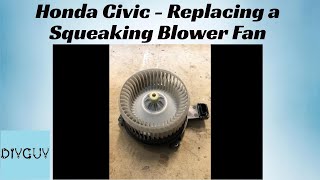
- Unusual Noises: A worn-out bearing in the motor can cause squeaking, rattling, or a clicking sound that changes with the fan speed. Debris like leaves or paper getting into the fan cage can also cause a rattling or ticking noise.
Known Issues, TSBs, and Recalls

As of early 2026, there are no specific recalls from the National Highway Traffic Safety Administration (NHTSA) for the HVAC blower motor itself on 2012-2015 Honda Civic models.
However, Honda did issue a Technical Service Bulletin (TSB) for some 2012 Civics that could be related.
- TSB 13-041: Titled "Buzz or Rattle From the Dash When the Heater Is On," this bulletin addresses a noise heard at low to medium fan speeds. The cause is identified as a warped air mix door within the heater assembly, not the blower motor itself. While the symptom is similar to a failing motor, the root cause is different.
There have been other HVAC-related warranty extensions for newer Civics concerning A/C condensers and compressor shaft seals, but these do not apply to the blower motor in the 2012-2015 model years.
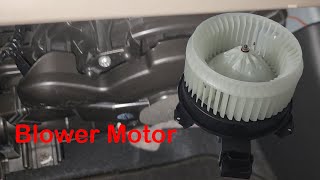
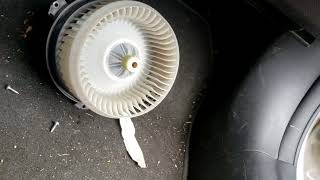
Pro Tip: Before replacing the blower motor for a noise complaint, remove the cabin air filter (located behind the glove box) and inspect the fan cage for leaves or other debris. 🎬 See how to remove and clean a noisy blower motor. Sometimes a simple cleaning is all that's needed.
Buying a Used HVAC Blower Motor

A used OEM (Original Equipment Manufacturer) blower motor can be a reliable and cost-effective alternative to a new part. Since these motors are relatively simple and durable, a low-mileage used unit often has plenty of life left. Here’s what to check before you buy.
Key Inspection Points:
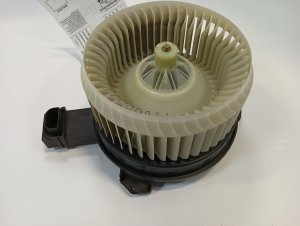
- Verify the Electrical Connector: The initial buyer warnings about L-shaped vs. rectangle plugs are important, though research indicates the 2012-2015 generation primarily uses a consistent connector. However, it is always best practice to visually compare the connector on the used part to your original one. A photo from the seller is essential. A melted or burnt-looking connector is a major red flag, indicating high electrical resistance that may have damaged both the motor and the vehicle's wiring.
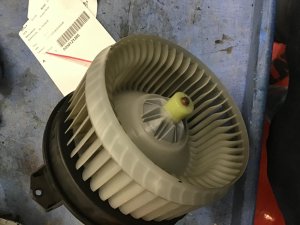
- Spin the Fan by Hand: The fan cage (the plastic squirrel cage) should spin freely and smoothly with minimal noise. If you feel any grinding, resistance, or hear a scraping sound, the motor's bearings are likely worn out.
- Inspect the Fan Cage: Check the plastic fan cage for any broken, cracked, or missing fins. An unbalanced cage will cause vibration and noise and can put extra stress on the motor bearings.
- Check for Water Damage: Look for any signs of rust or corrosion on the motor housing or electrical terminals. Water intrusion from a clogged cowl drain can destroy a blower motor.
Replacement Difficulty & Procedure

Replacing the blower motor on a 2012-2015 Honda Civic is a straightforward job suitable for a DIYer with basic tools.
- Difficulty Rating: 1.5 out of 5
- Estimated Time: 30-45 minutes
- Tools Required: Phillips head screwdriver, T20 or T25 Torx bit driver.
Step-by-Step Walkthrough:
- Locate the Motor: The blower motor is located in the passenger side footwell, underneath the glove box.
- Remove the Cover Panel: There is a small plastic cover under the dash held in by two Phillips head screws. Remove this panel to gain access.
- Disconnect the Electrical Plug: Find the white electrical connector going into the motor. Press the release tab and pull the connector out.
- Remove Mounting Screws: The motor is held in place by three Torx screws (usually T20 or T25). Remove these screws while supporting the motor to prevent it from falling.
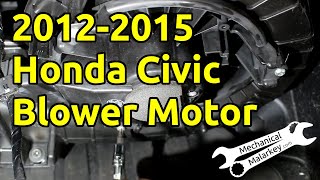
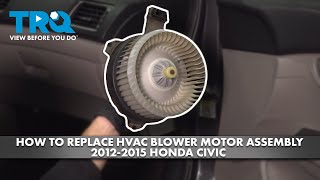
- Install the New Motor: Installation is the reverse of removal. 🎬 Watch this step-by-step video to see the full replacement process. Position the new motor, start the three screws by hand to avoid cross-threading, and then tighten them. Reconnect the electrical plug and reinstall the cover panel.
Warning: When tightening the mounting screws, be careful not to overtighten them as they thread into a plastic housing that can be easily stripped.
Cost Comparison
The cost to replace a 2012-2015 Civic blower motor varies depending on the type of part used and whether you do the work yourself.
| Part/Service | Estimated Cost | Notes |
|---|---|---|
| New OEM | $115 - $225 | Genuine Honda part from a dealership or online retailer. |
| New Aftermarket | $45 - $135 | Prices from retailers like AutoZone, Advance Auto Parts, and RockAuto. |
| Used OEM | $35 - $75 | Common price range from online sellers and salvage yards. |
| Shop Labor | $95 - $175 | Typically 0.5 to 1.0 hour of labor at a professional shop. |
| Total Professional Replacement | $250 - $370 | Using a new part at an independent repair shop. |
Frequently Asked Questions (FAQ)
Why does my fan only work on the highest speed?
This is almost always caused by a failed blower motor transistor (sometimes called a resistor), not the motor itself. The highest fan setting sends power directly to the motor, bypassing the transistor. On all other speeds, the transistor regulates the voltage to the motor. It's a separate, replaceable part.
🎬 Watch this guide on how to replace the blower motor resistor.Is it safe to drive with a broken blower motor?
Yes, but with a major caution. While a broken blower motor won't stop the car from running, it creates a safety hazard in cold or humid weather because you cannot defrost or defog your windshield, severely limiting visibility.
Do I need to replace the fan cage with the motor?
Most new and used blower motors come with the fan cage already attached. It is highly recommended to replace them as a single assembly. Trying to swap the cage from your old motor to a new one can be difficult and may result in an unbalanced fan that causes vibration and noise.
Could a blown fuse be the problem?
Yes. If the fan doesn't work on any speed, the first thing to check is the fuse for the HVAC system. A blown fuse is a simple fix. However, if the new fuse blows immediately, it could indicate a problem with the blower motor drawing too much current, which means the motor will likely need to be replaced.
Helpful Videos
Technical Specifications
OEM Part Numbers: 79311-TR0-A01 79311-TR6-A71 80030-TR0-305 79310-TR6-A71
Voltage: 12V
We Have This Part in Stock


The information in this article is provided for general reference and educational purposes only. Vehicle specifications, procedures, and part compatibility can vary by production date, trim level, and region. Always consult your vehicle's factory service manual and verify part numbers before purchasing or performing repairs. Safety-critical components such as airbags, seat belts, and braking systems should be installed by a qualified professional.
- Honda Civic:
- 🎬 Helpful Videos
- 🛍️ Shop This Part
- Symptoms of a Failing 2012-2015 Honda Civic Blower Motor
- Known Issues, TSBs, and Recalls
- Buying a Used HVAC Blower Motor
- Key Inspection Points:
- Replacement Difficulty & Procedure
- Step-by-Step Walkthrough:
- Cost Comparison
- Frequently Asked Questions (FAQ)
- 🎟️ Get 5% Off