

2008-2013 Highlander Rear HVAC Module: Failures, Part Numbers, and Replacement
This guide covers the common failures, diagnostic steps, and replacement realities for the rear climate control module in second-generation Toyota Highlanders.
- This module is ONLY for 2008-2013 Highlanders with optional REAR automatic climate control.
- You must match the OEM part number from your original module exactly for the replacement to work.
- Programming is generally NOT required for this specific part, making a DIY swap feasible.
- Failure of this module will not affect the operation of the front A/C and heating system.
Symptoms of a Failing Rear HVAC Module
When the rear HVAC control module fails, the symptoms are typically confined to the rear climate system. The front A/C and heat will continue to work normally. Here are the most common signs of failure:
- Completely Inoperative Rear Controls: The buttons and knobs for the rear climate system are unresponsive, and no air comes from the rear ceiling or floor vents.
- Rear Blower Issues: The rear fan may not turn on at all, or it could be stuck on a single speed regardless of the control setting.
- Inability to Adjust Temperature: The rear vents blow air, but the temperature is stuck on hot, cold, or ambient, and does not change when you adjust the controls.
- Clicking Noises from Rear Trim: A clicking or buzzing sound may be heard from the rear cargo area where the blower motor and actuators are located, indicating the module is sending erratic signals or has failed.
Before condemning the module, it's wise to check the basics first. Ensure the rear controls haven't been accidentally locked out from the main front control panel. Also, check the fuses related to the rear blower or HVAC system in the vehicle's fuse boxes.
🎬 See this video on troubleshooting a rear AC that is not workingThe Critical Question: Does It Need Programming?
This is the most important consideration when replacing this module. Based on owner experiences and seller information, this specific A/C amplifier for the 2008-2013 Highlander is typically a plug-and-play part, meaning it does not require special programming or flashing after installation. This is consistent with many Toyota modules of this era.
Pro Tip: While dealer programming isn't required, some service manuals describe an "initialization" process that can be performed with Toyota's Techstream software. This is not always necessary for the part to function, but it ensures all components are communicating correctly. A repair shop with access to Techstream can perform this, but many DIY installers have success without this step.
The key to a successful replacement is using a part with the exact same OEM part number as the one you are removing. Using a module from a different model or one with a different part number can lead to compatibility issues, even if it physically fits.
Known Issues, TSBs, and Recalls
There are no specific recalls or widespread Technical Service Bulletins (TSBs) from Toyota that target the rear HVAC control module itself for the 2008-2013 Highlander. However, some related TSBs exist for the A/C system:
- TSB-0152-13: This bulletin addresses an A/C inoperative condition on 2011-2013 Highlanders where a refrigerant line retainer clamp underneath the vehicle can come loose, causing a refrigerant leak and loss of cooling for the entire system, including the rear. If you have no cooling front or rear, this could be the cause, not the control module.
Owner forums and repair sites show that failure of the rear control module is a known, though not exceptionally common, issue. The failure often presents as a complete loss of function in the rear controls.
Buying a Used Rear HVAC Module
Warning: Only purchase a module from a vehicle equipped with the exact same type of rear climate control (automatic). Compatibility is key.
Buying a used OEM module is a cost-effective and reliable repair strategy. Here’s what to look for:
- Match the Part Number Exactly: This is the most important rule. Remove your old module first and read the number on its label. Compare it to the list of known part numbers (e.g., 88650-0E110, 88650-0E170, etc.) and ensure the replacement you buy is identical.
- Inspect the Connectors: Check the pins in the electrical connectors for any signs of corrosion, discoloration (from heat), or physical damage. Do not buy a module with damaged pins.
- Check for Water Damage: The module is located inside the cabin, but spills or leaks can happen. Look for any chalky residue or rust marks on the casing, which could indicate past water intrusion.
- Buy From a Reputable Source: Purchase from a seller that offers a warranty and has good reviews. This gives you recourse if the part is dead on arrival. A used OEM part that has been proven to work is often a safer bet than a new, unverified aftermarket clone.
Replacement Overview
The rear A/C amplifier is typically located in the rear of the vehicle, behind the passenger-side cargo area trim panel. Accessing it requires removing several plastic panels and potentially the rear seat components on that side.
- Disconnect the Battery: Always disconnect the negative battery terminal before working on electronic components.
- Remove Interior Trim: Carefully pry off the cargo floor panels, scuff plates, and the main side trim panel in the right rear of the vehicle. This process can be time-consuming and requires care to avoid breaking plastic clips.
- Locate and Unbolt the Module: The module is a small plastic box with electrical connectors, usually bolted to a bracket.
- Swap the Modules: Disconnect the wiring harnesses, unbolt the old module, and install the new one in its place.
- Reassemble and Test: Reconnect the battery, then test all functions of the rear climate control system before fully reinstalling all the interior trim panels.
Cost Comparison
Prices can vary based on supplier and availability. The following is an estimate to help you understand the value of a used part.
| Part Type | Estimated Cost |
|---|---|
| New OEM | $615 - $920 |
| New Aftermarket | Not commonly available |
| Used OEM | $85 - $150 |
| Shop Labor to Replace | $150 - $250 (1.5-2.0 hours) |
Frequently Asked Questions (FAQ)
What is the difference between the A/C Amplifier and the rear control panel?
The A/C Amplifier (this module) is the computer or "brain." The control panel in the back of the center console is just the user interface with the buttons and knobs. The amplifier takes the signals from the control panel and operates the system. Sometimes the control panel itself can fail, but it's often the amplifier module that is the root cause of a completely dead system.
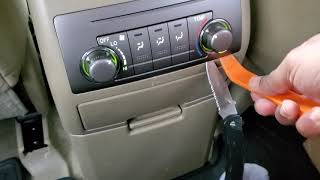
🎬 Watch: How to replace the rear climate control panelCan I install the module myself and then take it to a shop if it doesn't work?
Yes. Since programming is generally not required, the physical installation is the main task. If you install a known-good, matching part number module and the system still doesn't work, the problem likely lies elsewhere (e.g., wiring, blower motor, blend door actuator), and at that point, professional diagnosis would be the next step.
My Highlander has front automatic A/C but manual rear controls. Will this part work?
No. This specific module is for vehicles equipped with both front and rear automatic climate control. The part numbers are different for manual systems. Always verify your vehicle's options and the original part number.
Will a module from a Lexus RX350 of the same era work?
While the Highlander and Lexus RX share a platform, their electronic modules are often not interchangeable due to differences in software and vehicle-specific features. It is strongly recommended to use a module with a part number specifically listed for the 2008-2013 Highlander to avoid compatibility problems.
Helpful Videos

Technical Specifications
OEM Part Numbers: 88650-0E110 88650-0E170 88650-0E171 88650-48330 88650-48331
Also known as: A/C Amplifier, Amplifier Assembly Air.
We Have This Part in Stock


The information in this article is provided for general reference and educational purposes only. Vehicle specifications, procedures, and part compatibility can vary by production date, trim level, and region. Always consult your vehicle's factory service manual and verify part numbers before purchasing or performing repairs. Safety-critical components such as airbags, seat belts, and braking systems should be installed by a qualified professional.
- Toyota Highlander: