

2014-2018 Ford Transit Connect Wheel Hub: Diagnosing Noises & Front vs. Rear Parts
This guide covers how to identify a failing wheel hub by its sounds, find the correct OEM part number for the front or rear, and understand the costs of replacement.
- The front hub is part number AV6Z-1104-A and the rear hub is DV6Z-1109-A; they are not interchangeable.
- The most common sign of failure is a humming or growling noise that gets louder with speed and may change pitch when turning.
- Driving with a bad wheel hub is extremely dangerous as it can lead to wheel separation from the vehicle.
- When replacing a front hub, it is mandatory to use a new axle nut to ensure proper bearing preload and prevent premature failure.
Symptoms of a Failing Wheel Hub

A failing wheel hub bearing typically gives clear audible warnings. Ignoring these signs can be dangerous, as a complete failure can lead to the wheel separating from the vehicle. The most common symptom is a noise that changes with vehicle speed.
- Humming, Rumbling, or Growling Noise: This is the most classic sign of a bad wheel bearing. The noise sounds like a low drone or rumble that starts faintly and gets progressively louder over weeks or months. It is most noticeable at speeds above 20-30 MPH and will increase in pitch and volume as you accelerate.
- Noise Changes While Turning: A good way to isolate which side is failing is to pay attention to the noise as you make a long, sweeping turn (like on a highway ramp). When you turn right, the vehicle's weight shifts to the left side. If the noise gets louder, the failing bearing is likely on the left. If the noise gets quieter or disappears, the failing bearing is likely on the right.
- Clicking or Popping: A clicking or popping sound, especially when turning at lower speeds, can indicate a more severely worn bearing or a damaged CV joint, which is located next to the hub.
- Vibration or Loose Steering: As the bearing wears, it can develop excessive play. This can be felt as a vibration in the steering wheel or a general feeling of looseness in the steering. The vehicle may also pull to one side.
- ABS or Traction Control Light: The wheel hub assembly contains the tone ring that the wheel speed sensor reads. If this ring becomes damaged or covered in debris from the failing bearing, it can cause an erratic signal, triggering the ABS and/or traction control warning lights on the dashboard.
Known Issues, Recalls, and TSBs

As of mid-2026, there are no specific safety recalls or widespread Technical Service Bulletins (TSBs) issued by Ford or the NHTSA for wheel hub failures on the 2014-2018 Ford Transit Connect. However, owner forums and mechanic reports suggest the front wheel bearings can be a point of failure, sometimes repeatedly if not installed correctly. A common cause for repeat failure is reusing the old axle nut or using improper torque specifications during installation.
While the hubs themselves have not been recalled, this generation of Transit Connect has been subject to other notable recalls, including for door latches that may not secure properly, shifter cable bushings that can degrade and cause a rollaway risk, and panoramic roof panels that could detach.
Part Number Guide: Front vs. Rear Hubs

It is critical to order the correct hub for your vehicle's needs, as the front and rear hubs are different parts and are not interchangeable.
Front Wheel Hub Assembly
- Part Number: AV6Z-1104-A
- Fits: 2014-2018 Ford Transit Connect (Front Left or Right)
- Cross-Compatibility: Interestingly, this same front hub assembly is also used on the high-performance 2016-2018 Ford Focus RS model.
- Notes: This is a complete hub and bearing assembly. It is a bolt-on part.
Rear Wheel Hub Assembly
- Part Number: DV6Z-1109-A
- Fits: 2014-2018 Ford Transit Connect (Rear Left or Right)
- Notes: This is the updated service part for all 2014-2018 rear applications. Some part listings note that it supersedes an older number, DV6Z-1104-A (not to be confused with the front hub part number).
Warning: Always verify the part number with the seller using your vehicle's VIN before purchasing to ensure 100% compatibility.
Buying a Used 2014-2018 Transit Connect Hub

A low-mileage used OEM hub can be an excellent value, often providing superior quality and longevity compared to a cheap, new aftermarket part. The bearings and materials used by Ford are engineered to a higher standard. Here’s what to inspect:
- Check the Mileage: This is the most important factor. A wheel bearing's typical lifespan is between 75,000 and 150,000 miles. A used hub from a vehicle with less than 60,000 miles is ideal and likely has plenty of life left. Be wary of hubs from high-mileage vehicles.
- Perform a Spin Test: Hold the hub firmly and spin the flange by hand. It should rotate smoothly and silently. If you feel any roughness, grinding, or catching, the bearing is bad.
- Check for Play: Try to wiggle the hub flange back and forth. There should be zero noticeable play or looseness. Any movement indicates a worn bearing.
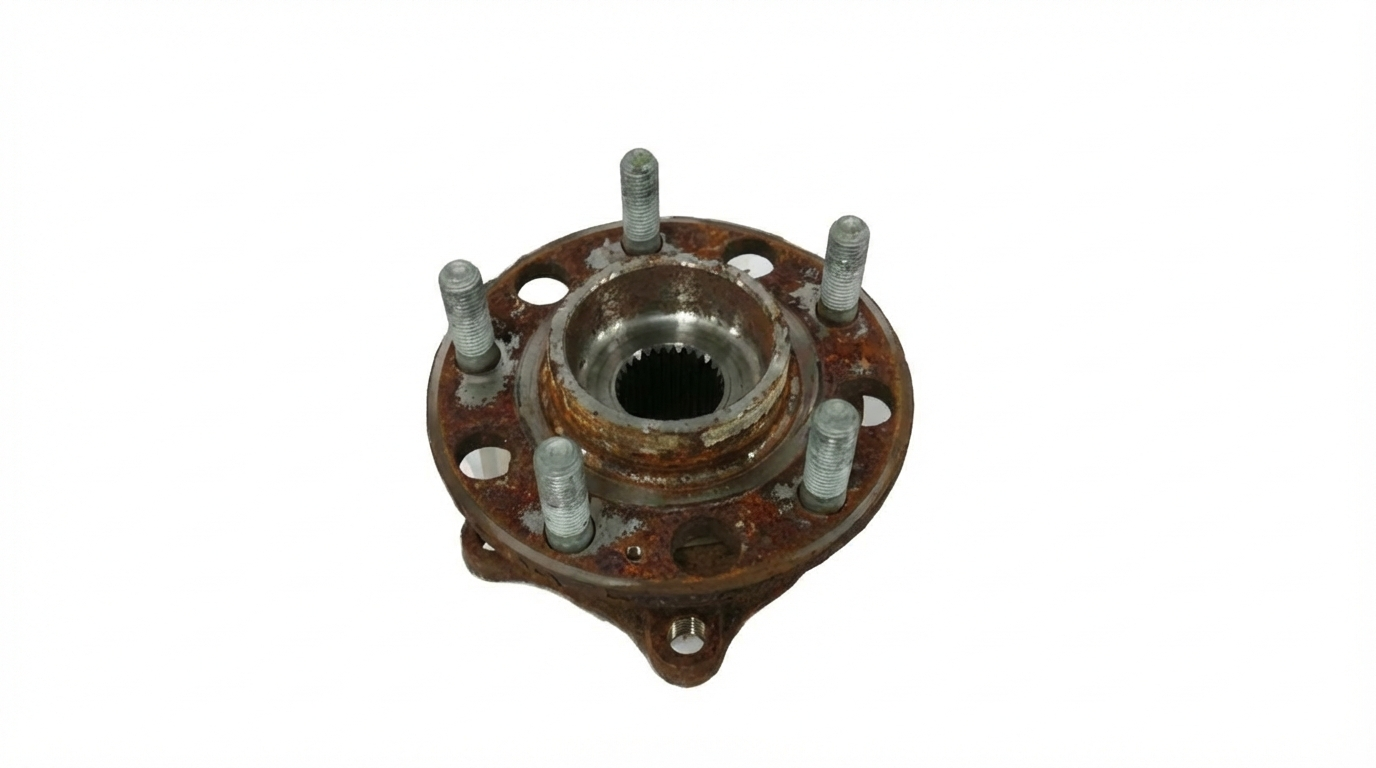
- Inspect the ABS Tone Ring: Look at the toothed ring on the back of the hub. Ensure it is free of cracks, damage, and that no teeth are missing. A damaged ring will cause ABS faults.
- Examine the Wheel Studs: Check that all five wheel studs are straight and that the threads are clean and undamaged.
Cost to Replace a Transit Connect Hub
Costs can vary based on your location and choice of parts. Replacing a hub is a common repair for most automotive shops.
| Part/Service | Estimated Cost | Notes |
|---|---|---|
| New OEM Hub (Front) | $185 - $210 | Part number AV6Z-1104-A, price from online Ford dealers. |
| New OEM Hub (Rear) | $200 - $270 | Part number DV6Z-1109-A, price from online Ford dealers. |
| New Aftermarket Hub | $50 - $150 | Wide range of quality. Premium brands (SKF, Timken, MOOG) are at the higher end, budget brands are cheaper. |
| Used OEM Hub | $40 - $100 | Dependent on mileage and condition. A good value if from a low-mileage vehicle. |
| Shop Labor | $110 - $160 per hub | Typically 1.0-1.5 hours of labor per side. |
| Total Professional Replacement | $388 - $498 per hub | RepairPal's estimated range for the 2014-2018 models, including parts and labor. |
Installation Tips & Torque Specs
Proper installation is crucial for the longevity of the new hub. Improper torque is a leading cause of premature failure.
- Always Replace the Axle Nut: The large nut in the center of the front hub is a one-time-use, torque-to-yield fastener. It must be replaced. Reusing it can cause the bearing to fail prematurely.
- Clean the Mating Surface: Before installing the new hub, thoroughly clean the steering knuckle of any rust or debris to ensure the hub sits perfectly flat.
- Use a Torque Wrench: Do not guess or use an impact gun to tighten the axle nut or lug nuts.
Pro Tip: After replacing a hub, it's recommended to have the wheel alignment checked, although it's not always required if only the hub was replaced without disturbing tie rods or control arms.
| Fastener | Torque Specification | Source/Note |
|---|---|---|
| Front Axle Hub Nut (36mm) | 148 lb-ft (200 Nm) | From a Ford Transit forum discussion. |
| Wheel Lug Nuts | 100 lb-ft (135 Nm) | Per the 2014 Owner's Manual. Some workshop manuals may list 111 lb-ft. |
Frequently Asked Questions (FAQ)
Is the front hub the same for the driver and passenger side?
Yes, the front hub assembly (AV6Z-1104-A) is the same for both the left and right sides of the 2014-2018 Transit Connect.
Can I just replace the bearing instead of the whole hub assembly?
No, for this vehicle the bearing is integrated into a sealed hub assembly. The entire unit must be replaced. This makes the job much easier than pressing old bearings out and new ones in.
Why do I have to replace the axle nut?
The front axle nut is a torque-to-yield (TTY) bolt. It is designed to stretch slightly when torqued to specification, which creates the precise clamping force (preload) needed for the bearing to function correctly. Once stretched, it cannot be safely reused.
Will a bad wheel hub always make noise?
Almost always. Noise is the primary indicator. However, a bad hub could also manifest as just an ABS light or a vibration. If you jack up the wheel and it has significant play or feels rough when spun, the bearing is bad even if it's not making a loud noise yet.
Technical Specifications
OEM Part Numbers: AV6Z-1104-A AV6Z1104A DV6Z-1109-A DV6Z1109A AV611104BAE DV612C299BAA DV612C299BAB HUB250 HUB401 HUB-401
Position: Front (AV6Z-1104-A), Rear (DV6Z-1109-A). Lug Pattern: 5-Lug. Includes integrated ABS tone ring.
We Have This Part in Stock

The information in this article is provided for general reference and educational purposes only. Vehicle specifications, procedures, and part compatibility can vary by production date, trim level, and region. Always consult your vehicle's factory service manual and verify part numbers before purchasing or performing repairs. Safety-critical components such as airbags, seat belts, and braking systems should be installed by a qualified professional.
- Ford Transit Connect:
- 🛍️ Shop This Part
- Symptoms of a Failing Wheel Hub
- Known Issues, Recalls, and TSBs
- Part Number Guide: Front vs. Rear Hubs
- Front Wheel Hub Assembly
- Rear Wheel Hub Assembly
- Buying a Used 2014-2018 Transit Connect Hub
- Cost to Replace a Transit Connect Hub
- Installation Tips & Torque Specs
- Frequently Asked Questions (FAQ)
- 🎟️ Get 5% Off