

Ram 1500 & Classic Hub Assembly Failure: Noises, Diagnosis, and Replacement (2012-2024)
This guide covers the common failure symptoms, compatibility differences, and replacement costs for front hub assemblies on the 2012-2024 Ram 1500 and 2019-2023 Ram 1500 Classic.
- The most common symptom of failure is a humming or roaring noise that changes with vehicle speed and while turning.
- Compatibility is critical: there are different hub assemblies for 2WD vs. 4WD and for the 'Classic' (DS) vs. 'New' (DT) body styles.
- Driving with a failed hub assembly is dangerous and can lead to wheel separation and a loss of vehicle control.
- When replacing, using a torque wrench for the axle nut and hub bolts is essential to prevent premature failure of the new part.
Compatibility: Critical Differences Between Models

One of the most confusing aspects of sourcing a hub assembly for these Ram trucks is confirming the correct part for your specific model. The initial part data contains several conflicting warnings because different hub assemblies were used across this wide range of model years. Here is a breakdown of the key differences:
- 4th Gen Ram 1500 (2012-2018) & Ram 1500 Classic (2019-2023): These trucks, built on the 'DS' platform, generally use the same style of hub assembly. However, there are distinct parts for two-wheel drive (2WD/RWD) 🎬 Watch: 2WD Ram 1500 front wheel bearing replacement and four-wheel drive (4WD) models. They are not interchangeable.
- 5th Gen Ram 1500 (2019-2024): This is the 'new' body style, also known as the 'DT' platform. It uses a different hub assembly than the 'Classic' models. 🎬 See this 2019 Ram 1500 4WD hub replacement guide Again, there are separate parts for 2WD and 4WD configurations.
Warning: Always verify the part is correct for your truck's drivetrain (2WD or 4WD) and body style (Classic or New/DT). An incorrect part will not fit and could compromise safety.
Symptoms of a Failing Hub Assembly


A failing wheel hub bearing typically gives several warning signs. Ignoring them can lead to more severe damage or a dangerous situation where the wheel could separate from the vehicle.
1. Humming, Roaring, or Grinding Noises
This is the most common symptom. The noise is often described as a humming, growling, or roaring sound that starts faint and gets progressively louder. The pitch and volume of the noise will typically change with vehicle speed. A key diagnostic clue is that the noise may change or disappear when turning; for example, a bad right-front bearing will often get louder when turning left, as more load is placed on it.
2. Vibration in the Steering Wheel or Floor
As the bearing wears, it can cause a vibration that you can feel in the steering wheel. This vibration may be more noticeable at certain speeds and can feel similar to an unbalanced tire. The key difference is that a bearing vibration is often accompanied by a humming or grinding noise.
3. Wheel Looseness or "Play"
A severely worn bearing will allow for excessive movement or "play" in the wheel. This can cause sloppy steering, a feeling of instability, or the vehicle pulling to one side. You can check for this by safely jacking up the front of the truck and trying to wiggle the tire by grabbing it at the top and bottom. 🎬 Watch: How to quickly diagnose a bad wheel bearing Any noticeable clunking or movement indicates a problem.
4. ABS or Traction Control Warning Light
The hub assembly contains the wheel speed sensor. If the sensor or its magnetic encoder ring is damaged, it can send an incorrect signal to the vehicle's computer, triggering the ABS and/or traction control warning lights on the dashboard. This is a serious safety issue as it disables these important systems.
Buying a Used Hub Assembly
A high-quality, low-mileage used OEM hub assembly can be a reliable and cost-effective alternative to a new part, especially when compared to cheap aftermarket options which may use lower-grade bearings. Here’s what to look for:
- Verify Mileage: Mileage is the most significant factor for a used hub. Ideally, look for a part from a vehicle with under 70,000 miles. While Ram 1500 bearings can last over 100,000 miles, failure is more common in the 70,000 to 110,000-mile range.
- Physical Inspection: Check for any signs of impact damage, corrosion, or cracks on the hub housing. Ensure the wheel studs are straight and the threads are in good condition.
- Check for Smoothness and Play: Hold the hub flange and try to rotate it. It should spin smoothly with no grinding, roughness, or catching. Try to wiggle the flange back and forth; there should be absolutely no detectable play or looseness.
- Inspect the ABS Sensor and Wire: Carefully examine the ABS sensor wire and its connector. Look for any cuts, fraying, or damage to the plastic connector. A damaged wire will render the part useless without repair.
- Confirm Compatibility: Double-check that the part came from a truck with the same drivetrain (2WD or 4WD) and body style (Classic or DT) as yours.
Known Issues, Recalls, and TSBs
While generally reliable, there have been some issues related to Ram 1500 hub assemblies.
- NHTSA Recall 24V-794: This recall affects certain 2025 model year Ram 1500 trucks. The issue is that the front wheel bearing encoder rings may have been damaged during assembly, which can cause a loss of the wheel speed signal and disable the Electronic Stability Control (ESC) system. The remedy is for dealers to inspect and, if necessary, replace the front wheel bearing hub assembly.
- NHTSA Recall 07V-038: This older recall applied to some 2007 models for insufficient grease in the front wheel bearings, which could lead to premature failure. While outside the primary year range of this guide, it highlights the importance of proper lubrication within the bearing.
- Premature Wear: Some owners in online forums have reported premature failures at mileages as low as 35,000-70,000 miles, though this is not widespread. Factors like large, heavy aftermarket wheels and tires, off-road use, or driving in harsh environments with road salt and moisture can accelerate wear.
Cost Breakdown
The cost to replace a Ram 1500 front hub assembly can vary significantly based on the part source and labor rates.
| Part Type | Estimated Cost (Per Side) |
|---|---|
| New OEM (Mopar) | $260 - $440 |
| New Aftermarket | $80 - $220 |
| Used OEM | $75 - $150 |
| Shop Labor | $163 - $240 |
| Total Professional Replacement | $528 - $675 (with new OEM part) |
Replacement Overview and Torque Specs

Replacing the front hub assembly on a Ram 1500 is a feasible DIY project for someone with mechanical experience and the right tools. The difficulty is moderate, primarily due to the high torque specs and potentially seized components.
Pro Tip: It is often recommended to replace hub assemblies in pairs. If one side has failed due to mileage and wear, the other side has been subjected to the same conditions and may not be far behind.
Key Steps:
- Safely lift and support the vehicle and remove the wheel.
- Remove the brake caliper and caliper bracket, and hang them securely out of the way. Remove the brake rotor.
- Remove the large axle nut (on 4WD models). This will require a large socket (typically 36mm) and a powerful breaker bar or impact wrench.
- Disconnect the ABS sensor wire.
- Remove the three bolts on the back of the steering knuckle that secure the hub assembly.
- Remove the old hub assembly. This may require significant force with a hammer or air hammer if it is rusted in place.
- Clean the mounting surface on the knuckle thoroughly before installing the new hub.
- Install the new hub and torque all bolts to the manufacturer's specification.
Critical Torque Specifications (2012-2018 Models)
Using a torque wrench is essential for this job. Incorrect torque can lead to premature bearing failure or unsafe conditions.
| Component | Torque Spec | Source |
|---|---|---|
| Hub/Bearing Mounting Bolts | 134 ft-lbs | |
| Axle Hub Nut (4WD) | 185 ft-lbs | |
| Brake Caliper Bracket Bolts | 130 ft-lbs | |
| Wheel Lug Nuts | 130 ft-lbs |
Warning: These torque specs are for 2012-2018 models. Always verify the correct specifications for your specific year and model before beginning work.
Frequently Asked Questions
Can I drive with a bad wheel bearing?
It is not recommended. A failing bearing can generate excessive heat, damage the hub and spindle, and in a worst-case scenario, the bearing can seize or fail completely, causing the wheel to separate from the vehicle. This can lead to a total loss of control.
Do I need a wheel alignment after replacing a hub assembly?
Generally, no. Replacing the hub assembly itself does not typically alter the vehicle's alignment angles. However, if other suspension components like control arms or tie rods were loosened or removed during the process, an alignment is recommended.
What is the difference between a wheel bearing and a hub assembly?
On modern vehicles like the Ram 1500, the wheel bearing is a sealed, non-serviceable component that is integrated into the hub assembly. You cannot replace just the bearing; you must replace the entire unit which includes the hub, bearing, mounting flange, and wheel studs.
Why did my ABS light come on with the humming noise?
The wheel speed sensor, which is part of the Anti-lock Brake System (ABS), is built into the hub assembly. When the bearing develops excessive play or the internal magnetic encoder ring is damaged, it disrupts the signal from the sensor, causing the computer to log a fault and illuminate the ABS warning light.
Helpful Videos
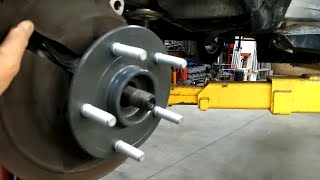
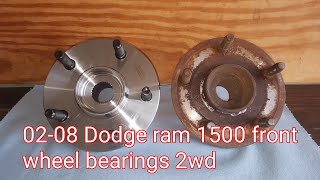
Technical Specifications
OEM Part Numbers: 05154171AA 4779829AD 5154171AA 68227354AA 68230055AB 68237141AA 68237141AB 68237141AC 68237141AD 68237141AE 68237141AF 68237141AG 68237141AH 68267298AA 68267298AB
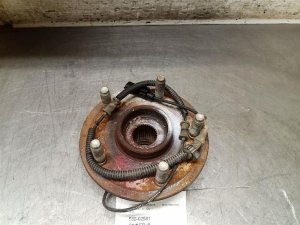
Sealed hub and bearing assembly with integrated ABS wheel speed sensor. Bolt pattern is 5-lug for the models covered.
We Have This Part in Stock



The information in this article is provided for general reference and educational purposes only. Vehicle specifications, procedures, and part compatibility can vary by production date, trim level, and region. Always consult your vehicle's factory service manual and verify part numbers before purchasing or performing repairs. Safety-critical components such as airbags, seat belts, and braking systems should be installed by a qualified professional.
- Ram 1500:
- Ram 1500 Classic:
- 🎬 Helpful Videos
- 🛍️ Shop This Part
- Compatibility: Critical Differences Between Models
- Symptoms of a Failing Hub Assembly
- 1. Humming, Roaring, or Grinding Noises
- 2. Vibration in the Steering Wheel or Floor
- 3. Wheel Looseness or "Play"
- 4. ABS or Traction Control Warning Light
- Buying a Used Hub Assembly
- Known Issues, Recalls, and TSBs
- Cost Breakdown
- Replacement Overview and Torque Specs
- Key Steps:
- Critical Torque Specifications (2012-2018 Models)
- Frequently Asked Questions
- 🎟️ Get 5% Off