

2002-2012 Ram 1500 Hub Assembly: Decoding Noises, 2WD vs. 4WD, and Replacement Costs
Your definitive guide to diagnosing bad wheel bearings and choosing the right front hub assembly for your 2002-2010 Dodge Ram 1500 or 2011-2012 Ram 1500.
- The most common symptom of failure is a humming or roaring noise that gets louder with speed and changes when turning.
- Compatibility is critical: 2WD and 4WD hub assemblies are different and not interchangeable. These parts also do not fit SRT-10 or Mega Cab models.
- Driving with a severely worn hub bearing is dangerous and can lead to wheel separation. Address symptoms immediately.
- When replacing, using a torque wrench for the hub bolts and axle nut is mandatory to prevent premature failure of the new part.
Symptoms of a Failing Hub Assembly
A bad wheel hub bearing rarely fails without warning. Recognizing the early signs can save you from a more dangerous situation, like a wheel separating from the vehicle. The symptoms usually start subtly and get worse over time.
1. Humming, Roaring, or Grinding Noises
This is the most common and noticeable symptom. The sound is often described as a low hum, roar, or grinding noise that gets louder and changes pitch as your speed increases. A key diagnostic clue is how the noise changes when you turn. For example, if the front-right wheel bearing is failing, the noise will often get louder when you make a left turn, as this action puts more weight and load on the right side of the truck. The noise may disappear completely when turning in the opposite direction.
2. Vibration in the Steering Wheel or Floor
As the bearing inside the hub wears out, it can cause a vibration that you feel through the steering wheel or the floor of the truck. This can feel similar to an unbalanced tire, but a bearing-related vibration is usually accompanied by the humming or roaring noise described above. The vibration may only be noticeable at certain speeds.
3. Looseness or "Play" in the Wheel
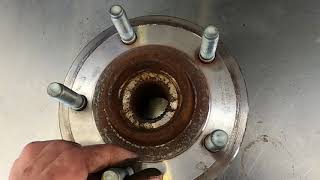
A severely worn bearing will allow the wheel to wobble, creating a feeling of looseness in the steering. Your truck might feel less stable, wander in the lane, or pull to one side. You can check for this by safely jacking up the front of the truck and trying to rock the tire from top to bottom (the 12-and-6 o'clock position). 🎬 Watch: How to diagnose a bad wheel bearing If you feel any significant movement or hear a clunking sound, the hub assembly is likely worn out and needs immediate replacement.
4. ABS or Traction Control Warning Light
The hub assembly contains the wheel speed sensor for the ABS and traction control systems. If the bearing becomes excessively loose or the sensor itself fails, it can send an erratic signal—or no signal at all—to the vehicle's computer. This will typically trigger the ABS and/or traction control warning lights on your dashboard.
Known Issues, Recalls, and Vehicle-Specific Information
While the hub assemblies for the 2002-2010 Dodge Ram 1500 and 2011-2012 Ram 1500 are similar, there are important distinctions and known issues to be aware of.
Compatibility: 2WD vs. 4WD is Critical
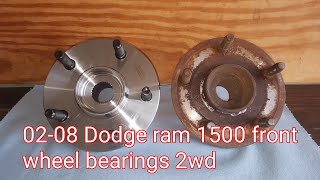
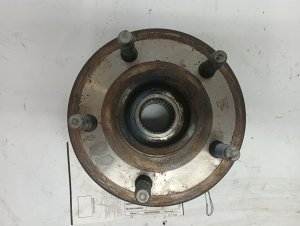
The single most important factor when ordering this part is your truck's drivetrain. The front hub assemblies for two-wheel drive (2WD) and four-wheel drive (4WD) models are NOT interchangeable. The 4WD version has splines in the center to accept the CV axle shaft, while the 2WD version does not. Always verify you are purchasing the correct part for your specific drivetrain.
🎬 See this 2WD front wheel bearing replacement guideWarning: This hub assembly is for 5-lug models only. It does NOT fit the high-performance SRT-10 models or the larger Mega Cab models, which use different suspension and hub components.
Recalls and Technical Service Bulletins (TSBs)
- NHTSA Recall 06V452000 (DaimlerChrysler G02): Some 2006 Dodge Ram 1500 trucks were recalled because the front wheel bearings may have been assembled with an insufficient amount of grease, potentially leading to premature failure and wheel separation.
- NHTSA Recall 10E040000: This recall was for certain aftermarket (non-OEM) hub assemblies made by Federal-Mogul (Carquest P/N 515073 and National P/N 515073) sold for 2002-2008 Dodge Ram 1500 2WD trucks. The inboard roll form could fatigue and fail, leading to noise or wheel separation. This highlights the potential risk of using lower-quality aftermarket parts.
No major recalls or TSBs were found specifically for the 2011-2012 Ram 1500 front hub assemblies at the time of this writing.
Buying a Used Hub Assembly: What to Look For
A high-quality, low-mileage used OEM hub assembly can be a reliable and cost-effective alternative to a new, unproven aftermarket part. OEM parts are built to the manufacturer's strict quality and material standards. Here’s what to inspect before you buy.
- Check the Mileage: Wheel bearings on these trucks typically last over 100,000 miles, but failures often begin to occur in the 70,000 to 110,000-mile range. Aim for a used part from a vehicle with well under 70,000 miles for the best remaining service life.
- Spin and Wiggle Test: Hold the hub assembly firmly. Try to rotate the flange where the wheel bolts on. It must spin smoothly with no roughness, catching, or grinding sounds. Next, try to wiggle the flange back and forth. There should be absolutely zero detectable play or looseness. Any movement indicates a worn bearing.
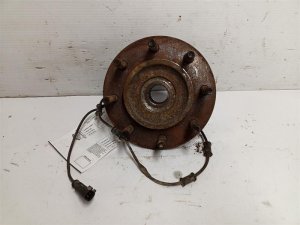
- Inspect the ABS Sensor and Wire: This is a critical check. Carefully examine the entire length of the ABS sensor wire and the plastic connector at the end. If the wire is cut, frayed, or the connector is cracked or broken, the part is unusable and will cause immediate ABS faults.
- Look for Physical Damage: Check the metal housing for any signs of cracks, heavy corrosion, or damage from an accident. Ensure the wheel studs are straight and the threads are in good condition.
Pro Tip: When comparing a used OEM hub to a new, cheap aftermarket one, remember that the quality of the internal bearings and the ABS sensor in the OEM part is often superior. A low-mileage OEM unit is frequently a better long-term value than a new part from an unknown brand.
Cost Comparison
The cost to replace a front hub assembly can vary significantly based on the part source and labor rates. Here is a general breakdown of expected costs for a single front hub assembly.
| Part Type | Estimated Cost |
|---|---|
| New OEM (Mopar) | $280 - $420 |
| New Premium Aftermarket (e.g., MOOG, Timken, SKF) | $150 - $300 |
| New Economy Aftermarket | $60 - $120 |
| Used OEM | $50 - $100 |
| Shop Labor | $150 - $250 |
Replacement Overview and Torque Specs
Replacing a front hub assembly is a feasible DIY job for someone with moderate mechanical experience and the right tools. The difficulty is around 3 out of 5. The process involves removing the wheel, brake caliper and bracket, and brake rotor to access the hub. For 4WD models, the large axle nut must also be removed to slide the CV axle out of the hub splines.
Using a torque wrench is absolutely essential for this job. Improper torque on the hub bolts or axle nut can lead to premature failure of the new bearing.
Critical Torque Specifications:
- Hub-to-Knuckle Bolts (3 bolts):
- 2002-2008 Models: 149 ft-lbs
- 2009-2012 Models: 130-134 ft-lbs
- Axle Nut (4WD Models Only):
- 2002-2008 Models: 185 ft-lbs
- 2009-2012 Models: 185 ft-lbs
- Brake Caliper Bracket Bolts: 130 ft-lbs
- Wheel Lug Nuts: 135 ft-lbs
Pro Tip: The old hub can be severely rusted to the steering knuckle. You may need a heavy hammer or a slide hammer to break it free. Before installing the new hub, thoroughly clean the mounting surface on the knuckle with a wire brush to ensure it sits perfectly flat.
🎬 Watch: 4x4 front hub replacement without axle removalFrequently Asked Questions (FAQ)
Do I need to replace both front hub assemblies at the same time?
It is not strictly necessary, but it is highly recommended. Wheel bearings on both sides of the vehicle experience the same conditions and wear at a similar rate. If one has failed, the other is often not far behind. Replacing them in pairs saves you from doing the same job twice in the near future.
Is a wheel alignment needed after replacing a hub assembly?
Yes, an alignment is recommended. Although replacing the hub itself doesn't change alignment angles directly, the process often involves separating suspension components like the upper ball joint or tie rod end to gain clearance, which can affect the alignment. An alignment ensures your tires will wear evenly and the truck will track straight.
What's the difference between a wheel bearing and a hub assembly?
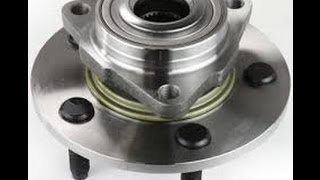
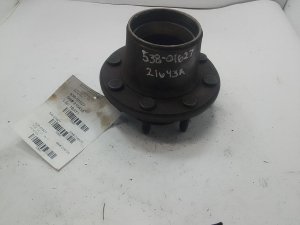
On older vehicles, the wheel bearings were separate components that had to be pressed into the hub. On modern trucks like the 2002-2012 Ram 1500, they are sold as a single, sealed unit called a hub assembly. This unit contains the hub, bearings, wheel studs, and ABS sensor, and it is replaced as a complete bolt-on part.
Can I drive with a bad wheel bearing?
It is not recommended and can be extremely dangerous. A failing bearing generates excessive heat and can eventually seize or break apart, which could cause the wheel to lock up or even detach from the vehicle, leading to a complete loss of control. If you hear grinding or feel significant looseness, do not drive the truck.
Helpful Videos

Technical Specifications
OEM Part Numbers: 52070323AA 52070323AB 52070323AE 52070323AG 52070323AH 52070323AI 52070323AJ 68024245AA 05154171AA 5154171AA
Fits 5-lug wheels. Includes integrated ABS sensor. Specific versions for 2WD and 4WD drivetrains.
We Have This Part in Stock




The information in this article is provided for general reference and educational purposes only. Vehicle specifications, procedures, and part compatibility can vary by production date, trim level, and region. Always consult your vehicle's factory service manual and verify part numbers before purchasing or performing repairs. Safety-critical components such as airbags, seat belts, and braking systems should be installed by a qualified professional.
- Ram 1500:
- Dodge Ram 1500:
- 🎬 Helpful Videos
- 🛍️ Shop This Part
- Symptoms of a Failing Hub Assembly
- 1. Humming, Roaring, or Grinding Noises
- 2. Vibration in the Steering Wheel or Floor
- 3. Looseness or "Play" in the Wheel
- 4. ABS or Traction Control Warning Light
- Known Issues, Recalls, and Vehicle-Specific Information
- Compatibility: 2WD vs. 4WD is Critical
- Recalls and Technical Service Bulletins (TSBs)
- Buying a Used Hub Assembly: What to Look For
- Cost Comparison
- Replacement Overview and Torque Specs
- Critical Torque Specifications:
- Frequently Asked Questions (FAQ)
- 🎟️ Get 5% Off