

2015-2025 Ford F-150 Front Hub Assembly: Solving Noises & IWE Confusion
This guide explains how to diagnose a failing front hub assembly on your 2015-2025 Ford F-150, how to distinguish it from IWE problems, and how to choose the right replacement part.
- Rule out IWE failure on 4WD models before replacing a hub; IWE grinding often stops when 4WD is engaged, while hub noise does not.
- Compatibility is critical: parts differ for 2WD vs. 4WD, and 2015 models have a mid-year design change around June 22, 2015.
- Correct torque specs are essential for safety and function, especially the low 30 ft-lb spec for the main axle nut on 4WD models.
- When buying a used OEM hub, physically inspect it for smooth rotation, no play, and an intact ABS sensor wire.
Symptoms of a Failing Hub Assembly

A bad hub assembly typically announces itself with distinct noises and vibrations. Ignoring these symptoms can be dangerous, as a complete failure can lead to the wheel separating from the vehicle.
Grinding, Growling, or Humming Noise
This is the most common symptom. The sound is similar to playing cards in a bicycle spoke or a deep, resonant hum. It is directly related to wheel speed and will get louder and higher-pitched as you accelerate. A key diagnostic trick is to notice if the sound changes when you turn. If the noise gets louder when turning left, the right-side hub is likely the culprit as it is under a greater load, and vice-versa. This helps distinguish it from tire noise, which usually remains constant during turns.
Clicking or Popping
A clicking or popping sound, especially when turning, can indicate a worn-out bearing. While this can also be a symptom of a bad CV (Constant Velocity) joint, it's often associated with the hub assembly when combined with a humming noise.
Vibration in the Steering Wheel
As the bearings inside the hub wear, they can develop excessive play. This looseness translates into a vibration that you can feel in the steering wheel and floorboard. The vibration will worsen with speed and may be more noticeable during long, sweeping turns on the highway.
ABS or Traction Control Light
The hub assembly houses the wheel speed sensor for the ABS. If the sensor fails or the magnetic ring it reads from becomes damaged by a loose, wobbling bearing, it can trigger the ABS and traction control warning lights on your dashboard. This will disable these important safety systems.
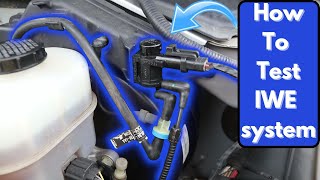
Pro Tip: Is It the Hub or the IWE? Many 4WD F-150 owners mistake the sound of a failing Integrated Wheel End (IWE) for a bad hub bearing. The IWE system uses vacuum to disengage the front hubs in 2WD. A vacuum leak can cause the IWE to partially engage, creating a grinding or rattling noise, especially under light acceleration. A key difference is that IWE noise often goes away when you switch to 4WD (4A or 4H), as this removes the vacuum and fully engages the hub lock. If the noise persists in both 2WD and 4WD, the hub bearing is the more likely cause.
🎬 Watch: How to test the IWE systemKnown Issues, TSBs, and Recalls

While there are no widespread recalls specifically for the front hub assemblies on 2015-2025 F-150s, there are related issues and recalls to be aware of.
- IWE System TSBs: Ford has issued multiple Technical Service Bulletins (TSBs) for the IWE system, which can produce symptoms similar to a bad hub. TSB 20-2028 and TSB 24-2189A address intermittent grinding noises by outlining procedures to inspect vacuum lines, replace check valves, and replace the IWE actuators themselves. These issues are common and should be ruled out before replacing a hub assembly on a 4WD truck.
- Rear Axle Bolt Recalls: Ford has issued recalls (NHTSA 23V-896 / Ford 23S65 and 25S82) for certain 2021-2025 F-150 models, particularly those with the Trailer Tow Max Duty package, for rear axle hub bolts that can fatigue and break. Symptoms include a clicking or rattling noise from the rear of the truck. While this recall concerns the rear axle, not the front hub assembly, it's important not to confuse the noises.
Compatibility and Part Variations

Choosing the correct hub assembly is critical, as there are several variations. Installing the wrong part can lead to ABS system failure, 4WD system malfunction, or improper fitment.
Warning: Always verify compatibility by the vehicle's drive type (2WD/4WD) and, for 2015 models, the specific build date. Using a VIN to confirm the exact OEM part number is the most reliable method.
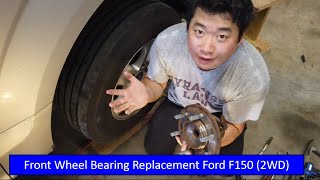
- 2WD (4x2) vs. 4WD (4x4): These are the most significant differences. 4WD hubs are designed to accept a CV axle shaft and engage with the IWE system. 2WD hubs are not. They are not interchangeable. 🎬 Watch: 2WD front wheel bearing replacement walkthrough
- 2015 Mid-Year Build Date Change: For the 2015 model year, there was a change in the hub assembly design on or around June 22, 2015. Parts for vehicles built on or before this date are different from those built after. It is essential to check the vehicle's production date, usually found on the sticker in the driver's side door jamb.
- Raptor Models: Ford F-150 Raptor models use different, heavy-duty suspension components, and their hub assemblies are not compatible with standard F-150s.
- Police Package (SSV/Police Responder): Some models equipped with police packages may use specific hub assemblies. It's important to verify the part number for these specialized trims.
Buying a Used Hub Assembly
A high-quality, low-mileage used OEM hub assembly can be a smart, cost-effective alternative to expensive new parts or lower-quality aftermarket options. OEM parts are manufactured to Ford's original standards for metallurgy, bearing quality, and sensor accuracy, ensuring a proper fit and long service life.
Inspection Checklist
When inspecting a used hub assembly, look for the following:
- Smooth Rotation: Turn the hub by hand. It should spin smoothly with no roughness, grinding, or catching.
- No Play: Try to wiggle the hub flange back and forth. There should be no noticeable play or looseness. Any wobble indicates a worn bearing.
- Intact ABS Sensor and Wire: Carefully inspect the ABS sensor wire and its connector. Ensure it is not cut, frayed, or damaged. A damaged sensor will require replacing the entire hub.
- Clean Wheel Studs: Check that the wheel studs are straight and the threads are not damaged or stripped.
- No Physical Damage: Inspect the housing for any cracks, significant corrosion, or signs of impact damage.
Mileage Considerations
F-150 hub assemblies can fail at a wide range of mileages, but failures often begin to be reported on forums around 80,000 to 120,000 miles. When buying used, look for a part from a vehicle with the lowest mileage possible to maximize its remaining service life.
Cost Breakdown
Prices can vary based on brand, location, and whether the part is for a 2WD or 4WD model. Here is a general cost comparison:
| Part Type | Estimated Cost (per side) |
|---|---|
| New OEM (Ford/Motorcraft) | $290 - $470 |
| New Aftermarket (Premium) | $150 - $300 |
| New Aftermarket (Value) | $80 - $130 |
| Used OEM | $75 - $150 |
| Shop Labor | $150 - $220 |
Replacement Overview and Torque Specs
Replacing an F-150 hub assembly is a feasible DIY job for someone with intermediate mechanical experience and the right tools. It does not typically require a post-replacement alignment.
Key Steps & Procedures
- Safely lift and support the vehicle and remove the wheel.
- Remove the brake caliper and caliper bracket, and hang the caliper securely to avoid straining the brake hose.
- Remove the brake rotor.
- Remove the axle dust cap and the main axle nut.
- Disconnect the ABS sensor wire and any vacuum lines for the IWE (on 4WD models).
- From behind the steering knuckle, remove the four bolts holding the hub assembly in place.
- Remove the old hub assembly. This may require a puller or careful use of a hammer if it is seized.
- Clean all mounting surfaces thoroughly before installing the new hub.
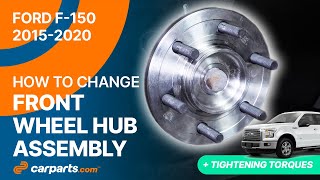
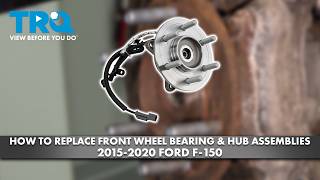
- On 4WD models, use a vacuum pump to engage the new IWE to ensure it slides onto the axle splines correctly. 🎬 See this step-by-step hub replacement video
Critical Torque Specifications
Using a torque wrench is mandatory for this job to ensure safety and prevent premature failure. Torque specs can vary slightly by model year and configuration, but these are common values. Always verify the correct specs for your specific vehicle.
- Hub Assembly Mounting Bolts (to knuckle): 129 ft-lbs (175 Nm) or 133 ft-lbs (180 Nm)
- Main Axle Nut: 30 ft-lbs (41 Nm)
- Brake Caliper Bracket Bolts: 184 ft-lbs (250 Nm)
- Wheel Lug Nuts: 150 ft-lbs (204 Nm)
Frequently Asked Questions
Can I replace just the bearing instead of the whole hub assembly?
No. The front wheel bearings on 2015-2025 F-150s are part of a sealed, non-serviceable hub assembly. The entire unit must be replaced.
Should I replace my hub assemblies in pairs?
While not strictly required, it is highly recommended. Wheel bearings on both sides of the vehicle have been subjected to the same mileage and conditions. If one has failed, the other is often not far behind. Replacing them in pairs ensures balanced performance and saves you from doing the same job twice in the near future.
What happens if I don't torque the axle nut correctly?
The low 30 ft-lb torque spec on the axle nut is critical for the 4WD system. Its purpose is to properly seat the CV axle into the IWE splines. Over-torquing it can damage the new bearing or the IWE system, while under-torquing it can cause engagement issues and noise. This is different from older designs or 2WD vehicles that often require very high torque on the axle nut.
Do I need a wheel alignment after replacing a hub assembly?
No. Replacing the hub assembly does not change the vehicle's alignment angles (camber, caster, or toe). An alignment is not necessary unless other suspension components like control arms or tie rod ends were also replaced.
Helpful Videos
Technical Specifications
OEM Part Numbers: FL342B663AD FL342B663AE FL342B663BD FL342B663BE FL342B663CA FL342B663CB FL342B663CC FL342B663CD FL3Z-1104-A FL3Z-1104-C FL3Z-1104-E FL3Z-1104-F FL3Z1104A FL3Z1104B FL3Z-1104-H FL3Z-1104-J FL3Z-1104-D FL3Z-1104-G
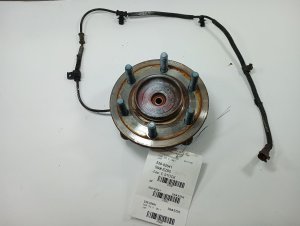
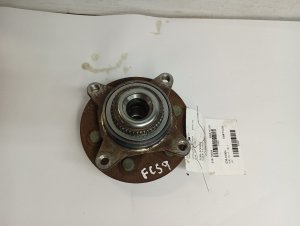
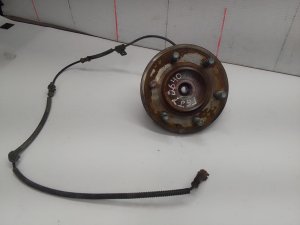
Sealed hub and bearing assembly with integrated ABS sensor. 4-bolt mounting flange. 6-lug pattern. Specific designs for 2WD and 4WD applications.
We Have This Part in Stock




The information in this article is provided for general reference and educational purposes only. Vehicle specifications, procedures, and part compatibility can vary by production date, trim level, and region. Always consult your vehicle's factory service manual and verify part numbers before purchasing or performing repairs. Safety-critical components such as airbags, seat belts, and braking systems should be installed by a qualified professional.
- Ford F-150:
- 🎬 Helpful Videos
- 🛍️ Shop This Part
- Symptoms of a Failing Hub Assembly
- Grinding, Growling, or Humming Noise
- Clicking or Popping
- Vibration in the Steering Wheel
- ABS or Traction Control Light
- Known Issues, TSBs, and Recalls
- Compatibility and Part Variations
- Buying a Used Hub Assembly
- Inspection Checklist
- Mileage Considerations
- Cost Breakdown
- Replacement Overview and Torque Specs
- Key Steps & Procedures
- Critical Torque Specifications
- Frequently Asked Questions
- 🎟️ Get 5% Off