

2006-2011 Buick Lucerne & Cadillac DTS Rear Hub Assembly Failure Symptoms and Replacement Guide
A complete guide to diagnosing and replacing the rear wheel hub assembly on the 2006-2011 Buick Lucerne and Cadillac DTS, including common noises, compatibility warnings, and torque specs.
- The most common failure symptom is a humming or roaring noise from the rear that gets louder with speed.
- For the Cadillac DTS, you must verify the vehicle has brake option code JL9 for this part to fit.
- Replacement is a straightforward DIY job; the four hub mounting bolts should be torqued to 50 lb-ft.
- Ignoring a failing hub is dangerous and can lead to the wheel separating from the vehicle.
Symptoms of a Failing Hub Assembly
A failing rear hub assembly on a 2006-2011 Buick Lucerne or Cadillac DTS will almost always provide audible or physical warnings. Ignoring these signs can lead to more severe damage or a dangerous loss of a wheel.
Common Noises
- Humming or Roaring: This is the most common symptom. It sounds like loud road noise or a humming sound coming from the rear of the car. The noise is directly related to vehicle speed—the faster you go, the louder it gets. It may change in pitch or intensity when you turn left or right, as the weight shifts from one side to the other.
- Grinding or Growling: In more advanced stages of failure, the humming can turn into a harsher grinding or growling sound, indicating the internal bearings are severely worn.
- Clicking or Popping: You might hear a clicking sound, especially when turning, which can suggest excessive play in the bearing.
Physical Sensations and Warnings
- Vibration: A worn hub assembly can cause vibrations felt in the steering wheel or the floor of the car, which worsen with speed.
- ABS or Traction Control Light: The hub assembly houses the wheel speed sensor. If this sensor fails or the bearing has excessive play, it can trigger the ABS and traction control warning lights on your dashboard. This is a common reason for replacement, even if the bearing itself isn't noisy.
- Uneven Tire Wear: A bad hub can cause the wheel to wobble slightly, leading to abnormal and accelerated tire wear.
- Loose Steering Feel: In severe cases, the steering may feel loose or less responsive due to play in the wheel.
Vehicle-Specific Information and Compatibility
While the Buick Lucerne and Cadillac DTS share the same platform and basic rear hub assembly, there is one critical compatibility check for DTS owners.
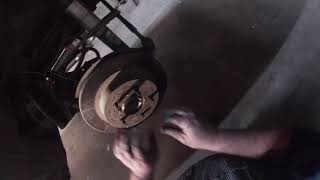
- Buick Lucerne (2006-2011): The standard rear hub assembly, OEM part number 21998965 🎬 Watch this step-by-step rear hub replacement on a Buick Lucerne., fits all models and trim levels of the Lucerne from this generation.
- Cadillac DTS (2006-2011): This hub assembly fits DTS models equipped with the JL9 brake option code. JL9 refers to the standard power 4-wheel anti-lock disc brake system. Most DTS models will have this, but it's crucial to verify. You can find your vehicle's RPO (Regular Production Option) codes on a sticker, typically located in the trunk, often on the spare tire cover.
Pro Tip: If you are unsure about your brake option code, a visual inspection can help. The JL9 system uses a specific size rotor and caliper. Comparing a potential replacement part to your existing setup is always a good practice.
Buying a Used Hub Assembly
A low-mileage, used OEM hub assembly can be a reliable and cost-effective alternative to a new part, especially when compared to cheap aftermarket options. Here’s what to look for:
- Mileage is Key: Wheel bearings have a finite lifespan, typically lasting between 75,000 and 150,000 miles. When buying used, aim for a part from a vehicle with the lowest possible mileage. A hub from a 60,000-mile car is a much better bet than one from a car with 150,000 miles.
- Check for Smoothness: Hold the hub firmly and try to spin the flange where the wheel bolts on. It should rotate smoothly with no grinding, roughness, or catching.
- Inspect for Play: Try to wiggle the flange back and forth. There should be absolutely no detectable play or looseness. Any movement indicates a worn bearing.
- Examine the ABS Sensor and Connector: Look closely at the ABS sensor wire and the plastic connector. Ensure they are not cut, frayed, or damaged. A damaged sensor makes the entire assembly useless.
- Look for Corrosion and Damage: Avoid hubs with heavy rust or signs of impact damage. While surface rust is common, deep pitting or corrosion around the mounting points or sensor can cause issues.
- Why Used OEM vs. New Aftermarket: Original GM parts often use higher quality steel and more precise manufacturing tolerances for the bearings and ABS sensors compared to budget aftermarket brands. A used OEM part with low mileage can often outlast a brand-new, cheap aftermarket hub.
Cost Comparison
The cost to replace a rear hub assembly can vary significantly based on the part source and labor rates.
| Part Type | Estimated Cost (Part Only) |
|---|---|
| New OEM (GM) | $400 - $550 |
| New Aftermarket | $70 - $150 |
| Used OEM | $40 - $100 |
| Shop Labor | $140 - $270 |
Replacement Overview and Torque Specs
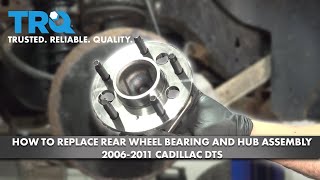
Replacing the rear hub assembly on these front-wheel-drive vehicles is a straightforward job suitable for a DIY mechanic with the right tools. 🎬 Check out this quick video guide for the DTS hub assembly. Because there is no axle shaft passing through the rear hub, the process is simpler than a front hub replacement.
Warning: Always use a torque wrench for the final tightening of bolts. Improper torque is a leading cause of premature bearing failure.
Required Tools:
- Jack and Jack Stands
- Lug Wrench (19mm socket)
- 13mm, 14mm, and 15mm sockets/wrenches
- Torque Wrench
- Brake Caliper Hanger or wire
- Hammer
- Wire Brush
- Penetrating Oil
Step-by-Step Summary:
- Raise and support the rear of the vehicle and remove the wheel.
- Remove the brake caliper and its mounting bracket. Use a caliper hanger or wire to support the caliper; do not let it hang by the brake hose.
- Remove the brake rotor.
- Disconnect the ABS wheel speed sensor electrical connector from the back of the hub.
- From behind the knuckle, remove the four 13mm bolts that secure the hub assembly.
- The hub may be stuck due to corrosion. Use a hammer to tap it from the backside to break it free.
- Clean the mounting surface on the knuckle with a wire brush to ensure the new hub sits perfectly flat.
- Install the new hub assembly and tighten the four mounting bolts.
- Reconnect the ABS sensor connector.
- Reinstall the brake rotor, caliper bracket, and caliper.
- Reinstall the wheel and lower the vehicle.
Torque Specifications:
- Hub Assembly to Knuckle Bolts: 50 lb-ft (68 Nm)
- Brake Caliper Bracket Bolts: 94 lb-ft for JL9 brakes
- Brake Caliper Pin Bolts: 25 lb-ft for JL9 brakes
- Wheel Lug Nuts: 100 lb-ft
Frequently Asked Questions (FAQ)
Can I replace just the bearing instead of the whole hub assembly?
No. On the 2006-2011 Lucerne and DTS, the rear wheel bearing is part of a sealed, non-serviceable hub assembly. The entire unit must be replaced.
Do I need to replace both rear hubs at the same time?
It is highly recommended. Wheel bearings on both sides of the vehicle experience similar wear. If one has failed due to mileage, the other is likely nearing the end of its service life. Replacing them in pairs ensures balanced performance and prevents you from having to do the same job again soon.
Will I need a wheel alignment after replacing a rear hub?
No, a wheel alignment is not typically necessary after replacing a rear hub assembly on these vehicles, as the part does not affect alignment angles.
What happens if I ignore a bad wheel bearing?
Continuing to drive on a failing hub assembly is extremely dangerous. The bearing can overheat and seize, or it can fail completely, which can cause the wheel to separate from the vehicle while driving, leading to a total loss of control.
Helpful Videos
Technical Specifications
OEM Part Numbers: 21998965
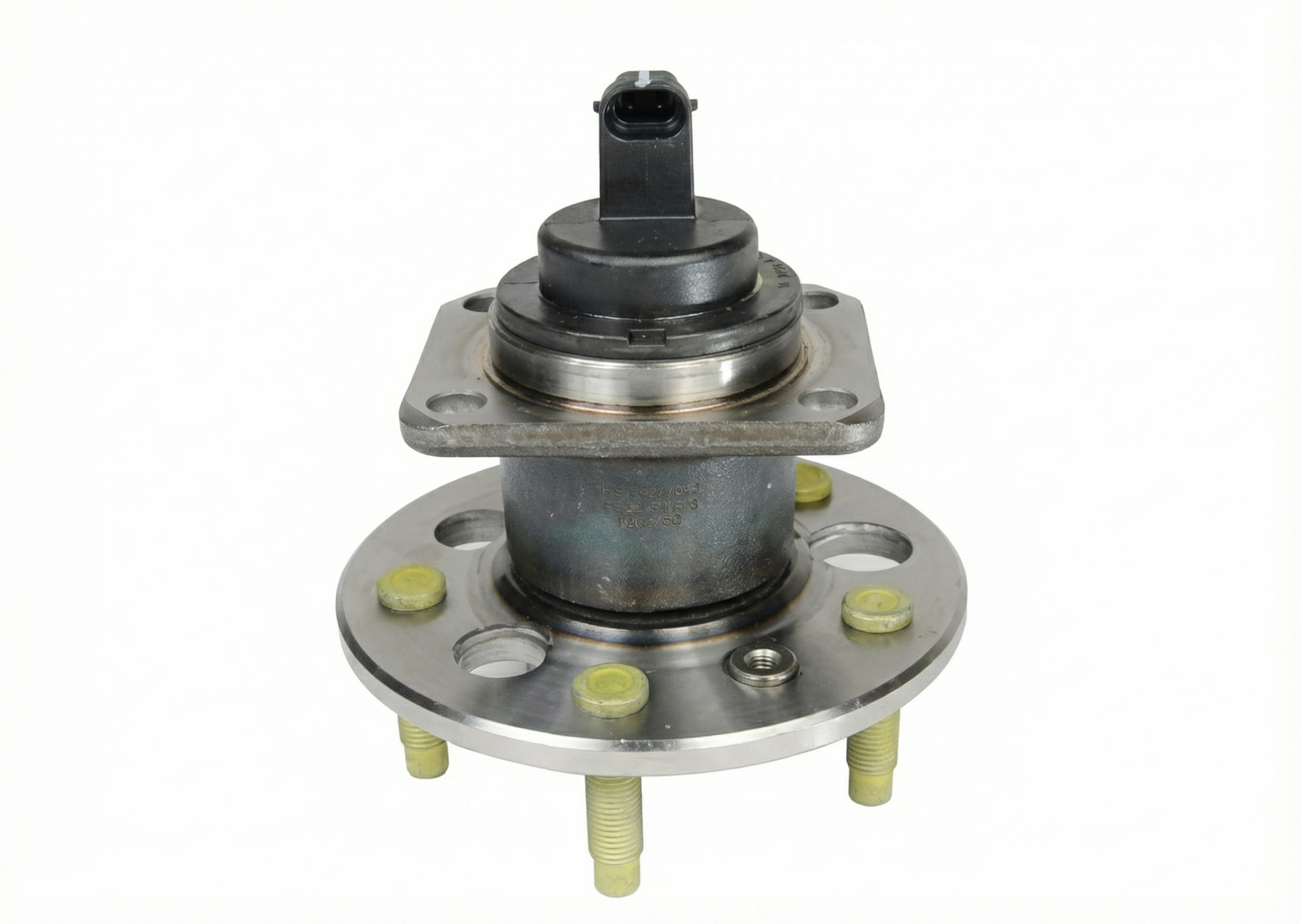
4-bolt square flange, 5 wheel studs, includes integrated ABS sensor.
We Have This Part in Stock

The information in this article is provided for general reference and educational purposes only. Vehicle specifications, procedures, and part compatibility can vary by production date, trim level, and region. Always consult your vehicle's factory service manual and verify part numbers before purchasing or performing repairs. Safety-critical components such as airbags, seat belts, and braking systems should be installed by a qualified professional.
- Buick Lucerne:
- Cadillac DTS:
- 🎬 Helpful Videos
- 🛍️ Shop This Part
- Symptoms of a Failing Hub Assembly
- Common Noises
- Physical Sensations and Warnings
- Vehicle-Specific Information and Compatibility
- Buying a Used Hub Assembly
- Cost Comparison
- Replacement Overview and Torque Specs
- Required Tools:
- Step-by-Step Summary:
- Torque Specifications:
- Frequently Asked Questions (FAQ)
- 🎟️ Get 5% Off