

2017-2023 Model 3 & 2020-2024 Model Y Horn Failure: Diagnosis and Replacement Guide
This guide explains the common causes of horn failure, including water damage and corrosion, and provides step-by-step replacement instructions for all Tesla Model 3 and Model Y vehicles.
- The most common cause of horn failure is water intrusion leading to corrosion, due to its location in the wheel well on most models.
- The horn's location is different on 2017-2018 Model 3s (frunk) compared to 2019+ Model 3s and all Model Ys (driver-side wheel well).
- The main horn is a separate part from the Pedestrian Warning System (PWS) / 'Boombox' speaker.
- Diagnosis is simple: if the horn fails to work from both the steering wheel and the mobile app, the horn assembly itself is the likely culprit.
Symptoms of a Failing Horn

Horn failure on the Tesla Model 3 and Model Y is a common issue, often linked to its location and exposure to the elements. Here are the most frequent symptoms:
- Complete Silence: The most obvious symptom is no sound at all when pressing the horn on the steering wheel or activating it through the Tesla mobile app.
- Muffled or Weak Sound: The horn may sound quiet, muffled, or hoarse. This often happens after driving in heavy rain or in freezing temperatures when water gets into the horn's diaphragm and freezes, impeding its movement.
- Intermittent Operation: The horn may work sporadically, often failing in cold or wet weather and sometimes returning to normal when conditions are dry and warm. This is a strong indicator of water intrusion and developing corrosion.
Known Issues and Vehicle-Specific Differences

The primary known issue for the horn on these vehicles is failure due to water ingress, which causes severe corrosion of the internal components. Forum discussions show numerous owners discovering their non-functional horns are completely rusted out upon removal. The horn's location is a key factor in its vulnerability.
Horn Location by Vehicle and Year
It is critical to know that the horn location differs on early Model 3s. This affects the replacement procedure.
- 2017-2018 Tesla Model 3: The horn assembly is located in the front trunk (frunk) area, near the hood latch. Access is from the top by removing the front underhood apron. 🎬 Watch: How to access the horn on 2017-2018 models.
- 2019-2023 Tesla Model 3 & 2020-2024 Tesla Model Y: The horn assembly is located in the front driver-side wheel well, mounted to the subframe. Access is from the side by pulling back the wheel arch liner.
Pro Tip: When diagnosing, always test the horn using both the steering wheel and the Tesla mobile app. If it fails to work with either method, the problem is very likely the horn assembly itself or its wiring, not the steering wheel controls.
Is it the Horn or the Pedestrian Warning System (PWS)?
Many owners confuse the main horn with the Pedestrian Warning System (PWS), also known as the 'Boombox' speaker. They are two separate parts with different functions.
- Horn: Makes the loud 'honk' for safety warnings. It's a dual-tone assembly.
- PWS/Boombox Speaker: Emits a low-volume sound at low speeds to alert pedestrians and plays custom sounds for the Boombox feature. Recalls related to the PWS being obscured by Boombox sounds were fixed via software updates and do not affect the main horn hardware. 🎬 See the difference between the PWS and the main horn.
Buying a Used Horn: What to Inspect

A used OEM horn is an excellent, cost-effective alternative to expensive dealer parts or lower-quality aftermarket options. Since the primary failure mode is corrosion, a careful inspection is key.
- Check Electrical Connectors: This is the most important check. Look inside the two connector ports. They should be clean and shiny. Avoid any horn that shows signs of green or white crusty powder, which indicates corrosion and is a major red flag.
- Inspect the Housing: Examine the black plastic trumpets of the horns. Look for any cracks or damage that could allow water to enter.
- Verify the Bracket: The horn assembly includes the metal mounting bracket. Ensure it is present, straight, and not severely rusted.
- Source from a Dry Climate: If possible, choose a part sourced from a vehicle in a dry, southern state. These parts have had less exposure to road salt and moisture, making them much less likely to have hidden corrosion.
- Test if Possible: If you have a 12V power source, you can briefly touch the leads to the pins in the connectors to test if the horns sound.
Replacement Guide (2019+ Model 3 & Model Y)

Replacing the horn on later Model 3s and all Model Ys is a manageable DIY job. The official Tesla service manual notes the wheel does not need to be removed, but jacking up the car and taking off the driver-side front wheel provides much better access.
Installation Difficulty: 2/5 (if wheel is removed)
Estimated Time: 0.5 - 1 hour
- Safety First: If jacking the vehicle, use proper jack stands and Tesla-specific jack pads to avoid damaging the battery. Chock the rear wheels.
- Access the Wheel Liner: Turn the steering wheel all the way to the left to create space. Remove the series of plastic push clips (usually 7-8) that secure the front half of the driver-side wheel arch liner. A clip removal tool is recommended.
- Expose the Horn: Pull the liner back and away from the bumper. You may need to tuck it behind the brake rotor to keep it out of the way. The horn assembly will be visible, bolted to the frame.
- Remove the Old Horn: Using a 10mm socket, remove the single bolt holding the horn bracket to the subframe.
- Disconnect Electrical Plugs: Disconnect the two electrical connectors from the horn assembly.
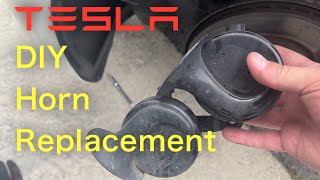
- Install the New Horn: Installation is the reverse of removal. Position the new assembly, connect the two plugs, and install the 10mm bolt. The official torque specification for this bolt is 12 Nm (8.8 lb-ft). 🎬 Follow this step-by-step video for the full replacement process.
- Test and Reassemble: Before putting the liner back, test the horn. Once confirmed, reinstall the wheel liner clips and the wheel (if removed).
Pro Tip: When installing the new horn, some owners suggest angling the horn trumpets downward as much as possible to help prevent future water collection.
Cost of Replacement
Costs can vary significantly depending on whether you do the work yourself or use a service center.
| Part/Service | Estimated Cost (USD) |
|---|---|
| New OEM (Tesla Service) | $128 - $400 (Varies widely by location and labor) |
| New Aftermarket / Online OEM | $50 - $75 |
| Used OEM | $60 - $85 |
| Shop Labor | $150 - $250 |
Frequently Asked Questions
Why did my horn stop working after rain or in the cold?
This is a classic symptom of water getting inside the horn assembly. The water can freeze, preventing the internal diaphragm from vibrating, or it can cause corrosion over time, leading to permanent failure.
Is there a fuse I can check for the horn?
No, the Tesla Model 3 and Model Y do not have a simple, user-replaceable fuse dedicated to the horn. The circuit is integrated with and protected by the vehicle's Body Control Module (BCM). If the horn doesn't work from the steering wheel or the app, the fault is almost always the horn unit itself.
Is the horn on a Model 3 the same as a Model Y?
Yes, for the model years covered (2019+ Model 3 and all Model Y), the horn assembly and its location in the driver-side wheel well are the same. However, early 2017-2018 Model 3s have a different horn location (in the frunk).
My car makes a sound at low speeds, but the horn doesn't work. What's wrong?
The sound you hear at low speeds is from the Pedestrian Warning System (PWS), which is a separate speaker. Your main horn assembly, which makes the loud honk, has likely failed due to corrosion and needs to be replaced.
Helpful Videos
Technical Specifications
OEM Part Numbers: 1109660-00-A 1109660-00-B 1486943 1486943-00-A
Dual-tone (high and low) 12V electric horn assembly. Mounting bolt torque: 12 Nm (8.8 lb-ft).

The information in this article is provided for general reference and educational purposes only. Vehicle specifications, procedures, and part compatibility can vary by production date, trim level, and region. Always consult your vehicle's factory service manual and verify part numbers before purchasing or performing repairs. Safety-critical components such as airbags, seat belts, and braking systems should be installed by a qualified professional.
- Tesla Model 3:
- Tesla Model Y:
- 🎬 Helpful Videos
- Symptoms of a Failing Horn
- Known Issues and Vehicle-Specific Differences
- Horn Location by Vehicle and Year
- Is it the Horn or the Pedestrian Warning System (PWS)?
- Buying a Used Horn: What to Inspect
- Replacement Guide (2019+ Model 3 & Model Y)
- Cost of Replacement
- Frequently Asked Questions
- 🎟️ Get 5% Off