

2014-2026 Ram 1500 Horn: Diagnosing Failures and Navigating the Classic (DS) vs. DT Split
This guide covers common horn failures, diagnosis, and the crucial compatibility differences between 4th Gen 'Classic' and 5th Gen Ram 1500 models.
- For 2019+ models, you must identify if you have a 'Classic' (DS, 5-lug wheels) or new style (DT, 6-lug wheels) as the horns are not interchangeable.
- Ram 1500s use a dual-horn system (high/low note); replacing only one will result in a weak or incorrect sound.
- Always check the fuse (F42 on 4th Gen) and listen for a relay click before assuming the horn itself is bad.
- If the horn and other steering wheel buttons fail simultaneously, the clockspring is the most likely culprit.
Known Issues and Common Problems

The horn system on the 2014-2026 Ram 1500 is generally reliable, but when problems arise, they typically stem from one of a few common culprits. Failures are rarely due to a single systemic defect but rather the result of normal wear and tear on individual components. The most frequent issues include a blown fuse, failure of the horn itself, or a problem with the clockspring in the steering column. Less common, but still possible, are issues with the horn relay (which may be integrated into the main fuse box and not separately replaceable) or the wiring.
Symptoms of a Failing Horn

Diagnosing a horn problem starts with observing the symptoms. Here’s what to look and listen for:
- Horn is Completely Silent: When you press the horn pad, nothing happens. This is the most common symptom and can point to a blown fuse, a bad relay, a failed clockspring, or two dead horns.
- Horn Sounds Weak or Different: If your truck has a dual-horn system, the failure of one of the two horns (either the high or low note) will result in a sound that is quieter and has a different pitch than normal.
- Horn Works Intermittently: The horn may work sometimes and not others. This can be caused by a loose connection, a failing relay, or a worn clockspring that only makes contact when the steering wheel is in a certain position.
- Horn is Stuck On: In rare cases, the horn may sound continuously without the horn pad being pressed. This is often caused by a stuck horn relay or a short circuit in the steering wheel's horn switch.
- Other Steering Wheel Buttons Fail: If the horn stops working at the same time as your cruise control or radio control buttons on the steering wheel, the problem is almost certainly a failed clockspring. 🎬 See this video for the top 5 bad clockspring symptoms
Diagnosing the Problem: Is It Really the Horn?

Before you buy a replacement horn, follow these steps to make sure the horn itself is actually the problem. This can save you time and money.
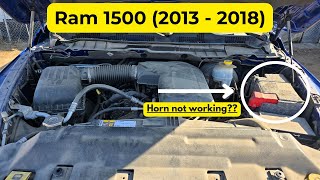
- Check the Fuse: This is the first and easiest step. For 2014-2018 (DS) models, the horn fuse is typically F42, a 20-amp fuse 🎬 Watch: How to find the horn fuse on 2013-2018 models located in the under-hood fuse box (also called the Totally Integrated Power Module or TIPM). For 2019+ (DT) models, consult your owner's manual for the specific fuse location, which may be under the hood or inside the cabin. Pull the fuse and inspect it. If the metal strip inside is broken, it's blown. Replace it with a new fuse of the same amperage.
- Listen for a Click: Have a helper press the horn while you listen near the under-hood fuse box. If you hear a clicking sound, it means the relay is likely working, and the problem is further down the line (wiring or the horn itself). If you don't hear a click, the problem could be the relay or the clockspring. Note: On many of these trucks, the horn relay is integrated into the fuse box module and is not a simple part to swap.
- Test for Power at the Horn: If the fuse is good, the next step is to test for power at the horn's electrical connector. You will need a multimeter for this. Locate the horn(s), unplug the electrical connector, set your multimeter to DC volts, and place the probes on the two terminals in the connector. Have a helper press the horn. You should see a reading of around 12 volts.
- If you get ~12 volts, the entire circuit up to the horn is working. The horn itself has failed and needs to be replaced.
- If you do not get 12 volts, the problem is in the wiring, relay, or clockspring, and replacing the horn will not fix the issue.
Warning: The clockspring is also part of the airbag system. If you suspect a bad clockspring and plan to work on the steering column, it is critical to disconnect the battery and wait at least 10-15 minutes before beginning work to avoid accidental airbag deployment.
Compatibility: The Most Common Buyer Mistake

There are two major compatibility traps when buying a horn for a Ram 1500, especially for model years 2019 and newer.
Dual Horn System: High vs. Low Note
Your truck has two horns that work together. When replacing one, you must ensure you are buying the correct note (high or low) to match the one you are replacing. If you install the wrong one, the horn will work, but the sound will be off. If your goal is to restore the factory sound, it's sometimes best to replace both horns as a pair.
4th Gen 'Classic' (DS) vs. 5th Gen (DT)
This is the single most important compatibility check for 2019-2024 models. During these years, Ram sold the old 4th Generation body style as the 'Ram 1500 Classic' (platform code: DS) alongside the completely redesigned 5th Generation model (platform code: DT). Parts for these two trucks, including the horns, are not interchangeable.
How to tell which you have:
- Grille: The DS 'Classic' has the traditional crosshair grille. The DT has a modern, bold grille without the crosshair design.
- Lug Nuts: This is the easiest way to be certain. The DS 'Classic' has 5-lug wheels. The new DT model has 6-lug wheels.
- VIN: For 2019 models, the 6th digit of the VIN can help. A '6' or '7' often indicates a DS, while an 'E' or 'F' indicates a DT.
Always verify which model you have before purchasing a part.
Buying a Used Ram 1500 Horn
A used OEM horn is often a great value, providing original factory quality and sound for a price that's competitive with new aftermarket parts. Here’s what to look for:
- Verify the Part Number: This is the best way to ensure a perfect match. Compare the number on the used part to your original. For 2014-2018/Classic models, look for numbers like 68306481AB. For 2019+ DT models, look for numbers like 68290864AC.
- Physical Inspection: Check the plastic housing for any cracks or signs of heat damage. Inspect the metal mounting bracket to ensure it isn't bent or heavily rusted.
- Connector Pins: Look inside the electrical connector. The pins should be clean, straight, and free of green or white corrosion. Corroded pins are a major red flag.
- Ask the Seller: If buying online, ask the seller to confirm the part number and the vehicle it came from (specifically, if it was a Classic or new body style for 2019+ models).
- Why Used OEM?: A genuine Mopar horn was designed for the specific acoustics and electrical load of your truck. Many cheap aftermarket horns can sound tinny or fail prematurely. A reliable used OEM part gives you the original quality without the new OEM price tag.
Replacement Guide
Replacing the horn on a Ram 1500 can be either very easy or moderately difficult, depending on its location.
- Difficulty: 1 to 3 out of 5
- Tools Needed: Basic socket set, possibly a trim removal tool or flathead screwdriver.
Location Varies by Year/Model:
- Behind the Grille (Easier): On some models, the horns are mounted directly behind the grille on the radiator core support, near the hood latch. Access may involve removing a top plastic shroud held in by push-pins.
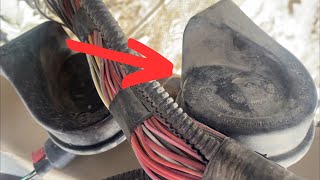
- In the Fender Well (Harder): On other models, particularly some 4th generation trucks, the horn(s) are located inside the driver's side fender, above the wheel well liner. 🎬 Watch: How to access and replace a fender-mounted horn Access requires turning the wheel, removing the plastic fender liner, and reaching up into the fender. This is a more time-consuming location.
General Steps:
- Disconnect the Battery: Always disconnect the negative battery terminal before starting any electrical work.
- Locate the Horn(s): Check both behind the grille and in the driver's side fender area to find your horn's location.
- Gain Access: Remove any plastic shrouds or the fender liner as needed to get to the horn.
- Unplug and Unbolt: Disconnect the electrical connector from the horn. Then, use a socket to remove the single bolt holding the horn bracket to the vehicle.
- Install the New Horn: Bolt the new horn into place, plug in the electrical connector, and re-install any trim or liners you removed.
- Test: Reconnect the battery and test the horn.
Cost Comparison
| Part Type | Estimated Price Range |
|---|---|
| New OEM (Mopar) | $55 - $90 |
| New Aftermarket | $20 - $50 |
| Used OEM | $25 - $50 |
| Shop Labor Cost | $75 - $150 |
OEM Part Numbers
These are the most common OEM part numbers. Always verify fitment for your specific vehicle with the seller or a dealer.
- 2014-2019 (Classic DS): 68306481AB (supersedes 68229241AA, 68306481AA)
- 2019-2026 (New DT): 68290864AC
Frequently Asked Questions (FAQ)
My horn works when I lock the truck with the fob, but not from the steering wheel. What's the problem?
This is a classic symptom of a failed clockspring. The signal from the key fob to honk the horn is sent directly by the truck's body control module, bypassing the steering wheel controls. The signal from the horn pad, however, must travel through the clockspring. When the clockspring fails, the horn pad stops working, but the lock-chirp function remains.
Why does my horn sound weak or high-pitched after I replaced it?
You likely have a dual-horn system and either replaced only one of the two horns, or you replaced it with the wrong tone (e.g., you replaced a low-note horn with a high-note horn). The factory sound relies on both the high and low tones sounding together.
Where is the horn fuse on a 2019+ Ram 1500 (DT)?
Fuse locations can vary slightly by year and trim. For the 5th Gen (DT) trucks, there is an under-hood fuse box and often an interior fuse box on the driver's side. Your owner's manual will have a precise diagram showing the location and function of each fuse. Always check the manual first.
Can I install a louder aftermarket train horn?
Yes, aftermarket horn kits, including very loud train horns, are available for the Ram 1500. However, be aware that these systems often require their own dedicated wiring, relay, and sometimes an air compressor. Also, check your local state and city regulations, as the use of train horns on public roads is often illegal and can result in fines.
Helpful Videos
Technical Specifications
OEM Part Numbers: 68229241AA 68290864AC 68306481AA 68306481AB
12-volt system. Dual horn setup (high and low note). Fuse requirement: 20A on 4th Gen models.
We Have This Part in Stock



The information in this article is provided for general reference and educational purposes only. Vehicle specifications, procedures, and part compatibility can vary by production date, trim level, and region. Always consult your vehicle's factory service manual and verify part numbers before purchasing or performing repairs. Safety-critical components such as airbags, seat belts, and braking systems should be installed by a qualified professional.
- Ram 1500:
- 🎬 Helpful Videos
- 🛍️ Shop This Part
- Known Issues and Common Problems
- Symptoms of a Failing Horn
- Diagnosing the Problem: Is It Really the Horn?
- Compatibility: The Most Common Buyer Mistake
- Dual Horn System: High vs. Low Note
- 4th Gen 'Classic' (DS) vs. 5th Gen (DT)
- Buying a Used Ram 1500 Horn
- Replacement Guide
- Cost Comparison
- OEM Part Numbers
- Frequently Asked Questions (FAQ)
- 🎟️ Get 5% Off