

1987-1995 Jeep Wrangler YJ Hood: Curing Hood Flutter and Preventing Rust
This guide covers the common issues for the YJ Wrangler hood, from the infamous 'hood flutter' to rust prevention and finding a quality used replacement.
- The notorious 'hood flutter' on YJ Wranglers is almost always caused by stretched-out rubber hood catches, not the hood itself; replacing them with heavy-duty latches is the fix.
- When buying a used hood, prioritize inspecting the underside seams and mounting points for hidden rust and use a magnet to check for body filler from past repairs.
- No recalls have been issued for the YJ Wrangler hood panel, though the latch mechanism has been a source of some owner complaints.
- Always test-fit a replacement hood to ensure proper alignment *before* having it painted, as adjustments are almost always necessary.
Symptoms of a Failing or Damaged Hood
The hood on a YJ Wrangler is a simple but critical body panel. Problems are typically easy to spot and often relate to physical damage, corrosion, or issues with related hardware.
Hood Flutter at Speed
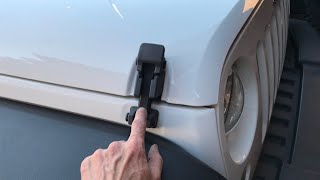
One of the most talked-about issues for Jeep owners is "hood flutter," where the hood appears to lift and shake at highway speeds or in strong crosswinds. This can be alarming, making it seem like the hood is about to fly open. However, this problem is almost never caused by the hood panel itself. The true culprit is usually the factory rubber hood catches that stretch and degrade over time due to heat and sun exposure. As the rubber loses its elasticity, it can no longer hold the hood down securely against the fenders, allowing air pressure from underneath to lift it.
🎬 Watch: How to fix Jeep hood flutterVisible Rust or Paint Bubbling
YJ Wranglers are known for their susceptibility to rust, and the hood is no exception. Rust often starts in areas where moisture can collect, such as along the seams on the underside, around the mounting points for hinges and latches, and under the front edge. You may see paint bubbling, which is a sign of corrosion underneath. If left untreated, this can lead to holes and compromise the panel's integrity.
Poor Alignment and Uneven Gaps
If the gaps between the hood and the fenders are uneven, or if the hood sits higher or lower than the surrounding body panels, it's a sign of poor alignment. This can be caused by previous accident damage, improper installation, or worn hinge bushings. A misaligned hood may be difficult to open or close and can cause paint to chip where it makes contact with other panels.
Physical Damage
Dents, dings, and creases are common on a vehicle designed for rugged use. While minor cosmetic damage is one thing, significant impacts can bend the hood's underlying support structure, making it difficult to align or latch properly. Large dents can also crack the paint and primer, exposing the bare metal to the elements and accelerating rust formation.
Pro Tip: Before blaming the hood for latching problems, thoroughly inspect the center latch mechanism and the safety catch. These components can wear out or become misaligned, preventing the hood from closing or staying shut securely.
Buying a Used 1987-1995 Wrangler Hood
A used OEM hood is often the best choice for replacement, as factory parts typically offer superior fit and steel quality compared to cheaper aftermarket alternatives. However, careful inspection is key to getting a good part.
What to Inspect on a Used Hood
- Check for Hidden Body Filler: Look for signs of previous repairs. Check the underside for any evidence of hammer marks or repair work. Run a small magnet over the entire surface, especially along edges and in the middle. A magnet will not stick to areas with thick body filler (Bondo), indicating a past repair that may not be visible under the paint.
- Inspect for Rust Thoroughly: Pay close attention to the inner seams and support braces on the underside, as this is where rust often starts and hides. Check the front and rear edges carefully. Surface rust can often be treated, but avoid any hood with deep, flaking rust or actual holes. 🎬 See how to spot hidden rust on a Jeep
- Verify Structural Integrity: Ensure the hood is not bent or twisted. Lay it on a flat surface to see if it sits level. Check all mounting points for the hinges and latch mechanism to make sure the threads are not stripped and the metal is not cracked or rusted out.
- Confirm Compatibility: Make sure the hood is from a 1987-1995 YJ Wrangler. While hoods from Jeep CJs look similar, there can be subtle differences. A YJ is easily identified by its square headlights.
Known Issues, Recalls, and TSBs
Searches of the National Highway Traffic Safety Administration (NHTSA) database do not show any recalls specifically for the hood panel of the 1987-1995 Jeep Wrangler. There are some complaints logged related to the hood latch, but no widespread recall was issued for the panel itself. The most significant known issue is not with the panel, but with the related components that cause hood flutter.
Replacement and Installation
Replacing the hood on a YJ Wrangler is a straightforward process but is best done with two people to avoid scratching the paint on the fenders or cowl.
Installation Difficulty: 2 out of 5
The basic steps involve:
- Scribing or outlining the position of the old hinges on the hood with masking tape before removal. This provides a starting point for aligning the new hood and can save significant time.
- Disconnecting any attached components, such as the windshield washer nozzles and hoses.
- Supporting the hood while a helper unbolts the hinges (typically using a T40 Torx bit).
- Lifting the old hood off and transferring the latch hardware to the replacement hood.
- Placing the new hood onto the hinges and loosely installing the bolts.
- Adjusting the hood's position to achieve even gaps on all sides before tightening the bolts. This may take several attempts. 🎬 Watch: Jeep Wrangler hood removal and alignment walkthrough
Warning: Always test-fit a replacement hood before painting. Even OEM hoods may require some adjustment for perfect alignment, and it's much easier to do this before applying fresh paint.
Cost Comparison for a 1987-1995 Jeep Wrangler Hood
Prices can vary based on condition, location, and shipping costs. Hoods are large and expensive to ship, so local pickup is often preferred.
| Part Type | Estimated Cost |
|---|---|
| New OEM | $400 - $500+ (if available) |
| New Aftermarket | $350 - $450 |
| Used OEM | $150 - $300 |
| Shop Labor for Installation | $100 - $200 |
Frequently Asked Questions (FAQ)
Will a hood from a Jeep CJ or TJ fit my YJ Wrangler?
No, while they may look similar, hoods from different Jeep generations like the CJ (pre-1987) or TJ (1997-2006) are not direct bolt-on replacements for a YJ. You should always use a hood specifically designed for the 1987-1995 YJ model years to ensure proper fitment.
How do I permanently fix hood flutter?
The best solution for hood flutter is to replace the original, stretchy rubber hood catches with a set of heavy-duty aftermarket latches. Options include adjustable polyurethane latches or locking metal latches, which not only solve the flutter but also add a layer of security since anyone can open a stock Jeep hood.
My replacement hood came in black primer. Can I just install it?
The black coating on most new aftermarket hoods is a temporary, thin e-coat primer designed to prevent rust during shipping and storage. It is not a durable finish. For a lasting repair, this primer should be properly scuffed, and then a compatible automotive primer, base coat, and clear coat should be applied by a professional.
Is it difficult to align a new hood?
Alignment can be tricky and requires patience. The process involves loosening the hinge bolts and shifting the hood forward, backward, and side-to-side until the gaps are even. Using masking tape to mark the position of the original hinges before you remove the old hood can make the process much faster.
Helpful Videos
![Jeep Wrangler Common Rust Spots: TJ [Watch BEFORE You Buy]](https://img.youtube.com/vi/beYqI6Ti20w/mqdefault.jpg)
Technical Specifications
OEM Part Numbers: 55345059
Material: Steel. Finish: Ships in black e-coat primer. Weight: Approximately 40 lbs.
We Have This Part in Stock


The information in this article is provided for general reference and educational purposes only. Vehicle specifications, procedures, and part compatibility can vary by production date, trim level, and region. Always consult your vehicle's factory service manual and verify part numbers before purchasing or performing repairs. Safety-critical components such as airbags, seat belts, and braking systems should be installed by a qualified professional.
- Jeep Wrangler:
- 🎬 Helpful Videos
- 🛍️ Shop This Part
- Symptoms of a Failing or Damaged Hood
- Hood Flutter at Speed
- Visible Rust or Paint Bubbling
- Poor Alignment and Uneven Gaps
- Physical Damage
- Buying a Used 1987-1995 Wrangler Hood
- What to Inspect on a Used Hood
- Known Issues, Recalls, and TSBs
- Replacement and Installation
- Cost Comparison for a 1987-1995 Jeep Wrangler Hood
- Frequently Asked Questions (FAQ)
- 🎟️ Get 5% Off