

1997-2005 Chevrolet Malibu Hood: Decoding the 'Classic' Body Style and Latch Issues
This guide covers the critical compatibility differences for the 1997-2005 Malibu, common latch and damage issues, and how to inspect a used hood before you buy.
- The most critical factor is compatibility: this hood only fits 1997-2003 models and 2004-2005 'Classic' models identified by an 'N' as the 4th VIN digit.
- Hood flutter at speed is a critical safety issue indicating latch failure; the vehicle should not be driven at high speeds until repaired.
- When buying used, inspect for hidden body filler with a magnet and check for rust along the front edge and underside seams.
- A used OEM hood generally provides better fitment than a new aftermarket hood, which can save significant time and money on alignment and bodywork.
Vehicle Compatibility: The 'Classic' Model Warning

Critical Compatibility Warning: This hood fits the 1997-2003 Chevrolet Malibu and the 2004-2005 Chevrolet Malibu Classic. The 'Classic' was the old body style carried over for fleet sales. You can identify a Classic model by checking the 4th digit of the Vehicle Identification Number (VIN); it will be an 'N'. This hood will NOT fit the new body style 2004-2005 Malibu or any Malibu Maxx models. Always verify your vehicle's model and VIN before purchasing.
Symptoms of a Damaged or Failing Hood

Unlike electronic parts, hood failure is typically visible or audible. Key symptoms point to physical damage, misalignment, or a faulty latch mechanism.
- Visible Damage: Dents, dings, creases, or large scratches are the most obvious signs. While minor cosmetic flaws may be acceptable, significant damage can compromise the hood's structural integrity.
- Rust: Corrosion, especially along the front leading edge and underneath along the support seams, is a major concern. Surface rust can often be repaired, but rust that has eaten through the metal requires more extensive work or full replacement.
- Hood Flutter at Speed: If the hood appears to vibrate or lift while driving at higher speeds, it is a serious safety issue. This indicates the latch is not holding securely, and the hood could fly open, obstructing your vision.
- Poor Alignment: Uneven gaps between the hood and the fenders, or a hood that doesn't sit flush with the surrounding body panels, points to either a past accident or incorrect installation.
- Latch and Release Problems: Difficulty opening the hood from inside the car, a release handle that feels loose with no resistance, or a hood that won't securely click shut are all signs of a failing latch or release cable. Sometimes the plastic interior release handle can break off entirely.
Known Issues, TSBs, and Recalls
While searches for the 1997-2005 Malibu did not reveal any specific recalls for the hood panel itself, hood latch and release cable issues are common across many vehicles. A dirty or worn latch mechanism can prevent the hood from closing securely. Additionally, a major recall (NHTSA Campaign ID: 14V400000) was issued for the ignition switch on 1997-2005 Malibu models, which could cause the car to shut off while driving. While not directly related to the hood, it is a critical safety issue for owners of these vehicles to be aware of.
Pro Tip: If your hood is difficult to open or close, first try cleaning and lubricating the latch mechanism with penetrating oil, followed by a coat of lithium grease. Often, dirt and grime are the culprits, not a broken part.
Buying a Used Hood: What to Inspect

A used OEM hood is often a better choice than a new aftermarket one due to superior fit and finish. Aftermarket hoods can require extra bodywork to align correctly, adding cost and labor. Here’s what to check before buying a used hood:
- Confirm Compatibility: First and foremost, re-verify it's for a 1997-2003 model or a 2004-2005 'Classic' with VIN 'N'.
- Inspect for Major Damage: Look down the length of the hood from all angles to spot large dents, waves, or creases. Minor dings can often be easily repaired by a paintless dent removal service.
- Check for Hidden Repairs: Look for signs of body filler (often called 'Bondo'). Check the underside for inconsistent paint texture or overspray. A small magnet can help detect thick areas of filler, as it won't stick as strongly as it does to bare metal.
- Examine for Rust: Carefully inspect the front lip and the underside seams. Use a finger or a small tool to press on any bubbled paint, which is a sign of underlying rust.
- Check Structural Points: Ensure the mounting points for the hinges and the striker loop for the latch are straight, solid, and free of cracks or rust. A bent mounting point can make alignment impossible.
Cost Comparison for a 1997-2005 Malibu Hood
Prices can vary based on condition, location, and whether the part is new or used. Painting is a significant additional cost to consider for any unpainted hood.
| Part Type | Estimated Cost (Part Only) | Notes |
|---|---|---|
| New OEM (GM) | $600 - $1,200+ | May be difficult to find. Offers perfect factory fit. Comes unpainted. |
| New Aftermarket | $200 - $350 | Widely available. Fitment can be inconsistent, potentially requiring more labor to align. Comes unpainted. |
| Used OEM | $100 - $250 | Best value. Offers OEM fitment. Condition varies, but you may find one in the correct color, saving on paint costs. |
| Labor: Installation | $150 - $400 | For a direct swap without paintwork. |
| Labor: Paint | $300 - $700+ | Cost to professionally prep and paint a hood to match your vehicle's color. |
Replacement Difficulty: 2/5
Replacing the hood is a straightforward job but requires a helper to avoid scratching the paint or damaging the fenders. The main challenge is aligning the new hood correctly.
- Estimated Time: 1 hour (for a pre-painted hood swap)
- Tools Needed: Socket set/wrenches, masking tape, and a helper.
- General Steps:
- Use masking tape to mark the position of the old hinges on the hood. This will give you a starting point for alignment.
- Have a helper support the weight of the hood while you disconnect any windshield washer fluid lines.
- Unbolt the hinges from the old hood and, with your helper, lift it off the car.
- With your helper, place the new hood onto the hinges and loosely install the bolts.
- Gently close the hood and check its alignment with the fenders and front bumper. Adjust as needed by slightly loosening the bolts and shifting the hood. 🎬 Watch this guide on how to align a car hood
- Once aligned, tighten the bolts and re-check. Adjust the rubber stoppers on the radiator support to ensure the hood is level with the fenders when closed.
Frequently Asked Questions (FAQ)
How do I know if I have a 2004-2005 Malibu 'Classic'?
Check the 4th character of your 17-digit VIN, which is visible on the driver's side dashboard through the windshield or on your door jamb sticker. If that character is an 'N', you have a Malibu Classic, and this hood will fit. If it's a different letter, you have the new body style, and this hood will not fit.
Will a hood from a 2002 Malibu fit a 2005 Malibu Classic?
Yes. The hood is the same for all 1997-2003 models and the 2004-2005 Classic models.
Is it hard to replace a hood by myself?
The process is not mechanically complex, but it is strongly recommended to have a helper. Hoods are large, heavy, and awkward, and trying to lift and align one by yourself is a very easy way to scratch your fenders or windshield.
Why are the gaps around my new hood uneven?
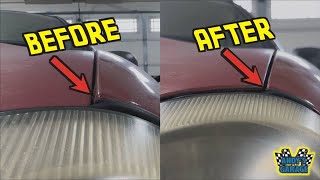
Uneven gaps mean the hood needs alignment. This is done by slightly loosening the hinge bolts and shifting the hood forward, backward, or side-to-side until the gaps are uniform. If you have an aftermarket hood, perfect alignment may be difficult to achieve due to manufacturing variances.
🎬 See how to adjust and level your hoodHelpful Videos
Technical Specifications
OEM Part Numbers: 22601675
Partslink Number: GM1230220

The information in this article is provided for general reference and educational purposes only. Vehicle specifications, procedures, and part compatibility can vary by production date, trim level, and region. Always consult your vehicle's factory service manual and verify part numbers before purchasing or performing repairs. Safety-critical components such as airbags, seat belts, and braking systems should be installed by a qualified professional.
- Chevrolet Malibu: