

2017-2018 Ford Fusion Fog Light: Halogen vs. LED, Moisture Issues, and Replacement
This guide covers the common issues, part variations, and replacement process for the halogen fog lamp assembly on 2017-2018 Ford Fusions.
- The key part number is HS7Z-15201-A, which is the DRIVER side HALOGEN fog lamp for models without the Sport package.
- Halogen (most trims) and LED (Sport/Platinum trims) fog lights are NOT interchangeable without major modifications.
- The most common failure is moisture inside the lens due to a bad seal, which can be inspected before buying a used part.
- Replacement is simple for DIYers, involving prying off the front bezel and removing two 10mm bolts.
Key Part Variants: Halogen vs. LED
For the 2017-2018 Ford Fusion, fog lights came in two main types, and they are not directly interchangeable. Understanding the difference is critical to ordering the correct part.
- Halogen Assembly (HS7Z-15201-A): This is the standard fog light found on most trims, including S, SE, and some Titanium models without specific packages. It uses a replaceable H11 halogen bulb. This assembly is characterized by a traditional reflector bowl design.
- LED Assembly: Higher trim levels like the Sport, Platinum, and SE models with the Luxury package or Appearance package came equipped with factory LED fog lights. These are a sealed unit where the LED light source is integrated and not separately replaceable. They have a distinctly different look, often with a flat, projector-style lens.
Warning: The halogen and LED fog light assemblies have different shapes, mounting points, and electrical connectors. You cannot upgrade from a halogen to an OEM LED unit without changing the bumper cover, wiring harness, and potentially reprogramming the vehicle's Body Control Module (BCM).
Symptoms of Failure
Due to their low position on the vehicle, fog light assemblies are prone to damage from road debris and weather. Here are the most common signs of failure:
- Condensation or Moisture Inside the Lens: This is the most frequent issue. It indicates a failed seal between the lens and the housing or a bad seal on the bulb socket. While minor fogging that clears up may be normal, persistent water droplets or pooling water will cause the reflective coating to peel and can short out the bulb.
- Cracked or Pitted Lens: Impacts from rocks and other road debris can easily crack or chip the plastic lens. A cracked lens will allow moisture to enter and will also disrupt the beam pattern, reducing effectiveness and potentially violating safety standards.
- Fog Light Not Working: If the light is out, the first step is to check the H11 bulb. If a new bulb doesn't fix it, the problem could be a corroded socket, a damaged connector, or a wiring issue.
- Dim or Yellowed Output: Over time, the internal reflector can become dull from heat and moisture, and the outer lens can be sandblasted by road grit, both of which significantly reduce light output.
Known Issues, TSBs, and Recalls
As of this writing, there are no specific recalls or widespread Technical Service Bulletins (TSBs) from Ford directly addressing the 2017-2018 Fusion's halogen fog lights. Most issues are related to common wear and tear. However, it's always wise to check for the latest TSBs, as new ones can be issued. The most common owner complaints found on forums relate to moisture intrusion and bulbs burning out prematurely due to this moisture.
Buying a Used Halogen Fog Light Assembly
A used OEM fog light is often a smart choice, offering original factory quality at a lower price than a new part. However, careful inspection is key.
- Inspect the Lens: Look for a clear lens with minimal pitting. Avoid any assembly with cracks, no matter how small, as they will leak.
- Check the Seal: Examine the seam where the clear lens meets the black plastic housing. There should be no signs of separation or previous attempts to re-seal it with silicone.
- Verify Mounting Tabs: This is critical. Ensure all mounting tabs and the alignment pins are intact and not cracked. These plastic tabs are fragile and can easily break during removal from a donor vehicle. A light with a broken tab will not sit securely and will vibrate or fall out.
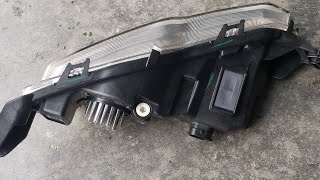
- Examine the Bulb Socket: Look at the rear of the assembly. The socket where the bulb twists in should be clean, with no signs of corrosion, melting, or water damage. The rubber O-ring that seals the bulb should be soft and present.
- OEM vs. Aftermarket: Used OEM parts are generally preferable to cheap, new aftermarket units. Aftermarket lights often use lower-quality plastics and seals, making them more prone to moisture leaks and lens yellowing over a shorter period. They may also have poor beam patterns that don't meet DOT standards.
Cost Comparison
| Part Type | Estimated Price Range |
|---|---|
| New OEM (Ford) | $105 - $165 |
| New Aftermarket | $40 - $75 |
| Used OEM | $50 - $100 |
| Shop Labor for Replacement | $75 - $150 |
Replacement and Alignment
Replacement Procedure
Replacing the fog light on a 2017-2018 Fusion is a straightforward DIY job. The difficulty is low, requiring basic tools and about 30-60 minutes per side.
- Access the Assembly: The easiest way is to remove the fog light bezel (the trim piece surrounding the light). This bezel is typically held in by clips and can be carefully pried off from the front of the bumper.
- Remove the Assembly: The fog light housing is held to the bumper by two 10mm bolts. Once these are removed, the assembly can be pulled forward.
- Disconnect Wiring: Squeeze the tab on the electrical connector and pull it off the bulb socket.
- Installation: Installation is the reverse of removal. Connect the new assembly, bolt it into place, and then snap the bezel back on. 🎬 See this step-by-step fog light replacement walkthrough
Pro Tip: Before fully reinstalling the bezel, turn on the fog lights to ensure the new bulb and connection are working.
Aiming the Fog Lights
After installation, you must aim the new fog light. An improperly aimed light is ineffective and can blind other drivers. Some sources suggest the adjustment screw is inaccessible without removing the light, while others imply it can be done from underneath. The general procedure is as follows:
- Park the car on a level surface, 25 feet away from a flat wall.
- Measure the height from the ground to the center of your fog light. Mark this height on the wall with tape.
- Turn on the fog lights. The top of the beam's brightest cutoff point should be 4 inches below your tape mark at 25 feet.
- Use the adjuster screw on the back of the fog light assembly (often a Phillips or Torx screw) to raise or lower the beam until it is correctly aimed. Turning the screw clockwise usually raises the beam, and counter-clockwise lowers it. 🎬 Watch: How to adjust the fog light on a 2017 Fusion
FAQ
What bulb does the 2017-2018 Fusion halogen fog light use?
The standard halogen fog light assembly uses an H11 bulb.
Can I just replace the lens if it's cracked?
No, the lens and housing are manufactured as a single, sealed unit. If the lens is cracked, the entire fog light assembly must be replaced.
My fog light has moisture in it. Do I need to replace it?
Not always. If it's a minor issue, you can try removing the assembly, taking out the bulb, and letting it dry completely in the sun. Reinstall, ensuring the bulb's rubber seal is in good condition. If the moisture returns, the main seal has failed and the assembly should be replaced to prevent electrical issues.
🎬 Watch: How to dry and seal moisture in your lightsIs the driver side and passenger side fog light the same part?
No, they are different parts with unique part numbers. The driver side is HS7Z-15201-A. The passenger side is HS7Z-15200-A. They are mirror images of each other and are not interchangeable.
Helpful Videos
Technical Specifications
OEM Part Numbers: HS7Z-15201-A (Driver Side) HS7Z-15200-A (Passenger Side)
Bulb Type: H11
We Have This Part in Stock


The information in this article is provided for general reference and educational purposes only. Vehicle specifications, procedures, and part compatibility can vary by production date, trim level, and region. Always consult your vehicle's factory service manual and verify part numbers before purchasing or performing repairs. Safety-critical components such as airbags, seat belts, and braking systems should be installed by a qualified professional.
- Ford Fusion: