

Toyota 4Runner Headlight Guide (2014-2021): Halogen vs. LED and Condensation Issues
This guide clarifies the critical differences between 2014-2020 halogen and 2021+ LED headlights, and covers common problems like moisture inside the lens.
- The most critical factor is the year: 2014-2020 models use halogen headlights, while 2021+ models use incompatible Bi-LED headlights.
- Moisture and condensation inside the lens is a very common problem, often caused by a poorly sealed rear dust cap after changing a bulb.
- The stock halogen headlights on 2014-2020 models are widely considered to have poor performance, driving many owners to seek upgrades.
- Aiming is mandatory after replacing a headlight assembly and can be done with a long Phillips screwdriver.
Headlight Variants: The 2021 Technology Split

The most important factor when buying a headlight for a 2014-2021 Toyota 4Runner is the model year. Toyota changed the headlight technology mid-generation, and the two types are not directly interchangeable.
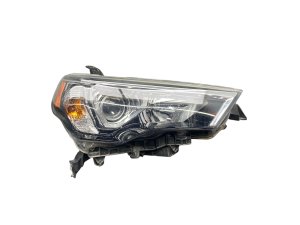
- 2014-2020 Models: Halogen Projector Headlights. The vast majority of 4Runners from these years, including SR5, Trail, TRD Off-Road, and Limited trims, came equipped with halogen projector headlights. These use a projector lens for the low beam (H11 bulb) and a separate reflector for the high beam (9005 bulb). Some trims, like the TRD Pro, featured a black or smoked chrome bezel, but the internal lighting technology remained the same. These assemblies are what the OEM part numbers 81130-35541 and TO2519150 refer to.
- 2021+ Models: Bi-LED Projector Headlights. Starting in the 2021 model year, all 4Runner trims received Bi-LED headlights as standard equipment. These units use a single, powerful LED source and a projector for both low and high beam functions, providing significantly better light output than the earlier halogen units.
Warning: The 2014-2020 halogen assemblies and 2021+ LED assemblies are NOT plug-and-play. While they share the same physical mounting points, the electrical connectors are different. Swapping from halogen to the OEM LED units requires modifying the wiring harness by changing the connector pins.
Symptoms of a Failing Headlight Assembly

- Dim or Yellowed Light Output: Over time, halogen bulbs degrade and the lens can become hazy or yellowed from UV exposure, significantly reducing visibility at night. Owners of 2014-2020 models frequently complain about poor stock headlight performance.
- Condensation or Moisture Inside the Lens: Finding water droplets or fog inside the headlight is a common issue. This points to a failed seal on the housing, a poorly seated bulb, or an improperly sealed dust cap, often after an aftermarket bulb installation.
- Flickering or Intermittent Operation: This can be caused by a failing bulb, a loose connection, or a problem with the vehicle's wiring. On 2014-2020 models, using incompatible LED drop-in bulbs for the Daytime Running Lights (DRLs) can cause flickering because the DRL function works by sending a pulsed, lower voltage to the high beam bulb.
- Cracked Lens or Broken Mounting Tabs: Physical damage from road debris or a minor impact can compromise the headlight's integrity, allowing moisture to enter and potentially causing it to become loose.
Known Issues, Recalls, and Technical Service Bulletins (TSBs)

As of early 2026, there are no specific recalls or widespread Technical Service Bulletins (TSBs) from Toyota for headlight failure, condensation, or hazing on the 2014-2021 4Runner. However, owner forums are filled with reports of two main issues:
- Moisture Intrusion: This is the most common complaint. Headlight housings are not perfectly airtight; they are vented to accommodate temperature and pressure changes. However, excessive or persistent water indicates a seal has failed. The most common culprits are the rear dust caps not being seated correctly after a bulb change or the main housing seal deteriorating over time.
- Poor Halogen Performance (2014-2020): The stock halogen projectors are widely considered to have weak light output. This has led to a large market for aftermarket upgrades, from simple bulb swaps to full housing replacements. A popular DIY upgrade is to modify and install an H9 bulb in place of the stock H11 low beam, which provides more light but has a shorter lifespan.
Buying a Used 2014-2021 4Runner Headlight Assembly

Buying a used OEM headlight is often a smart choice, as factory parts typically have better optics and durability than cheap aftermarket alternatives. Here’s what to look for.
1. Verify Compatibility: Halogen vs. LED
This is the most critical step. Confirm which type of headlight your 4Runner requires. If you have a 2014-2020 model, you need the halogen assembly. If you have a 2021 or newer model, you need the LED assembly. Do not buy an LED assembly for a halogen-equipped truck unless you are prepared to modify the wiring.
2. Inspect the Lens for Damage
Carefully check the clear polycarbonate lens for:
- Hazing and UV Damage: A cloudy or yellowed surface that can't be polished away.
- Moisture Stains: Look for dried water spots or a mineral film on the *inside* of the lens. This is a red flag that the unit has a leak.
- Deep Scratches or Cracks: Any crack, no matter how small, will allow moisture in and will eventually lead to failure.
3. Check All Mounting Tabs and the Housing
Turn the assembly over and inspect all mounting points. These are often broken during removal or in minor accidents. A headlight with a broken tab will not sit securely, leading to vibration and improper beam alignment. Also check the black plastic rear housing for any cracks or signs of repair.
4. What's Included?
Most used headlight assemblies are sold as the housing only. They typically do not include bulbs, rubber dust covers, or any wiring. The 2014-2020 halogen housings do not require any external ballasts or modules. The 2021+ LED headlights have their LED driver integrated into the assembly.
Cost Comparison
| Part Type | Estimated Cost (Per Side) | Notes |
|---|---|---|
| New OEM (Halogen) | $450 - $700+ | Genuine Toyota part from a dealership. |
| New Aftermarket (Halogen Style) | $130 - $250 | Varying quality. Brands include TYC, Depo, and others. |
| Used OEM (Halogen) | $150 - $300 | Good value, but requires careful inspection. |
| New Aftermarket (Full LED Upgrade) | $500 - $1,200 (Pair) | Complete LED assemblies from brands like Morimoto or AlphaRex. |
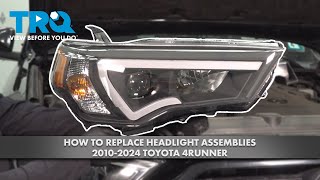
| Shop Labor for Replacement | $150 - $300 | Involves removing the front bumper cover. | 🎬 See this step-by-step walkthrough for replacing the entire headlight assembly.
Replacement and Alignment Overview
Replacing the headlight assembly is a feasible DIY job for those with moderate experience. The process involves removing the front bumper cover to access the bolts that secure the headlight.
Pro Tip: Before starting, place painter's tape along the edges of the fenders and bumper where they meet the headlight to prevent scratching the paint during removal and installation.
Is Aiming Required After Installation?
Yes, absolutely. Any time a headlight assembly is replaced, it must be properly aimed. Failure to do so will result in poor visibility and can be dangerous for oncoming drivers. The process is simple:
- Park the vehicle on a level surface, 25 feet away from a flat wall.
- Turn on the low beams.
- Locate the adjustment gear on the back of the headlight. It is accessible from the top with a long Phillips screwdriver or an 8mm socket.
- Turn the adjuster to move the beam up or down. On most models, turning clockwise lowers the beam and counter-clockwise raises it. The top of the beam's cutoff line should be slightly below the center height of the headlight itself. 🎬 Watch how to properly aim your 4Runner headlights after installation.
Frequently Asked Questions (FAQ)
Can I put 2021+ factory LED headlights on my 2018 4Runner?
Yes, it is physically possible as they share the same mounting points, but it requires electrical modification. You will need to change the pins on the wiring connector to match the 2021+ LED headlight's plug. There are video tutorials online showing how to perform this swap.
🎬 Watch this guide on retrofitting 2021 LED headlights to older models.My headlight is fogged up inside. Do I need to replace it?
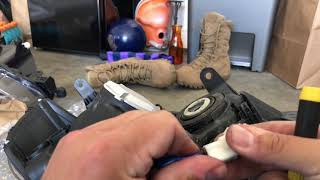
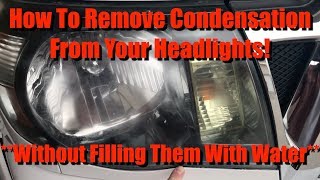
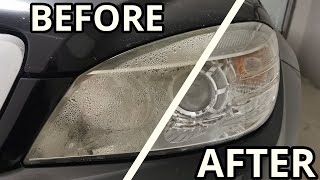
Not necessarily. First, check that the round, black rubber dust covers on the back are tight. A loose cap is the most common cause of moisture. If the cap is secure, you can try to dry out the headlight by removing the cap on a warm, dry day and letting the moisture evaporate. Some owners use a hairdryer on a low setting or place silica gel packets inside the housing temporarily to absorb the water. If the condensation returns quickly, the housing has a crack or a bad seal and should be replaced.
Why are my aftermarket LED bulbs flickering?
On 2014-2020 models, the Daytime Running Lights (DRLs) share the high beam bulb (9005) but run it at a lower power using a Pulse Width Modulation (PWM) signal. Many simple LED bulbs cannot handle this pulsed signal correctly, causing them to flicker or strobe in DRL mode. To fix this, you may need to install an anti-flicker harness or a CANbus decoder.
Is it worth upgrading from halogen to LED bulbs in my original 2016 headlights?
While many companies sell 'plug-and-play' LED bulbs, putting them into a housing designed for a halogen filament can produce a poor beam pattern with excessive glare and dark spots. While the light may seem brighter right in front of the truck, it often reduces long-distance visibility. For the best and safest performance upgrade, it is recommended to either replace the entire assembly with a quality aftermarket LED unit or perform a proper HID/LED projector retrofit.
Technical Specifications & Part Numbers
Applicable to 2014-2020 Halogen Headlight Assembly
- Low Beam Bulb Type: H11 Halogen
- High Beam / DRL Bulb Type: 9005 (HB3) Halogen
- Known OEM Part Numbers (Right/Passenger Side): 81130-35541, 81130-35540, 8113035541
- Known Partslink Number (Right/Passenger Side): TO2519150
- Known OEM Part Numbers (Left/Driver Side): 81170-35571, 81170-35570
Applicable to 2021+ LED Headlight Assembly
- Low & High Beam Type: Integrated Bi-LED Projector (non-serviceable bulb)
- Known OEM Part Numbers (Partial): 81070-35600, 81140-35610
Helpful Videos

Technical Specifications
OEM Part Numbers: 81130-35440 81130-35441 81130-35540 81130-35541 8113035541 81170-35570 81170-35571 TO2519150
Vehicle Year Split: 2014-2020 (Halogen Projector), 2021+ (Bi-LED Projector). Halogen Bulb Types: H11 (Low Beam), 9005/HB3 (High Beam/DRL).
We Have This Part in Stock


The information in this article is provided for general reference and educational purposes only. Vehicle specifications, procedures, and part compatibility can vary by production date, trim level, and region. Always consult your vehicle's factory service manual and verify part numbers before purchasing or performing repairs. Safety-critical components such as airbags, seat belts, and braking systems should be installed by a qualified professional.
- Toyota 4Runner:
- 🎬 Helpful Videos
- 🛍️ Shop This Part
- Headlight Variants: The 2021 Technology Split
- Symptoms of a Failing Headlight Assembly
- Known Issues, Recalls, and Technical Service Bulletins (TSBs)
- Buying a Used 2014-2021 4Runner Headlight Assembly
- 1. Verify Compatibility: Halogen vs. LED
- 2. Inspect the Lens for Damage
- 3. Check All Mounting Tabs and the Housing
- 4. What's Included?
- Cost Comparison
- Replacement and Alignment Overview
- Is Aiming Required After Installation?
- Frequently Asked Questions (FAQ)
- Technical Specifications & Part Numbers
- 🎟️ Get 5% Off