

2012-2014 Hyundai Azera Headlight Guide: Avoiding the Halogen vs. HID Trap
This guide covers the critical differences between Halogen and HID headlights, common moisture problems, and how to inspect a used assembly for your 2012-2014 Hyundai Azera.
- The 2012-2014 Azera has two non-interchangeable headlight types: Halogen (base) and HID/Xenon (Limited). You must buy the correct type for your car.
- Moisture and condensation inside the lens is a common failure point, often requiring the entire assembly to be replaced if the seal is broken.
- When buying a used assembly, check all mounting tabs for cracks and verify if HID models include the expensive ballast module.
- Replacement requires removing the front bumper cover, and the headlights must be properly aimed after installation for safety.
Headlight Variants: Halogen vs. HID (Xenon)
The 2012-2014 Hyundai Azera was equipped with two different types of headlight assemblies depending on the vehicle's trim level. This is the single most important factor to verify before purchasing a replacement, as the two types are not interchangeable.
Standard Halogen Headlights
Found on the base model Azera, these assemblies use halogen bulbs for both the low and high beams, typically an H7 bulb for each function. They have a more traditional reflector-style housing for the high beam and a projector for the low beam. The wiring connector and mounting points are specific to the halogen setup.
High-Intensity Discharge (HID/Xenon) Headlights
Standard on the Azera Limited and models with the Technology Package, these premium headlights offer a brighter, whiter light. They use a D1S HID bulb for the low beam and a separate H7 halogen bulb for the high beam. These assemblies are visually distinct due to the unique look of the HID projector lens and often have different internal styling. Crucially, they require an external ballast (or igniter module) to provide the high voltage needed to start the HID bulb. This ballast is a small metal box usually mounted to the bottom of the headlight housing.
Warning: Halogen and HID headlight assemblies are NOT plug-and-play. They use different wiring harnesses, and the vehicle's body control module is programmed differently for each type. Attempting to install an HID assembly on a car originally equipped with halogens (or vice-versa) will result in non-functional lights and potential electrical issues. Always match the replacement part to your vehicle's original factory-installed lighting technology.
Symptoms of a Failing Headlight Assembly
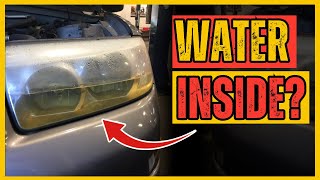
- Moisture or Condensation Inside the Lens: This is a very common issue. While minor fogging that disappears after running the lights may be normal, persistent moisture or visible water droplets indicate a failed seal or a crack in the housing. This can lead to corroded wiring, premature bulb failure, and foggy light output.
- Dim or Flickering HID Bulb: In HID-equipped models, a bulb that flickers, changes color (often to a pink or purple hue), or is dim could be a sign of a failing bulb or a bad ballast.
- Headlight Works Intermittently: This can point to a loose connection, a corroded wiring harness inside the assembly, or a failing ballast in HID models.
- Yellow, Hazy, or Foggy Lens: The outer polycarbonate lens can become yellowed and cloudy from UV sun damage and road debris. This significantly reduces light output and is a safety hazard.
- Non-Functioning Daytime Running Lights (DRLs): Some owners have reported issues with the LED daytime running lights dimming or failing completely, which can be caused by a faulty internal circuit board within the assembly.
Known Issues, TSBs, and Recalls
While there are no recalls specifically for the headlight assemblies on the 2012-2014 Azera, there are related factory communications and a major safety recall to be aware of.
- TSB for Headlight Condensation: Hyundai has issued a Technical Service Bulletin (TSB) that addresses the causes of moisture inside lamp assemblies. It explains that minor condensation can be normal, but persistent water buildup points to a problem. Common causes include bad seals, clogged housing vents, or cracks.
- Recall for ABS Module Fire Risk: A major recall (NHTSA ID: 23V-651000) was issued for many Hyundai models, including the 2012-2015 Azera. The Anti-Lock Brake System (ABS) module can leak fluid internally, causing an electrical short that can lead to a fire in the engine compartment, either while driving or parked. While not directly a headlight issue, this is a critical safety repair to have performed.
Pro Tip: If you have moisture in your headlight, you can try to dry it out. Remove the bulb access caps on the back of the assembly and use a hairdryer on a low setting to gently blow warm air inside. Afterwards, placing a few silica gel desiccant packs inside the housing before sealing it back up can help absorb any remaining moisture. 🎬 Watch: How to dry and seal a leaking headlight However, this is a temporary fix if the original seal is broken.
Buying a Used Headlight Assembly: What to Inspect
A used OEM headlight is often a great value compared to an expensive new dealer part. However, careful inspection is critical.
- Verify the Type (Halogen vs. HID): This is the most important step. Look for markings on the housing. HID assemblies will often have high-voltage warning symbols. The easiest way is to check the part number on the sticker. Part number 92101-3V020 is the left (driver) side Halogen assembly. If your car has HIDs, you need the corresponding HID part number.
- Check All Mounting Tabs: The assembly is held in place by several plastic tabs. These are brittle and often break during minor accidents or improper removal. Inspect every tab for cracks or signs of being repaired with glue or epoxy. A missing tab will cause the headlight to vibrate and be impossible to aim correctly.
- Inspect the Lens Condition: Look for deep scratches, rock chips, and stress cracks. Check for hazing or yellowing. Light surface hazing can be polished out, but a lens that is cloudy on the inside or has deep cracks cannot be repaired.
- Look for Signs of Moisture: Check for a 'water line' or mineral deposits on the inside of the lens or on the chrome reflectors. This is a clear sign the assembly had a leak and may have internal corrosion.
- For HID Assemblies - Check for Included Components: Verify if the used HID assembly includes the D1S bulb and, most importantly, the ballast module. The ballast is often sold separately and can be expensive, so an assembly that includes it is a much better value.
Replacement and Aiming
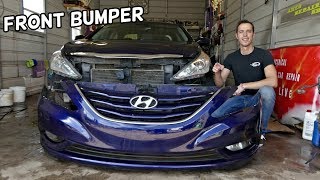
Replacing the headlight assembly on a 2012-2014 Azera is a moderately difficult job for a DIYer, primarily because it requires removing the front bumper cover to access all the mounting bolts.
🎬 See this guide on removing the front bumper coverAfter the new assembly is installed, it must be aimed. Failure to do so will result in poor visibility and can blind other drivers. The aiming procedure involves parking the car on a level surface 25 feet from a flat wall and adjusting two screws on the back of the headlight assembly. These screws control the vertical and horizontal alignment of the low-beam cutoff line.
Cost of a 2012-2014 Hyundai Azera Headlight Assembly
| Part Type | Estimated Cost (Per Side) |
|---|---|
| New OEM (Halogen) | $1,000 - $1,500 |
| New OEM (HID/Xenon) | $1,300 - $1,800+ |
| New Aftermarket | $250 - $500 |
| Used OEM | $200 - $700 (Varies by condition and type) |
| Shop Labor Cost | $150 - $300 (1.5-2.5 hours) |
Frequently Asked Questions (FAQ)
Can I upgrade my base model's halogen headlights to the factory HIDs?
This is not a simple swap. It would require the HID-specific headlight assemblies, ballasts, and significant custom wiring and potentially reprogramming the vehicle's computer. It is generally not considered a feasible or cost-effective modification.
My headlight is foggy on the inside. Do I have to replace the whole thing?
Not always. If the condensation is minor and goes away when the lights are on, it may be normal. If it's persistent, the assembly has a leak. You can try to reseal the lens-to-housing seam with clear silicone or replace the bulb cap seals. However, if there is permanent damage or water staining inside, replacement is the only reliable solution.
What's the difference between a headlight bulb and a headlight assembly?
A headlight bulb is the small, removable part that creates the light (e.g., an H7 or D1S bulb). The headlight assembly is the entire unit, including the plastic housing, the lens, the internal reflectors, and sometimes the wiring and modules like the ballast.
Is it difficult to replace just the bulb?
Access to the bulbs is through a dust cap on the back of the headlight assembly. While it doesn't require removing the bumper, space can be very tight, especially on one side of the engine bay. It requires twisting off the cap, unclipping the old bulb, and installing the new one without touching the glass.
Helpful Videos
Technical Specifications
OEM Part Numbers: 92101-3V000 92101-3V010 92101-3V020 92101-3V110 92102-3V000 92102-3V010 92102-3V020 92102-3V110
Bulb Types (Halogen Models): H7 Low Beam, H7 High Beam. Bulb Types (HID Models): D1S Low Beam, H7 High Beam.
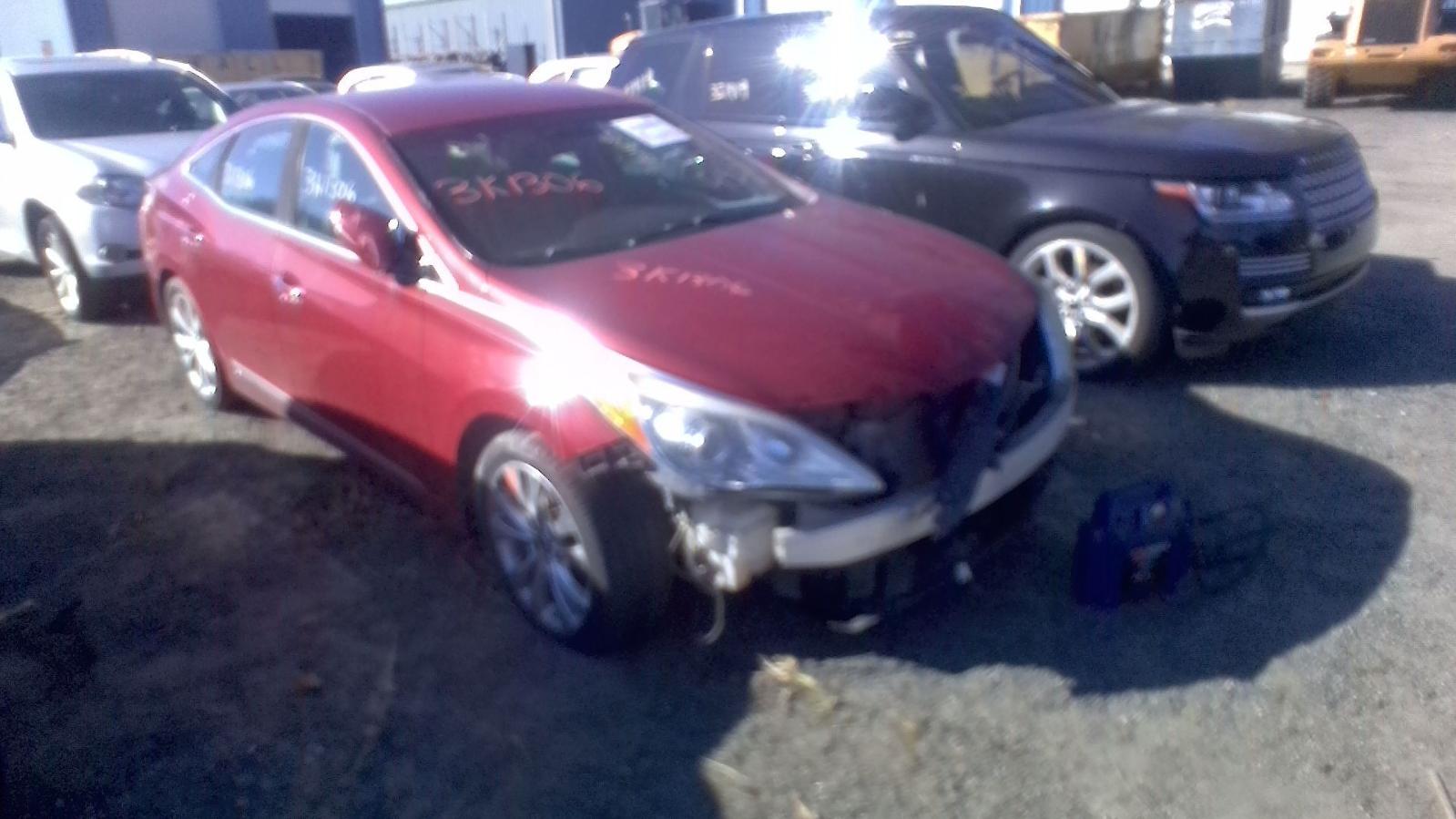
We Have This Part in Stock


The information in this article is provided for general reference and educational purposes only. Vehicle specifications, procedures, and part compatibility can vary by production date, trim level, and region. Always consult your vehicle's factory service manual and verify part numbers before purchasing or performing repairs. Safety-critical components such as airbags, seat belts, and braking systems should be installed by a qualified professional.
- Hyundai Azera:
- 🎬 Helpful Videos
- 🛍️ Shop This Part
- Headlight Variants: Halogen vs. HID (Xenon)
- Standard Halogen Headlights
- High-Intensity Discharge (HID/Xenon) Headlights
- Symptoms of a Failing Headlight Assembly
- Known Issues, TSBs, and Recalls
- Buying a Used Headlight Assembly: What to Inspect
- Replacement and Aiming
- Cost of a 2012-2014 Hyundai Azera Headlight Assembly
- Frequently Asked Questions (FAQ)
- 🎟️ Get 5% Off