

1985-1990 Escort & 1986-88 EXP Headlight: Sealed Beam vs. Composite Guide
This guide clarifies the critical mid-1985 headlight change for the Ford Escort and explains compatibility for the Ford EXP, ensuring you buy the correct assembly.
- Crucially, this composite headlight only fits 1985 Ford Escorts built from March 1985 onward; it does not fit early '85 models with sealed beams.
- This part fits all 1986-1990 Ford Escorts and 1986-1988 Ford EXPs.
- When buying used, the most important inspection points are the mounting tabs, which are notoriously brittle, and the clarity of the lens.
- The assembly uses a single, common 9004 halogen bulb for both high and low beams.
- Aiming the headlight is required after replacement for safety and legal compliance.
The Critical Mid-1985 Headlight Change
The single most important factor when buying a headlight for a 1985 Ford Escort is the production date. Ford updated the Escort's front-end style mid-year, creating a significant compatibility issue.
- Early 1985 (Before March 1985): These vehicles used a recessed, rectangular sealed beam headlight. The entire lamp is a single, sealed glass unit. 🎬 Watch how to replace a classic sealed beam headlight
- Late 1985 (From March 1985 onward): These vehicles feature a flush-mounted composite headlight assembly with a plastic lens and a replaceable halogen bulb.
Warning: The sealed beam and composite headlight assemblies are NOT interchangeable. They have different shapes, mounting points, and require different grilles and trim pieces. This guide and the associated part numbers ONLY apply to the later, composite-style headlights.
The Ford EXP received this new front end for its 1986 model year refresh, so all 1986-1988 EXPs use the composite headlight assembly discussed here.
Vehicle Fitment
This composite headlight assembly fits the following North American vehicles:
- 1985 Ford Escort (Manufactured from March 1985 onward)
- 1986-1990 Ford Escort
- 1986-1988 Ford EXP
- 1985-1987 Mercury Lynx (The Escort's sister car, also updated mid-1985)
Symptoms of a Failing Headlight Assembly
Failure of the assembly itself is usually physical, while lighting issues can be the bulb or wiring. Look for:
- Dim or Yellowed Light Output: The plastic lens becomes hazy and yellowed from UV exposure, scattering light instead of projecting it.
- Moisture or Condensation: Water droplets or fog inside the lens indicate a failed seal, which can lead to corrosion of the reflector and bulb socket.
- Cracked Lens or Housing: Physical damage from road debris or minor impacts can break the lens or rear housing, allowing moisture in and compromising the structure.
- Broken Mounting Tabs: The plastic tabs used to bolt the assembly to the car become brittle with age and can easily snap during removal or a minor impact, leading to a loose, vibrating headlight.
- Inoperable Headlight: While often a burned-out bulb or fuse, it can also be caused by a corroded bulb socket within the assembly itself.
Buying a Used Headlight Assembly: What to Inspect
For vehicles of this age, a used OEM headlight is often a better choice than a poor-quality new aftermarket part. Here’s what to check:
- Confirm the Style: First and foremost, ensure you are buying the composite style, not the earlier sealed beam.
- Lens Clarity: Check for deep yellowing, cloudiness, and 'crazing' (a network of fine cracks). Minor surface haze can often be polished away, but internal damage or deep cracks mean the lens is beyond saving.
- Mounting Point Integrity: Carefully inspect all mounting tabs and bosses on the housing. These are notoriously brittle on older plastics. A single broken tab can make it impossible to secure and aim the headlight properly.
- Check for Leaks: Look for a 'water line' or mineral deposits inside the housing. This is a clear sign the seal has failed and the assembly has had water in it.
- Reflector Condition: The chrome reflector inside should be bright and shiny. A dull, corroded, or burnt-looking reflector will not project light effectively, even with a new bulb.
- Bulb Socket and Wiring: Examine the bulb socket for signs of corrosion, melting, or brittle wires. A corroded socket can cause intermittent light function.
Pro Tip: When removing an old headlight, the plastic retaining clips and adjusters are often extremely brittle. Expect them to break and consider having replacements on hand if possible. A YouTube video on an '88 Escort GT highlights how fragile these components can be.
🎬 Watch this '88 Escort GT headlight installation walkthroughReplacement and Aiming
Replacing the headlight assembly on these models is straightforward for a DIY mechanic. The process typically involves removing the front grille and corner marker light to access the headlight's mounting bolts. No bumper removal is required for this generation, unlike later Escort models.
🎬 See a quick Ford Escort headlight replacement demoHeadlight Aiming
After installation, you MUST aim the headlight. This is a legal requirement and critical for safety. The general procedure is:
- Park the car on level ground, 25 feet away from a flat, vertical wall.
- Turn on the low beams. The top of the light cutoff on the wall should be no higher than the center of the headlight assembly itself.
- Use the adjuster screws on the back of the assembly to move the beam vertically and horizontally until it is properly aligned.
Technical Specifications and Part Numbers
These assemblies are simple composite halogen units. They do not require any special modules, ballasts, or drivers.
- Headlight Type: Composite Halogen
- Bulb Type: 9004 (for both high and low beam in one bulb)
| Part | Side | OEM Part Numbers |
|---|---|---|
| Headlight Assembly | Left (Driver) | E5FZ-13201-A, E7FZ-13201-A, E5YY-13201-A (Mercury) |
| Headlight Assembly | Right (Passenger) | E6FZ-13200-A |
| Side Marker Assembly | Left (Driver) | E6EB-13216-AD |
Note: Part numbers are provided for reference and were correct based on initial data. Always verify fitment with the seller.
Known Issues, Recalls, and TSBs
For vehicles of this age, formal recalls or Technical Service Bulletins (TSBs) are rare and difficult to source. The primary known issues are related to material degradation over time, such as plastic becoming brittle and lenses hazing. A search of the NHTSA database did not reveal any specific recalls for the headlight assemblies on the 1985-1990 Escort or 1986-1988 EXP. Most lighting-related recalls for Ford vehicles are for much newer models and different issues, such as faulty control modules or wiring harnesses that do not apply to these simple, older vehicles.
What's the difference between a sealed beam and a composite headlight?
A sealed beam headlight is a one-piece, self-contained unit where the filament, reflector, and lens are all sealed together in a glass housing. When the filament burns out, you replace the entire unit. A composite headlight has a separate housing (usually plastic) with a replaceable bulb inside. This was a newer technology in the mid-1980s.
Will this headlight fit my early 1985 Escort?
No. If your 1985 Escort was built before March 1985, it has the older sealed beam headlights. This composite assembly will not fit without extensive modification to the car's core support, grille, and trim.
Can I just polish my old, hazy headlight?
Sometimes. If the hazing and yellowing are only on the outside surface of the plastic lens, a headlight restoration kit can often restore clarity. However, if the plastic is cloudy all the way through, has fine cracks (crazing), or has moisture damage on the inside, polishing will not fix it and the assembly should be replaced.
Do I need to replace my headlights in pairs?
It is highly recommended. If one headlight is old and yellowed, the other is likely in similar condition. Replacing both at the same time ensures a consistent appearance and balanced light output for safer night driving. At a minimum, you should always replace bulbs in pairs.
Helpful Videos
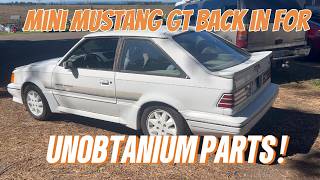
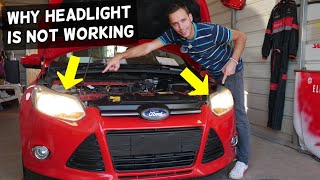

Technical Specifications
OEM Part Numbers: E5FZ-13201-A E6EB-13216-AD E6FZ-13200-A E7FZ-13201-A E5YY-13201-A
Headlight Type: Composite Halogen. Bulb Type: 9004.
We Have This Part in Stock


The information in this article is provided for general reference and educational purposes only. Vehicle specifications, procedures, and part compatibility can vary by production date, trim level, and region. Always consult your vehicle's factory service manual and verify part numbers before purchasing or performing repairs. Safety-critical components such as airbags, seat belts, and braking systems should be installed by a qualified professional.
- Ford Escort:
- Ford EXP:
- 🎬 Helpful Videos
- 🛍️ Shop This Part
- The Critical Mid-1985 Headlight Change
- Vehicle Fitment
- Symptoms of a Failing Headlight Assembly
- Buying a Used Headlight Assembly: What to Inspect
- Replacement and Aiming
- Headlight Aiming
- Technical Specifications and Part Numbers
- Known Issues, Recalls, and TSBs
- 🎟️ Get 5% Off