

Ford Escape Headlight Guide (2017-2025): Decoding Halogen, HID, and LED Versions
Avoid costly mistakes by learning to identify the many incompatible headlight versions for the 2017-2019 and 2020-2025 Ford Escape.
- The 2017-2019 and 2020-2025 Ford Escape use completely different headlights that are not interchangeable.
- Within each generation, Halogen, HID (2017-19), and various LED (2020-25) types are not plug-and-play compatible with each other.
- On 2017-2019 models, frequent halogen bulb burnout is a very common problem; many owners switch to aftermarket LED bulbs as a solution.
- When buying a used assembly, always inspect all mounting tabs for damage and check for any signs of past moisture inside the lens.
Ford Escape Headlight Generations: 2017-2019 vs. 2020-2025


The most important thing to understand when buying a headlight for a 2017-2025 Ford Escape is that this period covers two completely different vehicle generations. The headlights are not interchangeable between these groups.
- Third Generation (Facelift): 2017-2019 - These models have a distinct front-end style. Headlights from these years will not physically fit on a 2020 or newer model, and vice-versa.
- Fourth Generation: 2020-2025 - Ford introduced a complete redesign for the 2020 model year with a more rounded, car-like appearance. These headlights are unique to this generation.
Warning: Always confirm you are buying a headlight for the correct generation. A part listed for a "2019 Escape" will not fit a "2020 Escape".
2017-2019 Ford Escape Headlight Assemblies
For the third-generation facelift models, Ford offered two primary types of headlights: Halogen and High-Intensity Discharge (HID/Xenon). These two types are not interchangeable without extensive and costly modifications.
Variant Differences: Halogen vs. HID/Xenon
Identifying which type your Escape has is crucial before purchasing a replacement.
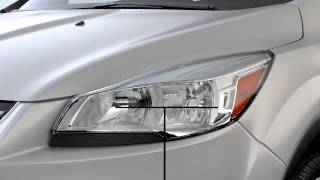
- Halogen Headlights: These are the most common type. They use a glowing filament bulb. The 2017-2019 Escape had two versions of the halogen lamp: a standard reflector type and a version with a chrome bezel that did not include an LED accent strip. The low beam bulb is typically an H11 or 9005, and the high beam is a 9005 or H9.
- HID/Xenon Headlights: Found on higher trim levels like the Titanium, these lights produce a brighter, whiter light. When you turn them on, they may have a brief warm-up period where they shift in color and intensity. They use a D3S bulb for both low and high beam functions (a setup called Bi-Xenon). These assemblies also require an HID ballast and igniter to function, which are typically mounted to the bottom or back of the headlight housing.
Compatibility Warning: A halogen assembly will not work on a vehicle originally equipped with HIDs, and an HID assembly will not work on a vehicle originally equipped with halogens. The wiring connectors and control systems are completely different.
Known Issues and Problems (2017-2019)
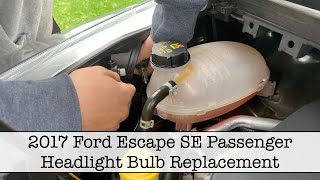
- Premature Bulb Burnout: A widespread complaint among owners is that the factory halogen low beam bulbs burn out frequently, sometimes every few months. 🎬 See how to replace the passenger side low beam bulb
- Melted Sockets: In some cases related to frequent bulb failure, the headlight wiring socket itself can overheat and melt, requiring replacement of the socket and bulb.
- Sudden Low Beam Failure: Some owners report both low beams failing simultaneously. This can sometimes be caused by the Body Control Module (BCM) detecting a fault in one bulb and shutting down the entire circuit as a safety measure. Even if the bulbs test as 'good' outside the vehicle, replacing them with new ones can sometimes resolve the issue.
2020-2025 Ford Escape Headlight Assemblies
The fourth-generation Escape moved away from HID technology in favor of Halogen and multiple tiers of LED headlights. The complexity increased, making correct identification even more critical.
Variant Differences: Halogen vs. LED Tiers
The 2020+ models have several headlight versions that look similar but are not interchangeable.
- Base Halogen: Found on lower trims (like S or SE), these use reflector housings with separate halogen bulbs for low (H9) and high beams (9005/HB3).
- Full LED Headlights: Found on mid- and high-level trims (like SEL, ST-Line, Titanium, Platinum), these assemblies use LEDs as the light source. Unlike halogen bulbs, the LEDs are integrated into the headlight and are not designed to be replaced separately. If an LED fails, the entire assembly must be replaced.
- LED with Signature Lighting / Light Bar: Some higher trims feature a distinctive LED daytime running light strip or a light bar that connects the two headlights across the grille. These assemblies have different internal wiring and control modules. An assembly for a model *with* the light bar will not work correctly on a model *without* it, and vice-versa.
Warning: Upgrading from halogen to factory LED headlights is not a plug-and-play process. It requires different wiring harnesses and programming of the Body Control Module (BCM). Attempting to connect an LED assembly to a halogen-wired car can result in non-functioning lights or damage to the vehicle's electrical system.
Known Issues, Recalls, and TSBs (2020-2025)
- Recall 26C12 (NHTSA 26V121): Certain 2025-2026 Explorer models were recalled for a software issue with the Dynamic Bending Light (DBL) system, which could cause the passenger-side headlight to aim incorrectly in curves. 🎬 Learn how to manually adjust your headlight aim While the recall primarily mentions the Explorer, the 2025 Escape uses similar technology, and owners of models with adaptive headlights should be aware of this potential issue.
- LED Driver Module Failure: Some 2025 models have been recalled for potential headlight failure due to a faulty LED Driver Module, which may need to be inspected and replaced by a dealer.
Symptoms of a Failing Headlight Assembly
- Dim or Yellowed Light Output: The most obvious sign of a failing bulb or a hazed lens.
- Flickering or Intermittent Operation: This can point to a failing bulb, a bad ballast (on HID models), a faulty LED driver, or a loose wiring connection.
- Moisture or Condensation Inside: Water droplets or fog inside the lens indicates a failed seal. This moisture will quickly corrode reflective surfaces and damage electronics, leading to total failure.
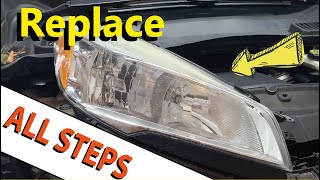
- Burnt Out Sections (LED Models): If a portion of the daytime running light strip or one of the main LED projectors goes out, the entire assembly usually needs to be replaced. 🎬 Watch: Full step-by-step guide for replacing the entire headlamp assembly
- Dashboard Warning Lights: A "Low Beam Bulb Fault" or similar message may appear on the instrument cluster.
Buyer's Guide: How to Inspect and Purchase a Used Headlight Assembly


Buying a used OEM headlight is an excellent way to save money, but careful inspection is key to getting a good part.
Step 1: Positively Identify Your Headlight Type
Before you shop, look at your vehicle's working headlight (if available). Is it Halogen, HID, or LED? Does it have a chrome or black interior bezel? Does it have the LED accent strip? Answering these questions is the first and most important step.
Step 2: Inspect the Lens Condition
Check for deep scratches, rock chips, and cracks. Most importantly, look for hazing (a cloudy or yellowed appearance) caused by UV damage. While minor hazing can be polished, a heavily damaged lens cannot be repaired.
Step 3: Check for Moisture and Seal Integrity
Look for a "water line" or dried mineral deposits on the inside of the lens or chrome. This is a red flag that the headlight had a bad seal and was full of water. Do not buy a headlight that has signs of previous water intrusion.
Step 4: Inspect All Mounting Tabs and Brackets
Headlight assemblies are held in by several plastic tabs that are easily broken in a minor accident or during careless removal. Inspect every single tab. A headlight with a broken main mounting tab may not sit securely, leading to vibration, a bad beam pattern, and potential water leaks.
Step 5: Verify Included Components
Ask if the assembly includes what you need. For a used part, you should expect:
- Halogen: Does it come with the bulbs and rubber dust covers?
- HID: Does it include the D3S bulb, the ballast, and the igniter? These can be very expensive to buy separately.
- LED: Does it include the integrated LED driver/control module?
Pro Tip: For this part, a used OEM (Original Equipment Manufacturer) assembly is often a much better choice than a cheap new aftermarket one. OEM parts use higher-quality plastics with better UV protection for the lens and are guaranteed to fit correctly and produce the correct, safe beam pattern.
Headlight Assembly Replacement and Aiming
Replacement Overview
While changing just a bulb can sometimes be done through the engine bay with tight access, replacing the entire assembly typically requires removing the front bumper cover. This involves removing numerous clips and screws along the top of the grille, in the wheel wells, and underneath the vehicle. While feasible for a DIY mechanic, it is a time-consuming process.
Aiming After Installation
Proper aiming is required by law and is critical for safety. An improperly aimed headlight can blind other drivers or fail to illuminate the road adequately.
- Park the vehicle on a level surface, 25 feet away from a flat, vertical wall.
- Measure the height from the ground to the center of your headlight lens.
- On the wall, make a horizontal tape line at that same height.
- Turn on the low beams. The top of the bright cutoff line of the beam pattern should be right at or slightly below your horizontal tape line.
- Use a Phillips screwdriver to turn the adjustment screw, typically found on the top or back of the headlight assembly, to raise or lower the beam as needed.
| Part Type | Estimated Cost (Per Side) |
|---|---|
| New OEM (Halogen) | $500 - $600 |
| New OEM (HID/LED) | $1,100 - $2,000+ |
| New Aftermarket | $150 - $450 |
| Used OEM | $150 - $600 |
| Shop Labor | $150 - $375 |
Frequently Asked Questions (FAQ)
Can I upgrade my 2017-2019 halogen headlights to factory HIDs?
This is not a simple swap. It requires different wiring harnesses, ballasts, bulbs, and potentially reprogramming the vehicle's computer. It is generally not considered a cost-effective or easy modification.
Can I put LED bulbs in my halogen headlight housings?
Yes, many owners do this, especially on the 2017-2019 models, to solve the problem of premature halogen bulb burnout and to get brighter light. However, the quality of the beam pattern can vary. It is important to buy high-quality LED bulbs designed for projector or reflector housings to ensure a safe beam pattern that doesn't create excessive glare for other drivers.
My new headlight has condensation inside. Is it defective?
Minor, temporary fogging that appears and disappears with weather changes can be normal. However, if you see large water droplets or standing water inside the lens, the headlight seal has failed, and the part is defective and should be returned.
Is a used headlight with a broken tab usable?
It is highly discouraged. Headlights need to be mounted securely to prevent vibration and maintain proper aim. A broken mounting tab can compromise the fit, leading to a shaky beam, a gap between the light and the body, and potential water leaks. It's best to find an assembly with all tabs intact.
OEM Part Numbers
This list contains known OEM part numbers. It is not exhaustive, and part numbers are often superseded. Always verify fitment with the seller using your vehicle's VIN.
- 2017-2019: GJ5Z-13008-A, GJ5Z-13008-N, GJ5Z-13008-P, GJ5Z13008N, GJ5Z-13008-S, GJ5Z-13008-B, GJ5Z-13008-R
- 2020-2025: LJ6B-13E014-AF, LJ6B-13E015-AF, LJ6B-13W029-AH, LJ6Z-13008-E, LJ6Z-13008-G, PJ6B13E015CA, PJ6B13E015CB, PJ6B13E015CC, PJ6B13E015CD, PJ6Z-13008-E, PJ6Z-13008-F, PJ6Z-13008-G, PJ6B-13E014-BC
Helpful Videos
Technical Specifications
OEM Part Numbers: GJ5Z-13008-A GJ5Z-13008-N GJ5Z13008N GJ5Z-13008-P GJ5Z-13008-S LJ6B-13E014-AF LJ6B-13E015-AF LJ6B-13W029-AH LJ6Z-13008-E LJ6Z-13008-G PJ6B13E015CA PJ6B13E015CB PJ6B13E015CC PJ6B13E015CD PJ6Z-13008-E PJ6Z-13008-F PJ6Z-13008-G
Bulb Types (2017-2019): Halogen Low Beam (H11 or 9005), Halogen High Beam (9005 or H9), HID (D3S). Bulb Types (2020-2025): Halogen Low Beam (H9), Halogen High Beam (9005), LED (Integrated/Non-Serviceable).
We Have This Part in Stock



The information in this article is provided for general reference and educational purposes only. Vehicle specifications, procedures, and part compatibility can vary by production date, trim level, and region. Always consult your vehicle's factory service manual and verify part numbers before purchasing or performing repairs. Safety-critical components such as airbags, seat belts, and braking systems should be installed by a qualified professional.
- Ford Escape:
- 🎬 Helpful Videos
- 🛍️ Shop This Part
- Ford Escape Headlight Generations: 2017-2019 vs. 2020-2025
- 2017-2019 Ford Escape Headlight Assemblies
- Variant Differences: Halogen vs. HID/Xenon
- Known Issues and Problems (2017-2019)
- 2020-2025 Ford Escape Headlight Assemblies
- Variant Differences: Halogen vs. LED Tiers
- Known Issues, Recalls, and TSBs (2020-2025)
- Symptoms of a Failing Headlight Assembly
- Buyer's Guide: How to Inspect and Purchase a Used Headlight Assembly
- Step 1: Positively Identify Your Headlight Type
- Step 2: Inspect the Lens Condition
- Step 3: Check for Moisture and Seal Integrity
- Step 4: Inspect All Mounting Tabs and Brackets
- Step 5: Verify Included Components
- Headlight Assembly Replacement and Aiming
- Replacement Overview
- Aiming After Installation
- Frequently Asked Questions (FAQ)
- OEM Part Numbers
- 🎟️ Get 5% Off