

1992-2002 Range Rover Headlight Guide: Classic Round vs. P38 Rectangular
This guide clarifies the critical differences between the simple 7-inch round headlights on the Range Rover Classic and the complex rectangular units on the P38, ensuring you buy the right part.
- The single most important factor is identifying your vehicle: 1992-1995 Range Rover Classics use interchangeable 7-inch round headlights, while 1995-2002 P38 models use side-specific rectangular assemblies.
- When buying a used P38 headlight, the integrity of the plastic mounting tabs is the most critical inspection point. Broken tabs mean the light cannot be installed securely.
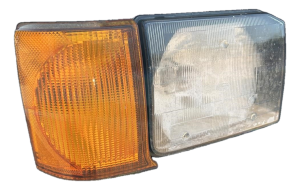
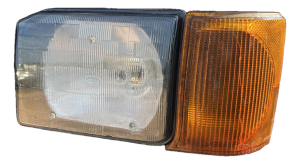
- For P38 models, you must verify the turn signal color (amber for ~95-99, clear for ~00-02) to ensure it matches your other headlight.
- Moisture inside a P38 headlight is a sign of a failed seal. This is a common issue that damages the internal reflector, so avoid buying units with any sign of water ingress.
A Tale of Two Rovers: Identifying Your Headlight

The 1992-2002 period covers two distinct generations of the Land Rover Range Rover, and their headlight assemblies are completely different and non-interchangeable. If you own a 1995 or 1996 model, you must visually confirm which vehicle you have, as both were sold during this overlap.
1992-1995 Range Rover Classic: The 7-Inch Round
Pro Tip: Left and right headlamps on the Range Rover Classic are identical and interchangeable.
The Range Rover Classic uses a traditional 7-inch round headlight, a simple and robust design shared with many classic vehicles. These are typically halogen units. Early models may have come with sealed beam headlights, but most have been converted to accept a modern H4 halogen bulb, which is a significant upgrade. These assemblies consist of a glass lens, a reflector, and a rear housing or 'bucket' that holds it in place. They are known for their simplicity and durability.
- Type: Halogen (originally sealed beam, most now use H4 bulbs).
- Key Feature: Simple, universal 7-inch round design.
- Common Upgrades: Many owners upgrade from original sealed beams to H4 conversion housings or modern LED units designed for 7-inch round openings.
1995-2002 Range Rover P38: The Rectangular Composite
The second-generation P38 Range Rover introduced a modern, rectangular composite headlamp assembly. These units are significantly more complex, featuring a glass lens, an internal reflector, and often an integrated turn signal and a unique headlight wiper system. These assemblies are specific to the left or right side and have several variations to be aware of.
- Type: Halogen (using separate low and high beam bulbs).
- Key Features: Rectangular glass lens, side-specific fitment, and an integrated headlight wash/wipe system on many models.
- Variations: The most important variation is the color of the integrated turn signal lens. Early P38 models (approx. 1995-1999) used an amber turn signal lens, while later models (approx. 2000-2002) used a clear lens. While they may be physically interchangeable, they must match the other side for a correct look.
Warning: A headlamp for a Range Rover Classic will NOT fit a P38, and vice-versa. The mounting, shape, and wiring are completely different. Always verify your model before purchasing.
Symptoms of a Failing Headlamp Assembly

Headlight issues can stem from a simple burnt-out bulb, but sometimes the entire assembly is the culprit. Here are common symptoms of failure:
- Dim or Yellowed Light Output: On Classic models, the reflector's silver coating can degrade or rust, reducing brightness. On P38 models, the internal reflector can peel or become hazy.
- Moisture or Condensation Inside: A common problem on P38 headlights where the seal between the glass lens and the plastic housing fails, allowing water inside. This fogs the lens and will quickly corrode the reflector and bulb sockets.
- Flickering or Intermittent Operation: This often points to a bad electrical connection. On older Classics, this can be due to corrosion in bullet connectors or the fuse block. On P38s, check the main fuse box in the engine bay for signs of burning or corrosion, as this is a known weak point that can cause various electrical issues.
- Cracked or Pitted Lens: The glass lenses on P38 models are durable but can be chipped by road debris or cracked in a minor impact. This will compromise the seal and lead to moisture entry.
- Inoperative Headlight Wipers (P38 Models): The small wiper motors are a frequent failure point. The spindle can seize from lack of lubrication, or the motor itself can burn out. Sometimes the issue is as simple as a blown fuse or the system being disabled if the washer fluid is low.
- Melted Connectors or Wiring: Using incorrect, high-wattage bulbs can overload the factory wiring, causing connectors and even the fuse box to melt, leading to intermittent or total failure.
Known Issues, TSBs, and Recalls
Searches for official Technical Service Bulletins (TSBs) and NHTSA recalls for headlamp assemblies on the 1992-2002 Range Rover models did not yield any specific results directly pertaining to the headlamp assemblies themselves. However, a recall (N556) was issued for later model Range Rovers (2018-2020) regarding the auto high beam indicator not displaying correctly, which is not relevant to these earlier models.
The most common issues reported by owners in forums are not formal recalls but are well-documented problems:
- P38 Engine Bay Fuse Box: This is a known weak point for many electrical systems, including the headlights. Over time, internal connections can degrade and cause intermittent power loss to the lights.
- P38 Headlight Wiper Seizure: The mechanism for the headlight wipers is prone to seizing due to corrosion and lack of lubrication. This can cause the wiper to stop mid-swipe or not work at all.
- Range Rover Classic Wiring: The wiring on older Classics, particularly the bullet connectors and grounds, can become corroded, leading to dim or flickering lights.
Buying a Used Headlamp Assembly: What to Inspect

A used OEM headlamp is often a better choice than a cheap aftermarket part due to superior materials, fit, and beam pattern. Here’s what to look for:
For a Range Rover Classic (7-Inch Round)
- Reflector Condition: Look inside the lens. The silvered reflector should be bright and shiny. Avoid any units with rust, black spots, or a dull, hazy finish, as this will severely impact light output.
- Lens Clarity: Ensure the glass is free of cracks, major chips, or heavy pitting from road debris.
- Bulb Type: Confirm whether it's an older sealed beam or a more desirable housing that accepts a replaceable H4 bulb.
- Mounting Bucket: If included, check the plastic or metal mounting bucket for cracks or stripped screw holes.
For a Range Rover P38 (Rectangular)
- Mounting Tabs: This is the most critical inspection point. The plastic mounting tabs and brackets are brittle and frequently break during removal or minor impacts. Carefully inspect all tabs for cracks, stress marks, or previous repairs. A unit with broken tabs will not mount securely.
- Lens and Seal Integrity: Check the glass lens for any cracks or chips. Closely inspect the seal around the perimeter where the glass meets the black plastic housing. Look for any gaps or signs of old, crumbling sealant.
- No Moisture Inside: Look for any signs of a water line, mineral deposits, or fogginess on the inside of the lens. This indicates a bad seal, and the internal reflector is likely damaged.
- Reflector Condition: Shine a light inside and check the chrome reflector. It should be mirror-bright. Avoid any assembly where the chrome is peeling, hazy, or burnt, especially around the bulb opening.
- Turn Signal Lens Color: Verify if you need the amber (pre-2000) or clear (2000-on) style to match your vehicle's other headlight.
- Headlight Wiper Motor: If possible, test the wiper motor by applying 12V power. At a minimum, check that the wiper arm is not seized on its spindle.
Replacement and Aiming

Replacement Process
Replacing the headlamp assembly is a feasible DIY job for both models.
- Range Rover Classic: The process is very simple. It typically involves removing the front grille and then unscrewing the outer retaining ring that holds the lamp in place. The entire unit can then be unplugged and removed.
- Range Rover P38: This is more involved. You will likely need to remove the front grille for better access. The assembly is held in by several nuts on studs. On the battery side, removing the battery cover or the battery itself can provide much-needed room to work. After unbolting, the assembly can be pulled forward and the electrical connectors unplugged.
Headlight Aiming
After installing a new headlamp assembly, you MUST aim the headlights to ensure proper visibility and avoid blinding other drivers. This is a legal requirement.
- Park the vehicle on a level surface about 25 feet away from a flat wall.
- Turn on the low beams. Measure the height from the ground to the center of your headlight bulbs.
- On the wall, draw a horizontal line at that same height. Draw a second horizontal line 2 inches below the first one.
- On the P38, locate the white plastic adjustment screws on the top/back of the headlamp housing. One screw adjusts vertical (up/down) aim, and the other adjusts horizontal (left/right) aim.
- Turn the vertical adjuster until the top edge of the bright part of the beam pattern (the 'cutoff') is aligned with the lower line you drew on the wall.
- The 'kick-up' in the beam pattern should be centered with the centerline of the headlight. Adjust horizontally as needed.
Warning: Simply installing a high-intensity discharge (HID) or LED bulb into a halogen headlamp housing is dangerous and often illegal. The reflector and lens are not designed for that type of light source and will create excessive glare for oncoming traffic instead of a controlled beam. Proper upgrades require a full projector retrofit.
Cost Comparison
| Part Type | Estimated Cost | Notes |
|---|---|---|
| New OEM (P38) | $450 - $650 per side | Highest quality and perfect fit, but very expensive. |
| New OEM (Classic) | $30 - $110 per side | Relatively inexpensive for a basic H4 conversion housing. |
| New Aftermarket (P38) | $150 - $250 per side | Quality can vary significantly. May have issues with beam pattern and long-term durability of seals. |
| Used OEM (P38) | $75 - $200 per side | Excellent value, provided you inspect it carefully for the issues listed above. |
| Shop Labor | $100 - $200 | Typically 1-1.5 hours of labor for replacement and aiming. |
Frequently Asked Questions
Will a headlight from a Range Rover Classic fit my P38?
No. The headlights are completely different in shape, size, and mounting. A 7-inch round lamp from a Classic will not fit the rectangular opening of a P38.
My P38 headlight is foggy inside. Can it be fixed?
It is possible, but difficult. It requires carefully heating the assembly to soften the sealant, prying the glass lens off, cleaning the inside, and then resealing it with high-quality automotive sealant. For most people, replacing the assembly with a good used unit is a more practical solution.
Why isn't my P38 headlight wiper working?
The most common cause is the wiper motor spindle seizing from corrosion. Other causes include a blown fuse (check fuse 28 in the under-hood fuse box), a bad motor, or a low washer fluid level, which disables the system. Also, remember the headlight wipers only activate when the headlights are on, and typically only on every second or third use of the windshield washers.
Can I upgrade my Range Rover Classic to LED headlights?
Yes, this is a popular and effective upgrade. Because the Classic uses a standard 7-inch round housing, many high-quality, DOT-approved LED replacement units are available that are designed as direct replacements for sealed beams or H4 housings. These provide much better visibility than the original halogen lights.
Technical Specifications
OEM Part Numbers: 9665 AMR2069 AMR3048 AMR3051 AMR3246 AMR4825 AMR4826 AMR4826G AMR4848 PRC7994 RTC4615 STC1210 XBC105100 XBC105160 XBC105170
Range Rover Classic: 7-inch round, typically H4 Halogen bulb. Range Rover P38: Rectangular composite, glass lens, Halogen bulbs (separate high/low), optional integrated headlight wiper.
We Have This Part in Stock



The information in this article is provided for general reference and educational purposes only. Vehicle specifications, procedures, and part compatibility can vary by production date, trim level, and region. Always consult your vehicle's factory service manual and verify part numbers before purchasing or performing repairs. Safety-critical components such as airbags, seat belts, and braking systems should be installed by a qualified professional.
- Land Rover Range Rover:
- 🛍️ Shop This Part
- A Tale of Two Rovers: Identifying Your Headlight
- 1992-1995 Range Rover Classic: The 7-Inch Round
- 1995-2002 Range Rover P38: The Rectangular Composite
- Symptoms of a Failing Headlamp Assembly
- Known Issues, TSBs, and Recalls
- Buying a Used Headlamp Assembly: What to Inspect
- For a Range Rover Classic (7-Inch Round)
- For a Range Rover P38 (Rectangular)
- Replacement and Aiming
- Replacement Process
- Headlight Aiming
- Cost Comparison
- Frequently Asked Questions
- 🎟️ Get 5% Off