

2020-2025 Toyota GR Supra Harmonic Balancer: Decoding B48 vs. B58 Engine Failures
This guide covers the critical differences between the 2.0L and 3.0L engine harmonic balancers, failure symptoms, and how to inspect a used part for your GR Supra.
- The GR Supra uses different harmonic balancers for the 2.0L (B48) and 3.0L (B58) engines; they are not interchangeable.
- When buying a used balancer, the most critical inspection is of the rubber ring for any cracks, bulging, or separation.
- Failure symptoms include unusual engine vibration, a visible wobble from the crank pulley, and chirping noises from the belt area.
- Driving with a failing harmonic balancer is unsafe and can lead to catastrophic engine damage or leave you stranded.
Critical Fitment Warning: 2.0L vs. 3.0L Engines

The most important factor when replacing the harmonic balancer on a 2020-2025 Toyota GR Supra is identifying the correct engine. The 2.0L 4-cylinder (BMW B48) and 3.0L 6-cylinder (BMW B58) models use different harmonic balancers. Installing the wrong part will lead to improper belt alignment, severe vibration, and potential engine damage. Always verify your engine size before purchasing a replacement.
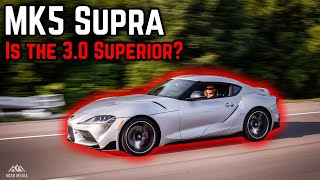
🎬 Watch: Comparing Toyota's MK5 Supra 2.0 vs 3.0 modelsWarning: The B48 and B58 engines are part of the same modular BMW engine family, but their balancers are not interchangeable. The 3.0L B58 is a straight-six, while the 2.0L B48 is essentially the same design with two fewer cylinders.
Part Number Identification
Because the GR Supra is a joint project with BMW, parts often carry both Toyota and BMW part numbers. The 3.0L and 2.0L engines have distinct part number series. Furthermore, Toyota has issued several updated or superseded part numbers. For the 2.0L B48 engine, there is a production date split for the correct part.
| Engine | Toyota Part Numbers | Equivalent BMW Part Numbers | Fitment Notes |
|---|---|---|---|
| 3.0L B58 (2020-2025) | 13470-WAA02, 13470-WAA04 | (Varies, cross-reference required) | Part number 13470-WAA04 replaces the older 13470-WAA02. Fits all 3.0L models. |
| 2.0L B48 (Thru 06/2021) | 13470-WAA01 | (Varies, cross-reference required) | Fits early production 2.0L models. |
| 2.0L B48 (From 07/2021) | 13470-WAA03 | 11238638614, 11232384185, 11238602799 | Fits later production 2.0L models. |
Symptoms of a Failing Harmonic Balancer

A failing harmonic balancer can produce a range of symptoms, from subtle noises to severe vibrations that are impossible to ignore. On the Supra forums, some owners have noted issues that could be related to balancer failure, such as unusual noises or vibrations.
- Engine Vibration: The most common symptom is a new or worsening engine vibration felt in the cabin, steering wheel, or floor, especially at idle or when cruising at a steady RPM.
- Visible Wobble: If you can safely observe the main crankshaft pulley while the engine is running, a visible wobble is a clear sign of failure. This indicates the rubber has degraded and the outer ring is no longer stable.
- Chirping or Squealing Noises: A high-pitched chirp or squeal from the front of the engine, often mistaken for a bad belt, can be caused by the inner and outer rings of the balancer slipping against each other. This happens as the rubber bonding layer fails.
- Separated Rubber: A visual inspection may reveal that the rubber ring between the hub and the outer pulley section is cracked, bulging, or separating.
- Rough Idle or Misfires: In severe cases, the excessive vibration can affect engine timing and stability, leading to a rough idle or even a check engine light for misfires.
Buying a Used Harmonic Balancer: What to Inspect

A used OEM harmonic balancer can be a cost-effective alternative to a new part, but careful inspection is essential. Since this part's function relies on the integrity of its rubber damper, you must check for signs of wear.
- Inspect the Rubber Damper Ring: This is the most critical check. Look for any cracks, no matter how small. Check for dry rot, bulging, or areas where the rubber is separating from the inner hub or outer ring. If the rubber looks anything less than perfect, pass on the part.
- Check for Wobble or Separation: Place the balancer on a flat surface. It should sit perfectly flat. Try to move the outer ring and inner hub relative to each other. There should be absolutely no play. A forum user noted a failure where the inner wheel was spinning independently of the outer part. This indicates complete failure.
- Verify the Part Number: Double-check the stamped part number against the required number for your Supra's specific engine (B48 vs. B58) and production date. Do not rely on visual comparison alone.
- Examine the Keyway and Bolt Holes: Inspect the central keyway for any signs of damage, stretching, or wear. Check the threads for the mounting bolts to ensure they are clean and undamaged.
- Consider Mileage: The rubber damper degrades over time and with exposure to heat cycles. A part from a low-mileage vehicle is always preferable. Avoid parts with unknown history or from high-mileage cars.
Pro Tip: When replacing the harmonic balancer, it is highly recommended to also replace the front crankshaft seal and the main crankshaft bolt. The bolt is typically a one-time-use, torque-to-yield (TTY) component and must not be reused.
Known Issues, TSBs, and Recalls
As of mid-2024, there are no specific recalls or Technical Service Bulletins (TSBs) from Toyota or the NHTSA directly addressing the harmonic balancer on the 2020-2025 GR Supra. Most recalls for this vehicle range concern issues like the fuel tank, headlights, steering, and backup camera software.
Cost Comparison: New vs. Used
Replacing a harmonic balancer can be costly, with labor being a significant portion of the expense. Opting for a quality used OEM part can offer substantial savings.
| Part Source | Estimated Cost | Notes |
|---|---|---|
| New OEM (Toyota/BMW) | $350 - $650 | Prices vary by part number and dealer. For example, part 13470-WAA04 has an MSRP of over $640 but can be found for around $430. |
| New Aftermarket | $90 - $450 | Prices range from budget brands like MaXpeedingrods (~$91) to premium aftermarket from brands like Febi Bilstein (~$322) or others at major auto parts stores. Quality can vary significantly. |
| Used OEM | $100 - $250 | Dependent on mileage, condition, and seller. Offers good value if the part is thoroughly inspected. |
| Shop Labor | $300 - $600 | Typically requires 2-4 hours of labor. The job requires removing the serpentine belt and using special tools like a crank holder and puller, which increases labor time. |
Replacement Overview & Difficulty

- Difficulty Rating: 4 out of 5
- Estimated Time: 2-4 hours
- DIY Feasible: For experienced mechanics only.
This is not a simple bolt-off, bolt-on job. The central crankshaft bolt is torqued to a very high specification and often requires a special tool to hold the crankshaft stationary for removal and installation. A gear/crank puller is also necessary to safely remove the balancer from the crankshaft without causing damage. Due to the high torque specs and need for special tools, this job is best left to professionals or highly experienced DIY mechanics.
Frequently Asked Questions
Can I drive with a bad harmonic balancer?
It is strongly advised not to. A failing balancer can separate at any time, potentially throwing the outer ring through the engine bay, damaging the radiator, hoses, and other components. It will also leave you stranded as the serpentine belt will come off, causing the alternator and water pump to stop working.
Why are there different part numbers for the 2.0L engine?
Manufacturers often make small changes during a vehicle's production run. For the 2.0L B48 engine in the GR Supra, a change was made that affects the harmonic balancer starting with vehicles produced in July 2021. You must use the correct part for your vehicle's specific production date to ensure proper fit.
Is a cheap aftermarket balancer a good idea?
While tempting, budget aftermarket balancers can be a gamble. The quality of the rubber and the precision of the balancing are critical for engine longevity. An out-of-spec or poor-quality balancer may not dampen vibrations effectively, leading to premature wear on engine bearings and the crankshaft itself. A quality used OEM part is often a safer bet than a new, cheap aftermarket one.
Do I need to replace the serpentine belt at the same time?
Yes, it is highly recommended. The belt must be removed for the job anyway, so you save on future labor. A failing balancer can also cause abnormal wear or damage to the belt, so replacing it ensures the entire system is in good condition.
Helpful Videos
Technical Specifications
OEM Part Numbers: 11232384185 11238602799 11238638613 11238638614 13470-WAA01 13470-WAA02 13470-WAA03 13470-WAA04 13470WAA01 13470WAA03
The harmonic balancer is a bonded assembly of a central hub, a rubber damping ring, and an outer inertia ring that also serves as the serpentine belt pulley. The main crankshaft bolt is a torque-to-yield (TTY) design and must be replaced.

The information in this article is provided for general reference and educational purposes only. Vehicle specifications, procedures, and part compatibility can vary by production date, trim level, and region. Always consult your vehicle's factory service manual and verify part numbers before purchasing or performing repairs. Safety-critical components such as airbags, seat belts, and braking systems should be installed by a qualified professional.
- Toyota GR Supra:
- 🎬 Helpful Videos
- Critical Fitment Warning: 2.0L vs. 3.0L Engines
- Part Number Identification
- Symptoms of a Failing Harmonic Balancer
- Buying a Used Harmonic Balancer: What to Inspect
- Known Issues, TSBs, and Recalls
- Cost Comparison: New vs. Used
- Replacement Overview & Difficulty
- Frequently Asked Questions
- 🎟️ Get 5% Off