

2008-2015 Audi R8 4.2L V8 Harmonic Balancer: A Guide to Vibrations and Wobbles
This guide covers the symptoms of a failing harmonic balancer on the Audi R8 4.2L V8, and how to inspect a used part to prevent catastrophic engine damage.
- This part is specific to the 4.2L V8 engine; the 5.2L V10 uses a different, non-interchangeable harmonic balancer.
- The primary failure mode is the degradation of the rubber ring. Always inspect a used part for cracks, bulging, or separation before buying.
- Do not drive the vehicle if the harmonic balancer is failing. Complete separation will cause immediate overheating and loss of power, risking catastrophic engine damage.
- A rattling noise from the transmission area at idle on manual cars is normal and should not be misdiagnosed as a bad harmonic balancer (per Audi TSB #02 13 03).
Symptoms of a Failing Harmonic Balancer
A failing harmonic balancer on an Audi R8 V8 will provide several warning signs. The most common failure is the deterioration of the internal rubber ring due to age, heat, and oil exposure. When this rubber fails, the balancer can no longer absorb vibrations and the outer ring can begin to separate from the inner hub.
- Engine Vibrations: The most common symptom is a new or unusual vibration felt in the cabin, steering wheel, or floor, especially at idle or when revving the engine. This occurs because the balancer is no longer absorbing the engine's natural vibrations.
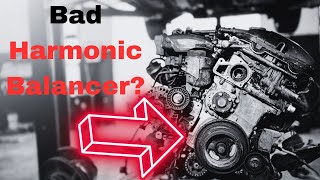
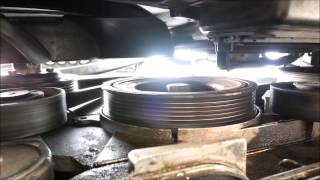
- Visible Wobble: If you can safely observe the main pulley at the front of the engine while it's running, a visible wobble is a definitive sign of failure. The outer ring of the pulley should spin perfectly true, without any eccentric movement. 🎬 Watch: How to spot these 5 common failure signs
- Chirping or Squealing Noises: A rhythmic chirping or squealing sound that changes with engine speed often points to a wobbling balancer causing the serpentine belt to misalign and slip.
- Separated Outer Ring: In severe cases, the outer pulley ring can completely detach from the inner hub. This will cause an immediate loss of all belt-driven accessories. The battery light will come on (alternator failure), the engine will rapidly overheat (water pump failure), and power steering will be lost. The separated metal ring can also be thrown at high speed, causing significant damage to other components in the engine bay.
Warning: Do not confuse a failing harmonic balancer with normal transmission noise. A Technical Service Bulletin (TSB #02 13 03) notes that a rattle from the rear of the transmission at idle is normal on manual gearbox R8s. This is due to the car not having a dual-mass flywheel. This normal gearbox rattle should not be mistaken for an engine vibration caused by a bad balancer.
Buying a Used 4.2L V8 Harmonic Balancer
Given the high cost of a new OEM part, a quality inspected used harmonic balancer is an excellent value. However, since the failure point is the rubber element, a thorough inspection is mandatory before purchase. A bad used part is no better than the one you're replacing.
Physical Inspection Checklist:
- Inspect the Rubber Ring: This is the most critical check. Carefully examine the rubber ring between the inner hub and outer pulley. Look for any signs of cracking (even hairline cracks), bulging, missing chunks, or dry rot.
- Check for Oil Contamination: If the part is greasy or coated in old oil, the rubber may be softened or swollen. Oil is a primary cause of rubber degradation.
- Test for Separation: Place the balancer on a flat surface and try to move the inner hub and outer ring relative to each other. There should be absolutely zero play or movement between the two metal sections. If you can twist them by hand, the rubber has failed.
- Examine the Keyway: Check the keyway slot on the inner hub. Ensure it is not chipped, deformed, or worn. A damaged keyway can prevent the balancer from seating correctly on the crankshaft.
- Check for Wobble/Runout: While difficult without special tools, check for any obvious signs of bending or damage that would cause the pulley to wobble.
Pro Tip: When buying a used balancer, prioritize the condition of the rubber over the mileage of the donor car. A lower-mileage part that sat in a hot climate or had an oil leak may be in worse condition than a higher-mileage part with pristine rubber.
Known Issues, Recalls, and TSBs
As of mid-2026, there are no specific recalls from Audi or the NHTSA for harmonic balancer failure on the 2008-2015 Audi R8. Failures are typically isolated incidents related to the age and wear of the rubber damping material. While engine vibration is a known potential issue, it is more commonly attributed to worn engine mounts. As mentioned, TSB #02 13 03 addresses a normal transmission rattle that can be mistaken for a vibration-related problem.
Cost Comparison
Replacing the harmonic balancer on an R8 is a labor-intensive job. The value of a quality used OEM part is significant compared to the price of a new component.
| Part Type | Estimated Cost |
|---|---|
| New OEM | $500 - $800 (estimate) |
| New Aftermarket | Not readily available for OEM-style replacement |
| Used OEM | $25 - $60 |
| Shop Labor | $500 - $900 |
Replacement Information
- Difficulty: 5 out of 5 (Professional Recommended)
- Estimated Time: 3-5 hours
- DIY Feasible: No. This job is not recommended for DIY mechanics without specific experience on this platform.
Access to the front of the engine in the mid-engine R8 is extremely limited. The replacement requires releasing the serpentine belt tension, but the main challenge is the central crankshaft bolt. This bolt is torqued to a very high specification and requires a special counter-hold tool to remove and reinstall it without damaging the engine. Failure to torque the bolt correctly can lead to it backing out, causing catastrophic engine failure.
🎬 See this 4.2L engine harmonic balancer removal walkthroughTechnical Specifications & Part Numbers
This guide and the part numbers listed are for the 4.2L V8 engine only. The 5.2L V10 uses a different, non-interchangeable harmonic balancer.
Compatibility Warning: The harmonic balancer for the 4.2L V8 and 5.2L V10 are NOT interchangeable. Always verify the part number for your specific engine before purchasing.
| Engine | OEM Part Numbers |
|---|---|
| 4.2L V8 | 079105251L, 079105253C |
| 5.2L V10 | Different Part (e.g., 07L105251T for some years) |
Frequently Asked Questions (FAQ)
Can I drive my R8 with a bad harmonic balancer?
No. It is extremely unsafe to drive with a failing harmonic balancer. If the outer ring separates, you will lose power steering, the alternator will stop charging the battery, and the water pump will stop circulating coolant, leading to rapid overheating and engine seizure. The separated part can also cause extensive damage to other components.
Is the harmonic balancer for the V8 and V10 R8 the same?
No, they are not the same. The 4.2L V8 and 5.2L V10 engines use different part numbers for their harmonic balancers. You must purchase the correct part for your specific engine.
What is the rattling noise I hear at idle in my manual R8?
If you hear a rattling noise from the rear of the car at idle that changes when you press the clutch, this is likely normal gearbox noise. Audi issued a TSB explaining that because the R8 does not use a dual-mass flywheel, some engine vibrations are transmitted to the transmission gears, causing a rattle. This is considered a normal characteristic and not a sign of a failing part.
Why is a used OEM harmonic balancer a good option?
For a high-performance engine like the R8's V8, the harmonic balancer is a precision-engineered and balanced component. A thoroughly inspected used OEM part that meets all visual checks offers the original factory quality and fitment at a fraction of the cost of a new one. Cheap aftermarket alternatives, if available, may not have the same damping characteristics or durability, potentially leading to increased engine vibration or premature failure.
Helpful Videos
Technical Specifications
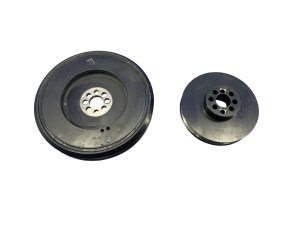
OEM Part Numbers: 079105251L 079105253C
Fits 2008-2015 Audi R8 models with the 4.2L V8 engine only.
We Have This Part in Stock

The information in this article is provided for general reference and educational purposes only. Vehicle specifications, procedures, and part compatibility can vary by production date, trim level, and region. Always consult your vehicle's factory service manual and verify part numbers before purchasing or performing repairs. Safety-critical components such as airbags, seat belts, and braking systems should be installed by a qualified professional.
- Audi R8:
- 🎬 Helpful Videos
- 🛍️ Shop This Part
- Symptoms of a Failing Harmonic Balancer
- Buying a Used 4.2L V8 Harmonic Balancer
- Physical Inspection Checklist:
- Known Issues, Recalls, and TSBs
- Cost Comparison
- Replacement Information
- Technical Specifications & Part Numbers
- Frequently Asked Questions (FAQ)
- 🎟️ Get 5% Off