

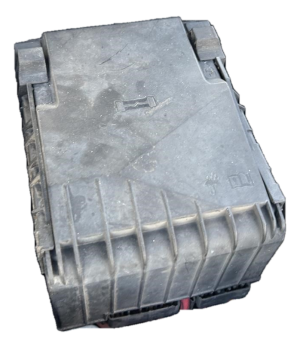
VW & Audi Engine Fuse Box (2000-2018): Solving Water Damage, Melting, and Electrical Faults
This guide covers the common failures of the engine bay fuse box in many VW Passat, CC, Jetta, Tiguan, and Audi Q3 models, focusing on the primary cause: water intrusion.
- The primary cause of failure is water damage from clogged plenum drains under the windshield cowl; regular cleaning is essential prevention.
- This engine compartment fuse box (E-Box) is PLUG-AND-PLAY and does NOT require programming. Do not confuse it with the interior J519/BCM module, which does.
- You must match the part number on your old fuse box exactly. Different numbers have different internal wiring, even if they look identical.
- If you see any signs of melting, corrosion, or burning, the entire fuse box must be replaced. Simply replacing a fuse in a melted slot is a fire hazard.
The Critical Difference: Engine Fuse Box vs. Interior Control Module

Before diagnosing any issue, it's vital to understand there are two main electrical hubs in these vehicles, and they are often confused:
- Engine Compartment Fuse Box (E-Box): This is the part covered in this guide. It is located under the hood, usually near the battery. Its job is power distribution.
- Central Electronics Module (J519/BCM): This module is located inside the car, typically under the driver's side dashboard. It is a computer that controls body functions like lights, wipers, and windows.
Warning: The engine compartment fuse box (E-Box) is a non-programmable, plug-and-play part. However, the interior Central Electronics Module (J519/BCM) DOES require programming and coding to your vehicle's specific VIN and options. Swapping a J519 module from another car without programming will cause many features to stop working. Always confirm which part is truly faulty before ordering.
The #1 Cause of Failure: Water Intrusion

The overwhelming majority of fuse box failures in these Volkswagen and Audi models are caused by one thing: water. These vehicles have a collection area under the windshield called the plenum chamber. This area has drain holes designed to let rainwater escape. Over time, these drains get clogged with leaves, dirt, and other debris. When the drains are blocked, rainwater fills the plenum chamber like a bathtub, submerging the fuse box, wiring harnesses, and other sensitive electronics.
This water intrusion leads to severe corrosion on the fuse box terminals, pins, and internal connections. The corrosion creates high resistance, which generates heat. This heat can melt the fuse box housing, fuse holders, and wire insulation, leading to intermittent or total failure of major electrical circuits.
Pro Tip: Preventing fuse box failure is as simple as routine maintenance. At least once a year, clean the plenum drains under your vehicle's cowl panel. Remove the battery and battery tray to access the rubber drain grommets and clear out any accumulated leaves and sludge. This simple task can save you from a thousand-dollar electrical repair bill.
Symptoms of a Failing Engine Fuse Box

Because the fuse box powers so many different systems, symptoms can be varied and seem unrelated. Look for these common signs:
- Dead Circuits: One or more components suddenly stop working, such as headlights, cooling fans, fuel pump, or starter.
- Intermittent Electrical 'Gremlins': Lights flicker, the radio cuts out, or the engine stalls randomly. This is often caused by loose or corroded connections making intermittent contact.
- No-Start Condition: The car may crank but not start if the fuel pump or engine computer relays are not getting power. In other cases, it may be completely dead if the main power feeds are compromised.
- Repeatedly Blowing Fuses: While a single blown fuse is normal, if the same fuse blows repeatedly, it could point to a short circuit within the fuse box itself.
- Visible Damage: A visual inspection may reveal a white or green powdery residue (corrosion), melted plastic around a fuse or relay socket, or burnt-looking terminals.
- Burning Plastic Smell: A strong burning odor from the engine bay is a serious warning sign of a high-resistance connection overheating and melting the fuse box.
Associated OBD-II Trouble Codes
The fuse box itself does not generate trouble codes. Instead, its failure causes other modules to report faults. You may see codes related to the components that have lost power, such as:
- Fuel pump circuit errors (e.g., P0230, P0231) or low fuel pressure codes (P0087).
- Cooling fan control circuit errors (e.g., P1950, P1951).
- Loss of communication with various modules (U-codes).
- Power supply errors for the Engine Control Module (ECU) or other computers.
Vehicle-Specific Information and Part Numbers

While these vehicles share similar designs, they use different fuse boxes. You must match the part number exactly. Using the wrong fuse box can lead to improper function or damage to your vehicle's electrical system.
Group 1: PQ46 Platform
Vehicles: 2006-2010 Volkswagen Passat, 2013-2017 Volkswagen CC
Common Part Numbers: 3C0937125, 3C0937125A
Notes: These models are particularly known for clogged plenum drains under the battery and brake booster. Water damage is the primary issue. The fuse box is located in the engine bay on the driver's side.
Group 2: PQ35 Platform
Vehicles: 2005-2006 Volkswagen Jetta, 2012-2017 Volkswagen Tiguan, 2018 Volkswagen Tiguan Limited, 2015-2018 Audi Q3
Common Part Numbers: 1K0937124H, 1K0937124K, 1K0937124P
Notes: This fuse box is also located in the engine bay near the battery. While still susceptible to moisture, failures can also occur from high-resistance connections on high-load circuits (like the cooling fans) causing localized melting even without widespread water damage.
Group 3: B5/B5.5 Platform
Vehicles: 2000-2005 Volkswagen Passat
Common Part Numbers: This platform uses a different system with multiple relay and fuse panels. The main fuse panel is inside the car on the driver's side of the dashboard. However, there are critical relays and an ECU box in the plenum chamber that are highly susceptible to the same water ingress issues from clogged drains under the battery. A common related part is the relay carrier plate, part number 8L0941822A, which holds auxiliary relays.
Buying a Used Fuse Box: What to Look For
A used OEM fuse box is an excellent, cost-effective solution, as long as you inspect it carefully. Aftermarket versions often use inferior plastics and terminals that can't handle the heat and electrical loads as well as the original.
- Match the Part Number Exactly: Do not deviate. The part number is printed clearly on the side of the plastic housing.
- Inspect for Heat Damage: Look very closely at every single fuse and relay slot. Check for any signs of melted plastic, discoloration, or warping. Pay special attention to the large-amperage fuse slots.
- Check for Corrosion: Look for any white, green, or blue powder or crust on the metal terminals inside the slots. Any sign of corrosion means the part was exposed to moisture and should be avoided.
- Examine the Main Connectors: Check the large multi-pin connectors on the bottom or sides. All pins should be straight, clean, and free of corrosion.
- Fuses/Relays Not Included: Understand that a used fuse box is typically sold as the bare housing. You will need to carefully transfer all fuses and relays from your old unit to the new one. Take a clear photo before you begin to ensure everything goes back in the correct spot.
Cost of Replacement
Prices can vary based on the specific part number and vehicle.
| Part Type | Estimated Cost | Notes |
|---|---|---|
| New OEM | $250 - $560 | Highest cost, but brand new from the dealer. |
| New Aftermarket | $100 - $250 | Lower cost, but quality can be questionable. May not hold up to heat as well as OEM. |
| Used OEM | $50 - $150 | Best value. An undamaged OEM part is often more reliable than a new aftermarket one. |
| Shop Labor | $150 - $300 | Typically 1-2 hours of labor. Involves disconnecting the battery, swapping the unit, and transferring all fuses/relays. |
Frequently Asked Questions (FAQ)
Does a replacement engine fuse box need to be programmed?
No. The engine compartment fuse box (E-Box) is a power distribution center and does not contain software. It is plug-and-play. You do not need a dealer or special tools for installation, beyond transferring the fuses and relays. The part that requires programming is the J519 Central Electronics Module located inside the cabin.
Can I use a fuse box with a different part number if it looks the same?
No. Even if they look physically similar, different part numbers have different internal wiring and connections based on the vehicle's options (e.g., engine size, transmission, trim level). You must match the OEM part number exactly to ensure compatibility.
My fuse box is melted. Can I just replace the bad fuse?
No. If the plastic housing around the fuse is melted, the terminal has lost its tension and is damaged from high resistance and heat. Simply putting in a new fuse will not solve the problem; it will quickly overheat and fail again, posing a significant fire risk. The entire fuse box must be replaced.
What is a plenum drain and why does it cause this problem?
The plenum is the area at the base of your windshield, under the plastic cowl trim. It's designed to catch rainwater and channel it out through rubber drain tubes. When these tubes clog with leaves and dirt, the plenum fills with water, submerging the fuse box and other electronics housed there, causing massive corrosion and electrical failures.
Technical Specifications
OEM Part Numbers: 3C0937125 3C0937125A 1K0937124H 1K0937124K 1K0937124P 8L0941822A
Houses blade-type and high-amperage strip fuses, as well as standard automotive relays. Constructed from high-temperature thermoplastic. Power distribution is managed through multi-layered internal bus bars.
We Have This Part in Stock



The information in this article is provided for general reference and educational purposes only. Vehicle specifications, procedures, and part compatibility can vary by production date, trim level, and region. Always consult your vehicle's factory service manual and verify part numbers before purchasing or performing repairs. Safety-critical components such as airbags, seat belts, and braking systems should be installed by a qualified professional.
- Volkswagen Passat:
- Audi Q3:
- Volkswagen CC:
- Volkswagen Jetta:
- Volkswagen Tiguan:
- Volkswagen Tiguan Limited:
- 🛍️ Shop This Part
- The Critical Difference: Engine Fuse Box vs. Interior Control Module
- The #1 Cause of Failure: Water Intrusion
- Symptoms of a Failing Engine Fuse Box
- Associated OBD-II Trouble Codes
- Vehicle-Specific Information and Part Numbers
- Group 1: PQ46 Platform
- Group 2: PQ35 Platform
- Group 3: B5/B5.5 Platform
- Buying a Used Fuse Box: What to Look For
- Cost of Replacement
- Frequently Asked Questions (FAQ)
- 🎟️ Get 5% Off