

2011-2022 VW Passat Fuse Box: Why Programming is Critical for Interior Panels
This guide covers the multiple fuse box locations in your Passat, common failures like water damage, and the essential programming required for the interior fuse box/BCM.
- The interior driver-side fuse box is part of the Body Control Module (BCM) and MUST be programmed by a professional after installation.
- The Passat has multiple fuse box locations (engine bay, interior dash); you must verify the correct location before ordering a replacement.
- Water intrusion is a common cause of failure for the interior fuse box/BCM, leading to corrosion and widespread electrical issues.
- You must transfer fuses and relays from your original fuse box to the replacement to match your vehicle's specific equipment and options.
Generation and Model Year Clarification
The 2011-2022 Volkswagen Passat in North America covers two main versions. The 2012-2019 models are known as the Passat NMS (New Midsize Sedan) or B7. The 2020-2022 models are a significant facelift of this platform. It's important to identify your specific model year, as there can be differences in fuse box layouts and part numbers between these versions. This guide focuses primarily on the North American NMS models from 2012-2022.
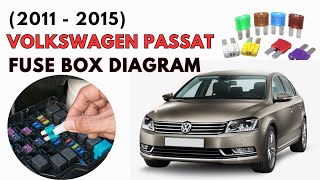
🎬 Watch: 2011-2015 Passat fuse box diagram and location guideFuse Box Locations


Your Passat has multiple fuse box locations, and you must identify the correct one when diagnosing issues or ordering parts.
- Engine Compartment Fuse Box (E-box): Located under the hood, this box manages high-current components like the engine control unit, cooling fans, ABS, and starter motor. You can access it by releasing the lock buttons on its cover and lifting it upwards.
- Interior Fuse Box / Body Control Module (BCM): This is the most common one owners interact with. It's located behind a removable panel on the driver's side of the dashboard. In many Passat models, this fuse panel is physically and electronically part of the Body Control Module (BCM or J519), which controls windows, locks, lights, and more.
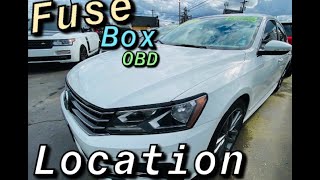
- Other Potential Locations: Depending on the year and trim, there may be additional fuse or relay panels, such as on the passenger side of the dashboard or in the luggage compartment. 🎬 See this walkthrough for 2015-2019 Passat fuse box locations
Warning: The initial part numbers provided (1H0-937-530 and 1K1941824) are incorrect for the 2011-2022 Passat. These numbers correspond to older Volkswagen models like the Golf and Jetta. Always verify the part number directly from your original fuse box before ordering a replacement.
Known Issues and Common Failure Modes

Water Intrusion and Corrosion
Water damage is a primary cause of fuse box failure in the Passat. Leaks from clogged sunroof drains, a bad windshield seal, or a poorly sealed cowl area can allow water to drip onto the interior fuse box/BCM. This leads to green or white crusty corrosion on the terminals, causing a host of bizarre, intermittent electrical problems or a complete no-start condition. In some cases, corroded wiring under the driver's side carpet near the control module can also cause a no-start issue.
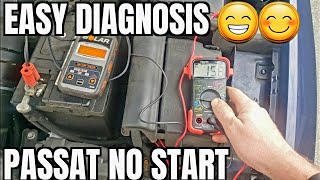
🎬 Watch: How to fix a no-start issue caused by corroded wiringHeat Damage and Melting
While more common on the older B6 Passat, the engine bay fuse box can still be susceptible to heat damage. A poor connection at a high-amperage terminal, like for the alternator or fuel pump, can generate intense heat. This can melt the plastic housing of the fuse box, leading to a loss of charging, stalling, or a complete electrical failure.
Symptoms of a Failing Fuse Box
Fuse box problems can be tricky to diagnose because they often mimic other issues. Here are the key signs:
- Multiple, Unrelated Electrical Failures: This is the classic symptom. For example, the radio, power windows, and interior lights might all stop working at once. This happens because a single internal fault in the fuse box can cut power to many different circuits.
- Car Will Not Start or Cranks Weakly: A failure in the fuse box can prevent power from reaching the fuel pump, starter solenoid, or engine control module, resulting in a no-start condition even with a good battery.
- Frequently Blowing Fuses: If a specific fuse blows repeatedly, it usually points to a short in that circuit. However, if multiple different fuses blow, it could indicate an internal short within the fuse box itself.
- Visible Damage: Look for obvious signs like melted plastic, scorch marks, or green/white corrosion on the terminals and connectors.
- Burning Smell or Buzzing Sounds: An acrid, burning plastic smell or any buzzing/hissing from the fuse box area is a sign of a serious electrical short or overheating and requires immediate attention.
Programming and Installation Requirements

Critical: This is the most important takeaway for anyone replacing a Passat fuse box. Programming requirements depend on the location.
- Engine Bay Fuse Box: This unit is a power distribution center and typically does NOT require programming. It can be swapped with a matching part.
- Interior Fuse Box / BCM: Because this panel is integrated with the Body Control Module (J519), it MUST be programmed after installation. A professional technician needs to use a specialized diagnostic tool (like VCDS or dealership software) to code the replacement module to your car's specific VIN and options (e.g., sunroof, power seats, lighting package). Failure to program it will result in many features not working correctly.
Buying a Used Fuse Box: What to Look For
A used OEM fuse box is an excellent value, but careful inspection is key.
- Match Part Numbers EXACTLY: This is non-negotiable, especially for the interior BCM/fuse box. The part number on the replacement must be identical to your original. Even a one-digit difference can mean incompatible hardware or software.
- Inspect for Heat Damage: Carefully check all terminals, especially the large ones in the engine bay unit, for any signs of melting, discoloration, or scorching.
- Check for Corrosion: Look for any green or white powder on the pins, connectors, or circuit board. This is a red flag for water damage, and the part should be rejected.
- Verify Configuration (If Possible): The fuse and relay layout is specific to the donor vehicle's options. You will almost certainly need to transfer the fuses and relays from your old fuse box to the new one to ensure all your car's features are powered correctly.
Pro Tip: When you receive your used fuse box, take a clear photo of its fuse and relay layout. Then, take a photo of your original fuse box before removing it. Use these photos as a guide to carefully transfer each fuse and relay to its correct position in the replacement unit.
Cost Comparison
| Part Type | Estimated Cost |
|---|---|
| New OEM (Dealer) | $250 - $800+ (depending on location/BCM integration) |
| New Aftermarket | $40 - $100 (Often just the box, not integrated modules) |
| Used OEM | $50 - $260 |
| Shop Labor for Replacement | $175 - $350 |
| Shop Labor for Programming (BCM) | $100 - $250 (Often included in replacement cost if done at a dealer) |
Frequently Asked Questions (FAQ)
Do I have to program a replacement fuse box for my Passat?
It depends on the location. The engine compartment fuse box does not need programming. However, the main interior fuse box on the driver's side is part of the Body Control Module (BCM) and absolutely MUST be programmed by a professional to work with your car's features.
Why are multiple, unrelated things not working in my car?
This is a classic sign of a failing fuse box or BCM. Because the fuse box is a central power distribution point, a single internal fault like a corroded connection can cut power to many different circuits at the same time, causing seemingly random systems to fail.
Can I drive with a bad fuse box?
It is not recommended. A failing fuse box can affect critical safety systems like headlights, wipers, turn signals, or even the fuel pump without warning. This could lead to the car stalling in traffic or create other unsafe driving conditions.
My car won't start, but the battery is good. Could it be the fuse box?
Yes. If the fuse box has a fault in a circuit that powers the fuel pump, starter, or engine computer, the car may crank but not start, or it may not do anything at all when you turn the key. This should be one of the components you check after confirming the battery and starter are functional.
Helpful Videos
Technical Specifications
OEM Part Numbers: 5C0937125 5C0937125C 5Q0937125B 3C0937125A 1K0937125A 1K0937125C 5C0937819L 3Q0937125
Fuse box locations include the engine compartment and the driver's side of the instrument panel. The interior fuse box is often integrated with the Body Control Module (BCM/J519).
We Have This Part in Stock



The information in this article is provided for general reference and educational purposes only. Vehicle specifications, procedures, and part compatibility can vary by production date, trim level, and region. Always consult your vehicle's factory service manual and verify part numbers before purchasing or performing repairs. Safety-critical components such as airbags, seat belts, and braking systems should be installed by a qualified professional.
- Volkswagen Passat:
- 🎬 Helpful Videos
- 🛍️ Shop This Part
- Generation and Model Year Clarification
- Fuse Box Locations
- Known Issues and Common Failure Modes
- Water Intrusion and Corrosion
- Heat Damage and Melting
- Symptoms of a Failing Fuse Box
- Programming and Installation Requirements
- Buying a Used Fuse Box: What to Look For
- Cost Comparison
- Frequently Asked Questions (FAQ)
- 🎟️ Get 5% Off