

2016-2020 Tesla Model S & Model X Fuse Box & Body Controller Guide
A deep dive into the fuse boxes and body controllers for the 2016-2020 Tesla Model S and Model X, covering common failures, part numbers, and critical replacement information.
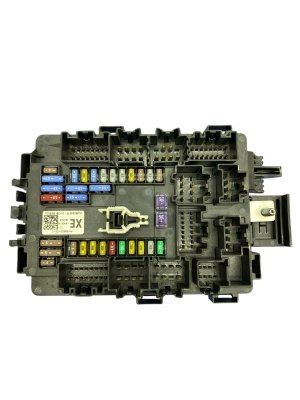
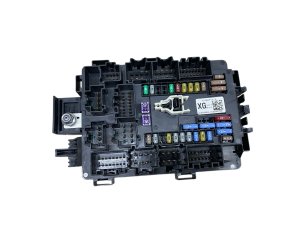
- The 'Cabin Fuse Box' (PN 1094409-xx-x) is actually the Front Body Controller and is NOT plug-and-play; it requires mandatory programming by Tesla or a specialist with 'Toolbox 3' software after installation.
- Water intrusion is a primary cause of failure for both the underhood and cabin modules; always inspect used parts for any signs of corrosion.
- Many confusing electrical faults, including a dead 12V battery, can be traced back to a faulty Front Body Controller.
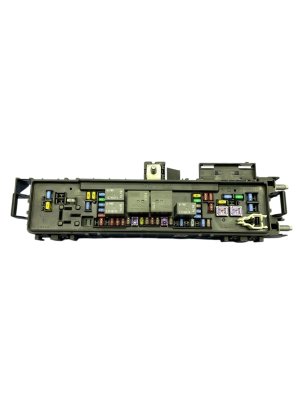
- Some replacement Underhood Fuse Boxes (PN 1094405-xx-x) have a mirrored connector and require swapping the lower plastic housing from the original part to fit.
Understanding the 'Fuse Box' in Your Tesla

When diagnosing electrical issues in a 2016-2020 Tesla Model S or Model X, it's important to know that there isn't one single 'fuse box.' Instead, these vehicles use a distributed system. The two main components owners will interact with are:
- Underhood Fuse Box (in the frunk): This unit, with part numbers like 1034405-xx-x and 1094405-xx-x, handles high-amperage circuits. It's located under the plastic covers near the windshield.
- Cabin Fuse Box / Front Body Controller (VCFRONT): This is the brain behind many of the car's functions. Located inside the cabin (often behind trim panels in the passenger or driver footwell area), this module uses part numbers like 1094409-xx-x. It's a smart device that does much more than just hold fuses and is a common source of complex electrical problems.
Known Issues and Symptoms of Failure

Failures in these components can cause a wide and confusing range of symptoms. Because the Front Body Controller manages so many unrelated systems, problems can seem random.
Common Failure: Water Intrusion
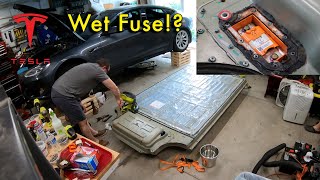
A significant known issue, especially for earlier Model S and X vehicles, is water damage. The design of the A/C condensate drain hose could allow water to drip onto electrical components in the frunk, leading to corrosion on the fuse box cover and eventual water ingress into the sealed units. Any signs of rust, white, or green crusty deposits on the connectors 🎬 Watch a video on diagnosing Tesla Model S wet fuse box issues or housing are a major red flag indicating moisture has gotten inside.
Symptoms of a Failing Front Body Controller (VCFRONT)
- Multiple, Unrelated Dashboard Warnings: You may see a cascade of error messages for systems like power steering, lighting, and cameras. Forum users report alerts like "adaptive headlight feature unavailable" or other "VCFRONT" bus codes.
- Component Malfunctions: Key systems may stop working intermittently or entirely. This includes headlights, horn, windshield wipers, and the front trunk (frunk) latch.
- Parasitic 12V Battery Drain: A faulty controller can fail to "go to sleep" when the car is parked, causing a continuous power draw that drains the 12-volt battery. This can lead to a car that appears completely dead and won't wake up.
- False "Frunk Open" Warnings: The controller may send an incorrect signal that the front trunk is open even when it is securely latched.
Symptoms of a Failing Underhood Fuse Box
- Loss of Power to Major Systems: Since this box handles high-current circuits, failure can lead to a loss of power steering or other critical functions.
- Repeatedly Blowing Fuses: If a new fuse for a circuit blows immediately after replacement, it could indicate a short within the fuse box itself.
- Visible Corrosion or Damage: Physical inspection may reveal rust or water damage, which is a clear indicator of a problem.
Pro Tip: Many electrical issues, including those that seem to point to a body controller failure, can be caused by a weak or failing 12V auxiliary battery. Always test the 12V battery and ensure it's in good health before condemning an expensive electronic module.
Buying a Used Fuse Box or Body Controller

Purchasing a used OEM module is a cost-effective repair strategy, but it requires careful attention to detail.
- Verify the Part Number EXACTLY: Tesla uses many hardware revisions. You must match the full OEM part number from your original unit. Part numbers like 1094409-01-E must be matched precisely. A module with a different revision may not be compatible with your vehicle's features or software.
- Inspect for Water Damage: This is the #1 killer of these parts. Carefully examine all photos of a used part. Look for any signs of corrosion on the pins, connectors, or metal case. Do not buy any unit that shows evidence of moisture.
- Connector Orientation Warning: Be aware of a specific issue with replacement Underhood Fuse Boxes (part numbers 1034405 or 1094405). Some service replacement units have a mirrored center connector on the underside. If you receive a part like this, you must carefully swap the lower plastic housing from your original fuse box onto the replacement unit for it to connect correctly.
- Buy from Reputable Sellers: Purchase from sellers who show clear, high-resolution photos of the actual part, including the part number sticker and all connectors.
Programming and Installation Requirements
Warning: The Cabin Fuse Box / Front Body Controller (part numbers starting with 1094409) is NOT a plug-and-play part.
After physical installation, the module must be programmed and configured to your vehicle's specific VIN and options. This procedure requires Tesla's proprietary diagnostic software, known as Toolbox 3. The vehicle firmware must be reinstalled, and specific configurations (like coolant pump type) may need to be set. While an experienced DIY mechanic can physically swap the module, the final software steps must be performed by a Tesla Service Center or a qualified independent repair shop with a subscription to Toolbox 3. Failure to program the module will result in a car that may not start or will have numerous features disabled.
The Underhood Fuse Box (part numbers starting with 1034405/1094405) is generally a direct replacement and does not require programming, but you must be aware of the potential connector housing swap mentioned above.
Recalls and Technical Service Bulletins (TSBs)
As of early 2026, there are no specific NHTSA recalls directly targeting the fuse boxes or front body controllers for the 2016-2020 Model S and Model X. However, several recalls for this period address related electrical systems:
- A recall for some 2017-2020 models involved a software calibration issue that could cause a loss of power steering assist, a function controlled by the VCFRONT. This was correctable via an over-the-air (OTA) software update.
- Numerous other recalls for these vehicles have been issued, but most are related to software (FSD Beta, warning light font size) or other mechanical components and are resolved with OTA updates.
Tesla has issued internal service bulletins regarding the replacement of the front body controller on certain vehicles to ensure compatibility with the car's configuration.
Cost of Replacement
The cost can vary widely depending on the part needed and labor rates. The Front Body Controller is significantly more expensive to replace due to the required software programming.
| Part / Service | Estimated Cost |
|---|---|
| New OEM Front Body Controller (Part Only) | $400 - $800+ |
| Used OEM Front Body Controller (Part Only) | $75 - $400 |
| New/Used Underhood Fuse Box (Part Only) | $80 - $300 |
| Shop Labor (Physical Swap) | $150 - $300 (approx. 1-2 hours) |
| Shop Labor (Programming & Configuration) | $250 - $500 (approx. 1-2 hours, specialized rate) |
| Total Cost (Front Body Controller) | $700 - $1600+ |
| Total Cost (Underhood Fuse Box) | $230 - $600 |
Frequently Asked Questions (FAQ)
Does the fuse box need to be programmed to my Model S or Model X?
It depends on the part. The main Underhood Fuse Box (in the frunk, PNs 1034405/1094405) does NOT require programming. However, the Cabin Fuse Box / Front Body Controller (PN 1094409-xx-x) ABSOLUTELY requires programming and configuration with Tesla's Toolbox 3 software after installation.
Can I replace the Front Body Controller myself?
The physical replacement is possible for a skilled DIY mechanic and involves removing the frunk storage unit and various trim pieces to access the module. However, you will not be able to complete the job. The vehicle will be inoperable until it is towed to a Tesla Service Center or a specialized independent shop for the mandatory software configuration.
My car is totally dead. Could it be the fuse box?
Yes. A common failure mode for the Front Body Controller is an internal short that creates a parasitic draw, draining the 12V battery completely. When the 12V battery is dead, the car will be unresponsive and will not wake up or charge. This is often misdiagnosed as only a bad 12V battery.
What's the difference between all the part numbers?
The different part numbers (e.g., 1094409-01-E vs. 1094409-01-G) represent hardware and software revisions made by Tesla over the years. It is critical to match the part number from your original module when buying a replacement. Using an incompatible revision can cause features to not work or prevent the module from being programmed at all.
Helpful Videos
Technical Specifications
OEM Part Numbers: 1034405-02-E 1094405-00-F 1094405-02-D 1094405-02-E 1094405-02-F 1094409-00-E 1094409-00-G 1094409-01-E 1094409-01-G 109440901E
Controls low-voltage (12V) vehicle systems. The Front Body Controller (1094409-xx-x series) acts as a programmable electronic control module, while the Underhood Fuse Box (1034405/1094405 series) is a high-amperage power distribution unit.
We Have This Part in Stock

The information in this article is provided for general reference and educational purposes only. Vehicle specifications, procedures, and part compatibility can vary by production date, trim level, and region. Always consult your vehicle's factory service manual and verify part numbers before purchasing or performing repairs. Safety-critical components such as airbags, seat belts, and braking systems should be installed by a qualified professional.
- Tesla X:
- Tesla S:
- 🎬 Helpful Videos
- 🛍️ Shop This Part
- Understanding the 'Fuse Box' in Your Tesla
- Known Issues and Symptoms of Failure
- Common Failure: Water Intrusion
- Symptoms of a Failing Front Body Controller (VCFRONT)
- Symptoms of a Failing Underhood Fuse Box
- Buying a Used Fuse Box or Body Controller
- Programming and Installation Requirements
- Recalls and Technical Service Bulletins (TSBs)
- Cost of Replacement
- Frequently Asked Questions (FAQ)
- 🎟️ Get 5% Off