

2006-2014 Subaru Legacy & Outback Fuse Box: A Guide to the Two Different Designs
This guide clarifies the critical split between the 2006-2009 and 2010-2014 engine bay fuse boxes, detailing common failures, part numbers, and replacement tips.
- There are two different, non-interchangeable fuse boxes for this period: one for 2006-2009 models and another for 2010-2014 models. Verify your year before buying.
- Replacement fuse boxes do NOT require any dealer programming or flashing, making a used unit a simple and cost-effective repair.
- The most common cause of failure is corrosion from water intrusion. If replacing a corroded box, you must find and fix the water leak.
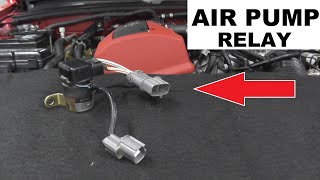
- Check for recalls on 2007-2009 turbo models for a faulty secondary air injection pump relay (WTM-73), which is located in the fuse box.
Generation Split: Which Fuse Box Does Your Subaru Have?

The most important thing to understand when shopping for a main fuse box for a 2006-2014 Subaru Legacy or Subaru Outback is that two different, non-interchangeable designs were used. The model year 2010 was a complete redesign for both vehicles, and the fuse box changed with it. Using the wrong generation of fuse box will not work.
Warning: You must match the fuse box to your vehicle's specific year range. The part numbers and physical designs are different between the two generations.
| Vehicle Generation | Years | Models | Common Part Number Prefixes |
|---|---|---|---|
| 4th Gen Legacy / 3rd Gen Outback | 2006, 2007, 2008, 2009 | Legacy & Outback | 82241AG... |
| 5th Gen Legacy / 4th Gen Outback | 2010, 2011, 2012, 2013, 2014 | Legacy & Outback | 82201AJ... |
Symptoms of a Failing Fuse Box

A failing main fuse box often creates confusing electrical problems that can be mistaken for other issues. Because it's a central hub, its failure can cause multiple, seemingly unrelated systems to stop working at once.
- Multiple Electrical Failures: You may experience a combination of issues like the radio not working, power windows failing, headlights being inoperative, and the car not starting. If several unrelated electrical items fail simultaneously, the fuse box is a primary suspect.
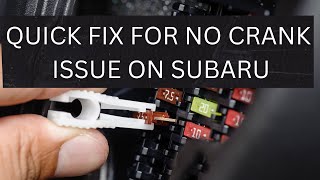
- Engine No-Crank or No-Start: The fuse box houses relays and fuses critical for the starter and fuel pump. A failure within the box can prevent the engine from cranking or starting, even with a good battery. 🎬 Watch: Quick fix for a no-crank, no-start issue.
- Visible Damage, Corrosion, or Melting: A physical inspection may reveal obvious problems. Look for a white or greenish powder (corrosion) on the terminals, melted plastic around fuse or relay sockets, or a burnt smell. This is often caused by water intrusion or a loose connection causing high resistance and heat.
- Repeatedly Blowing Fuses: While a single blown fuse is common, if a new fuse blows immediately or repeatedly, it can indicate a short in the wiring or a problem within the fuse box itself, such as internal corrosion creating a short circuit.
- Buzzing or Hissing Noises: Any unusual noises coming from the fuse box area can indicate electrical arcing due to a poor connection, which is a serious fire hazard.
Known Issues, Recalls, and Service Bulletins

While the fuse box assembly itself has not been the subject of many direct recalls, related electrical issues and TSBs can lead to its failure.
Recalls
- Secondary Air Injection Pump Relay (Recall WTM-73): This recall affects some 2007-2009 Legacy and Outback models with turbocharged engines. A faulty relay, located in the main fuse box, could fail and cause the air pump to run continuously. This could overheat the pump, potentially melting it and increasing the risk of a fire. The fix involves replacing the relay. 🎬 See how to test and replace an air pump relay.
- Puddle Lights (Recall WQE-41): Affecting some 2010-2011 Legacy and Outback vehicles, this recall addresses an issue where optional puddle lights could short circuit when exposed to salt water, posing a fire risk. The fix involves installing an in-line fuse, highlighting how external electrical issues can relate back to the vehicle's fused circuits.
- Electronic Parking Brake (Recall WTV-81): On 2010-2014 Legacy and Outback models with manual transmissions, a defect in the electronic parking brake control unit could prevent the brake from engaging properly. While not a fuse box issue, it is a significant electrical system recall for this generation.
Technical Service Bulletins (TSBs) for Water Leaks
Water intrusion is a primary cause of fuse box and wiring harness corrosion. Several TSBs have been issued for water leaks that can lead to the kind of electrical problems that damage a fuse box.
- Sunroof Drain Leaks (TSB 12-117-10R): On 2010-2013 models, clogged or kinked sunroof drains can cause water to leak into the cabin, potentially affecting the interior fuse panel and related wiring.
- Cowl Area Leaks: A TSB was issued for water leaking into the passenger footwell area from a poorly sealed body seam in the cowl area, which can saturate wiring connectors.
- Vapor Barrier Leaks: TSBs exist for later models describing how water can enter the cabin through improperly sealed door vapor barriers, leading to corrosion in the footwell wiring connectors.
Pro Tip: If you are replacing a fuse box due to corrosion, it is critical to find and fix the source of the water leak first. If you don't, the new fuse box will suffer the same fate.
Buying a Used Main Fuse Box: What to Look For

A used OEM fuse box is an excellent, cost-effective alternative to a new part, which may be expensive or discontinued. Here’s how to inspect a used unit:
- Verify the Part Number: This is the most critical step. Match the part number exactly or confirm it's a valid superseded number for your vehicle's specific generation (2006-2009 or 2010-2014).
- Inspect All Terminals and Pins: Carefully check every pin and socket, both on top where the fuses/relays plug in and on the bottom where the wiring harnesses connect. Look for any signs of green or white corrosion, water marks, or rust. Reject any unit that isn't perfectly clean.
- Check for Heat Damage: Look closely at the plastic around each fuse and relay socket. Any signs of melting, warping, or discoloration indicate a previous circuit overload or a poor connection that created excessive heat.
- Examine the Casing: Ensure the plastic housing is not cracked or broken, especially around the mounting tabs and connector latches. A damaged case can allow moisture and dirt to enter.
- Ask About the Donor Vehicle: If possible, find out the mileage and history of the vehicle the part came from. A low-mileage part from a vehicle in a dry climate is always preferable.
Cost of Replacement
The cost to replace the main fuse box can vary significantly based on the part source and labor rates.
| Item | Estimated Cost |
|---|---|
| New OEM | $450 - $700+ (if available) |
| New Aftermarket | $200 - $400 |
| Used OEM | $75 - $200 |
| Shop Labor | $150 - $300 |
Frequently Asked Questions (FAQ)
Does a replacement fuse box need to be programmed?
No, the main engine compartment fuse box on the 2006-2014 Subaru Legacy and Outback does not need to be programmed or flashed. It is a direct swap component. This makes a used fuse box an even more attractive option, as no dealer visit is required after installation.
Where is the main fuse box located?
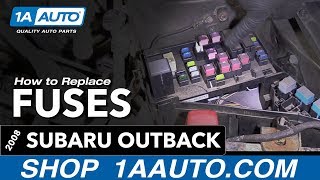
The main fuse and relay box is located in the engine compartment on the driver's side, typically near the battery. It is a black plastic box with a removable lid. The inside of the lid has a diagram showing the location and amperage of each fuse and relay.
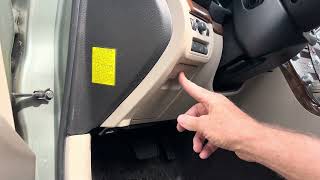
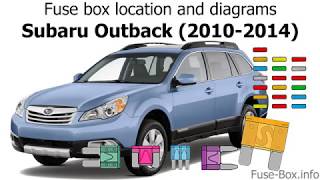
🎬 Watch: 2010-2014 fuse box location and diagram walkthrough.Can I replace the fuse box myself?
Yes, this is a DIY-friendly job for someone with basic mechanical skills. The process generally involves disconnecting the battery, removing a few bolts holding the box in place, and carefully unplugging the large electrical connectors from the underside. The key is to be gentle with the plastic locking tabs on the connectors.
My car won't start. Could it be the main fuse?
Yes. The main fuse, often a large, bolted-in component inside the fuse box, protects the entire electrical system. If it blows, usually from a major short circuit or incorrectly jump-starting the vehicle, the car will be completely dead. This main fuse can often be replaced separately without replacing the entire fuse box assembly.
Helpful Videos
Technical Specifications
OEM Part Numbers: 82201AJ00A 82241AG00A 82241AG00E 82243AG010 82243AG01A 82290AG00A 82290AG00C 82290AG00D 82290AJ00A 82290AJ00J
Houses blade-type fuses (MINI, LP), J-case fuses, and relays. Located in the engine compartment on the driver's side.
We Have This Part in Stock



The information in this article is provided for general reference and educational purposes only. Vehicle specifications, procedures, and part compatibility can vary by production date, trim level, and region. Always consult your vehicle's factory service manual and verify part numbers before purchasing or performing repairs. Safety-critical components such as airbags, seat belts, and braking systems should be installed by a qualified professional.
- Subaru Legacy:
- Subaru Outback:
- 🎬 Helpful Videos
- 🛍️ Shop This Part
- Generation Split: Which Fuse Box Does Your Subaru Have?
- Symptoms of a Failing Fuse Box
- Known Issues, Recalls, and Service Bulletins
- Recalls
- Technical Service Bulletins (TSBs) for Water Leaks
- Buying a Used Main Fuse Box: What to Look For
- Cost of Replacement
- Frequently Asked Questions (FAQ)
- 🎟️ Get 5% Off