

2022-2025 Wagoneer & Grand Wagoneer Fuse Box Guide: Locations, Part Numbers & Common Problems
Electrical issues in your Jeep Wagoneer often point to a Power Distribution Center. This guide clarifies the different fuse box locations and helps you diagnose common failures.
- These vehicles have multiple fuse boxes (engine bay, interior, and rear cargo area); you must identify the correct one before purchasing.
- Always match the OEM part number exactly, as they vary by engine, drivetrain, and vehicle options.
- When buying a used unit, the most important inspection points are checking for any signs of corrosion (white/green powder) or heat damage (melted plastic).
- Fuse box replacement typically does not require dealer programming, making it a straightforward DIY job.
Identifying Your Wagoneer's Fuse Boxes: Locations and Functions

Before diagnosing any electrical problem, it's critical to know that the 2022-2025 Jeep Wagoneer, Grand Wagoneer, Wagoneer L, and Grand Wagoneer L have at least three separate fuse boxes, also known as Power Distribution Centers (PDCs). Ordering the wrong one is a common and costly mistake.
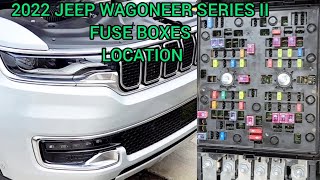
- Engine Compartment PDC: This is the main fuse box, located on the right-hand (passenger side) of the engine bay, near the battery. It houses the high-amperage fuses and relays that control critical systems like the engine, transmission, cooling fans, and fuel pump.
- Passenger Compartment PDC: This interior fuse box is located under the driver's side dashboard, often above the pedals. It manages most of the interior electronics, including the radio, instrument cluster, interior lighting, and power windows.
- Rear/Luggage Compartment PDC: Found behind a trim panel in the rear cargo area (typically on the driver's side), this fuse box controls functions at the back of the vehicle, such as the power liftgate, rear lights, and trailer tow circuits. 🎬 Watch: Locate and access all three Wagoneer fuse boxes
Warning: Always verify which fuse box is causing your issue before ordering a replacement. The part numbers for the front, interior, and rear units are not interchangeable.
Common Symptoms of a Failing Fuse Box

A failing PDC can cause some of the most confusing and frustrating electrical problems. While a simple blown fuse will cause a single component to stop working, a fault within the fuse box itself can lead to more widespread issues.
- Multiple Unrelated System Failures: One of the most common signs is when several unrelated electrical components stop working at once. For example, the radio, power windows, and interior lights might all fail simultaneously.
- Intermittent Electrical Gremlins: Components may work one moment and not the next. This can be caused by a poor connection or a cracked solder joint inside the PDC.
- Engine Starting Issues: The main engine compartment PDC contains relays and fuses for the fuel pump and ignition system. A fault here can prevent the engine from cranking or starting. 🎬 Watch: Troubleshoot a Wagoneer no-start and gear shift light issue
- Visible Damage: A visual inspection may reveal melted plastic around a fuse or relay socket, or signs of corrosion (a white or greenish powder) from water intrusion.
- Specific OBD-II Codes: While a failing fuse box may not set a single specific code, it can cause a flood of communication errors (U-codes) or codes related to specific circuits, such as P2C30 (Ignition Coil Primary Circuit Fuse A) or P2C31 (Ignition Coil Primary Circuit Fuse B).
Known Issues, TSBs, and Recalls

While there are no widespread recalls specifically for the fuse boxes on these vehicles as of early 2026, the Wagoneer platform has experienced various electrical issues. Owners have reported problems like battery drain, random error messages, and even complete system shutdowns while driving. 🎬 See how a loose connection caused a Wagoneer to die in traffic These issues are often traced back to software glitches, faulty batteries, or alternator problems rather than the PDC itself.
A relevant Technical Service Bulletin (TSB), 08-054-25 REV. A, was issued for 2024 models with the 3.0L Hurricane engine. It addresses engine hesitation and misfires, setting codes like P2C30 and P2C31 which are directly related to ignition coil fuses. The fix involves a software update to the Ignition System Control Module (ISCM), not a replacement of the fuse box.
Separately, several recalls have been issued for these models concerning exterior trim pieces detaching, which are unrelated to the electrical system.
Buying a Used Fuse Box: What to Look For

A used OEM Power Distribution Center is an excellent, cost-effective alternative to a new part from the dealer. However, careful inspection is key to getting a reliable unit.
- Match the Part Number Exactly: This is the most important rule. Part numbers can vary based on the vehicle's location (front/rear), engine (5.7L V8, 6.4L V8, 3.0L I6), and other options. Do not rely on visual similarity. Verify the number on your original part before ordering.
- Inspect for Corrosion: Carefully check all the electrical terminals, both where the fuses plug in and where the main wiring harnesses connect. Any sign of white or green powder indicates corrosion from water damage, and the part should be rejected.
- Check for Heat Damage: Look for any melted plastic, discoloration, or warping around the fuse and relay sockets. This is a clear sign that a circuit has overheated and the PDC is compromised.
- Ensure All Tabs and Clips are Intact: The plastic housing can become brittle over time. Make sure all mounting tabs and the clips for the cover are present and not cracked to ensure a secure, weather-tight installation.
- Ask About the Donor Vehicle: If possible, find out the mileage and history of the vehicle the part came from. A low-mileage part from a vehicle with no reported electrical issues is always the best choice.
Pro Tip: When buying used, ask if the seller can include the pigtail connectors—the short lengths of wire with the plastic plugs. If your original connectors are corroded or damaged during removal, having replacements on hand can be a lifesaver.
Programming and Installation
A standard Power Distribution Center is typically a non-intelligent part, meaning it does not require any programming or flashing after installation. It is a direct plug-and-play replacement. You simply disconnect the battery, swap the unit, and reconnect the battery. However, always double-check service information for your specific year and model, as some vehicles integrate functions of the Body Control Module (BCM) into the PDC, which could require configuration.
Cost Comparison
| Part Type | Estimated Cost |
|---|---|
| New OEM | $130 - $300 |
| New Aftermarket | Not Widely Available |
| Used OEM | $75 - $200 |
| Shop Labor | $150 - $300 |
OEM Part Number Reference
The following part numbers are associated with Power Distribution Centers for these vehicles. This list is not exhaustive, and you must match the number from your original part.
- 68418362AD (Replaces 68418362AC)
- 68564722AA
- 68418357AD
- 68418349AF (Pre Fuse Block)
- 68528784AD (PDC-Pre Fuse Block)
Frequently Asked Questions (FAQ)
Do I need to program a replacement fuse box for my 2023 Jeep Wagoneer?
In most cases, no. The Power Distribution Centers on these vehicles are typically not "intelligent" modules and do not require VIN programming or flashing. It should be a direct plug-and-play replacement.
Why are my power windows and radio not working, but all the fuses look good?
This could be a sign of a fault inside the fuse box itself. The internal circuitry that supplies power to multiple fuses may have failed. It could also indicate a problem with a related control module, like the Body Control Module (BCM).
Can I use a fuse box from a Wagoneer with a 5.7L V8 in my Grand Wagoneer with a 3.0L I6?
It is highly unlikely. Different engines and trim levels have different electrical requirements, leading to different internal wiring in the fuse box. Always replace with a part that has the exact same OEM part number to ensure compatibility.
Is it difficult to replace the engine bay fuse box myself?
For a DIY mechanic with some experience, it is a manageable job. The key steps are disconnecting the battery, carefully unclipping the numerous wiring harnesses without breaking the tabs, removing the main power cables, and unbolting the unit. It requires patience but typically no special tools. The difficulty is around 2 out of 5.
Helpful Videos

Technical Specifications
OEM Part Numbers: 68418362AD 68418362AC 68564722AA 68418357AD 68418347AD 68564721AA 68418349AF 68528784AD
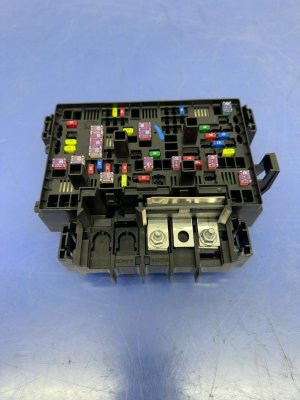
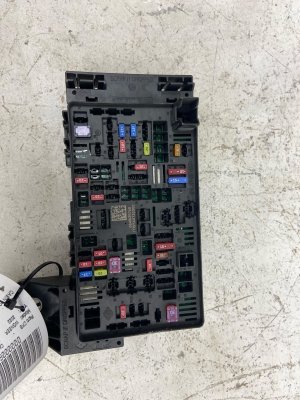
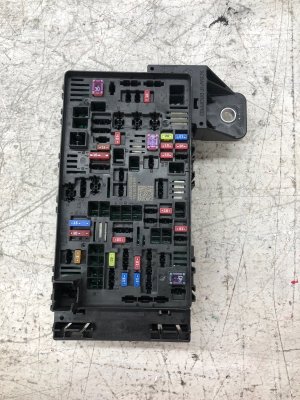
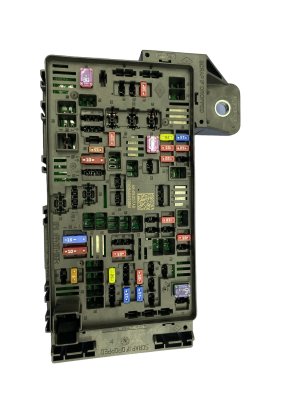
Houses various types of fuses including MICRO2, MICRO3, FMM/MCase, and J-Case fuses, as well as mini relays.
We Have This Part in Stock

The information in this article is provided for general reference and educational purposes only. Vehicle specifications, procedures, and part compatibility can vary by production date, trim level, and region. Always consult your vehicle's factory service manual and verify part numbers before purchasing or performing repairs. Safety-critical components such as airbags, seat belts, and braking systems should be installed by a qualified professional.
- Jeep Wagoneer:
- Jeep Grand Wagoneer:
- Jeep Wagoneer L:
- Jeep Grand Wagoneer L:
- 🎬 Helpful Videos
- 🛍️ Shop This Part
- Identifying Your Wagoneer's Fuse Boxes: Locations and Functions
- Common Symptoms of a Failing Fuse Box
- Known Issues, TSBs, and Recalls
- Buying a Used Fuse Box: What to Look For
- Programming and Installation
- Cost Comparison
- OEM Part Number Reference
- Frequently Asked Questions (FAQ)
- 🎟️ Get 5% Off