

Grand Cherokee & Grand Cherokee L Fuse Box Guide (2016-2025): Solving TIPM Electrical Problems
This guide explains common fuse box failures, symptoms, and replacement nuances for the 2016-2025 Jeep Grand Cherokee (WK2 & WL) and 2021-2025 Grand Cherokee L (WL).
- The fuse box is an intelligent module (TIPM) and a common failure point, causing random electrical issues, no-start conditions, or stalling.
- Replacement units MUST be programmed to the vehicle using a "PROXI Alignment" procedure, which usually requires a dealer or specialized shop.
- The 2021 Grand Cherokee was made in two different body styles (WK2 and WL) that use different parts; verify which you have before buying.
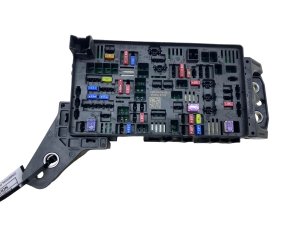
- When buying a used fuse box, you must match the OEM part number exactly and transfer your old fuses and relays to the replacement unit.
Understanding the Grand Cherokee Fuse Box: WK2 vs. WL Generations

The fuse box, or Totally Integrated Power Module (TIPM), is a known point of failure for many Jeep models, and the Grand Cherokee is no exception. This guide covers two distinct generations: the later years of the WK2 Grand Cherokee and the new WL generation, which includes both the Grand Cherokee and the larger Grand Cherokee L.
Critical 2021 Model Year Distinction: The 2021 model year is a crossover year. The "Jeep Grand Cherokee" (without the 'L') was sold in two different body styles:
- 2021 Grand Cherokee WK: This is the outgoing WK2 body style, which is a continuation of the generation that started in 2011. It is subject to the well-documented TIPM issues of that platform.
- 2021 Grand Cherokee WL: This is the all-new, redesigned body style. It shares its platform with the Grand Cherokee L.
It is absolutely essential to correctly identify which version of the 2021 Grand Cherokee you have before purchasing a fuse box, as the parts are not interchangeable.
Vehicle Generations Covered:
- 2016-2021 Jeep Grand Cherokee (WK2): This generation has a widely documented history of TIPM-related electrical problems. Many of the common symptoms listed below are most prevalent 🎬 See a real-world example of these common electrical problems in action. in these models.
- 2021-2025 Jeep Grand Cherokee (WL): The redesigned model with a different electrical architecture.
- 2021-2025 Jeep Grand Cherokee L (WL): The three-row version, which shares its platform and many parts with the two-row WL Grand Cherokee.
Common Symptoms of a Failing Fuse Box (TIPM)


A failing TIPM can create some of the most confusing and difficult-to-diagnose problems in a vehicle. Symptoms are often intermittent and can seem completely unrelated. The root cause is often a faulty internal relay or a failing circuit board inside the sealed TIPM unit.
1. Engine Starting and Running Issues
One of the most common and dangerous symptoms is related to the fuel pump. The internal fuel pump relay can fail, causing the engine to crank but not start, or to stall unexpectedly while driving. The fuel pump might also continue running after the vehicle is shut off, draining the battery.
2. Random Electrical Malfunctions
This is the hallmark of a bad TIPM. You may experience:
- Horn honking randomly
- Windshield wipers turning on by themselves or not turning off
- Headlights, taillights, or turn signals working intermittently or not at all
- Power windows and door locks operating on their own
- Radio or infotainment screen shutting off or acting erratically
3. Dead Battery / Parasitic Drain
A faulty TIPM can have relays that get "stuck" in the 'on' position, continuously drawing power from the battery even when the vehicle is off. This leads to a battery that is frequently dead, especially overnight.
4. Dashboard Warning Lights
A flood of seemingly unrelated warning lights, such as the check engine light, ABS light, or airbag light, can be triggered by a failing TIPM. Communication error codes (U-codes) are particularly common as the TIPM struggles to communicate with other vehicle modules.
Associated OBD-II Trouble Codes
While many issues won't set a specific code for the TIPM itself, they often generate communication loss codes. A scanner may show codes like:
- U0100: Lost Communication with ECM/PCM
- U0103: Lost Communication with Gear Shift Control Module
- U0155: Lost Communication with Instrument Panel Cluster
- U0184: Lost Communication with Radio
- P0884: Power Up at Speed (related to transmission control)
Known Issues, Recalls, and Technical Service Bulletins (TSBs)

Recalls
- NHTSA Recall 23V-303 (May 2023): Affecting some 2022-2023 Wrangler and Grand Cherokee 4xe (PHEV) models, this recall addresses incorrect fasteners on the 200-amp fuse in the high-voltage battery pack. This could cause high resistance, heat, and a potential loss of motive power.
- NHTSA Recall 24V-720 / 25V-741 (Expanded): A significant "park outside" recall was issued for 2022-2025 Grand Cherokee PHEV models due to a fire risk from the high-voltage battery pack, even when parked and off. The remedy involves a software update and potential battery replacement.
- NHTSA Recall for 2016 Grand Cherokee: A recall was issued for some 2016 models due to a loose electrical connection in the Brake Transmission Shift Interlock (BTSI) solenoid, which could cause the shifter to become stuck in Park or Neutral.
Technical Service Bulletins (TSBs)
TSBs are instructions from the manufacturer to dealers for fixing common, non-safety-critical problems.
- TSB 08-359-25 (for WL PHEV): Addresses a variety of issues on 2023 models including a no-start condition, low 12V battery, and rough shifting, solved by a software update to the Hybrid Control Processor.
- TSB J08 FSAR-TSB-5068 (for 2023-2025 WL): Addresses droning or humming noises from the Active Noise Cancellation system caused by a PROXI configuration misalignment. The fix is to perform a PROXI alignment with a dealer scan tool.
- TSB 18-015-23 (for 2023 WL): A software flash for the Powertrain Control Module (PCM) to address a Malfunction Indicator Lamp (MIL) illumination.
Replacement and Programming
Pro Tip: Before condemning the fuse box, always disconnect and clean all battery terminals and the main power and ground connections to the fuse box itself. A poor connection can mimic the symptoms of a complete failure.
Does a Replacement Fuse Box Need Programming?
Yes, in most cases. The fuse box (TIPM/PDC) is an integrated electronic module that is part of the vehicle's CAN bus network. When a new or used unit is installed, it needs to be configured to the specific options and VIN of the vehicle. This process is called a "PROXI Configuration Alignment".
Without a PROXI alignment, you may experience issues like features not working (e.g., fog lights, premium sound), incorrect mileage displaying on the odometer, or persistent error messages. While the vehicle may start and run, it will not be fully functional.
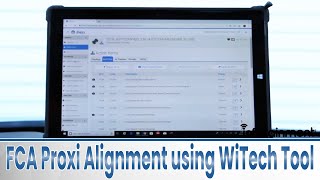
This procedure requires a high-end diagnostic scan tool with manufacturer-specific software, like the wiTECH tool used by dealers. Some advanced independent 🎬 Watch a step-by-step tutorial on performing a PROXI configuration alignment. shops may have this capability, but a dealer visit is often required.
Buying a Used Fuse Box
Buying a used OEM fuse box can offer significant savings over a new unit from the dealer. However, due to the complexity of this part, careful purchasing is essential.
1. Match the Part Number EXACTLY
This is the most important rule. There are dozens of different fuse boxes for these vehicles, depending on the year, engine (3.6L, 3.0L, 5.7L, PHEV), drivetrain (4x2, 4x4), and options (tow package, premium audio, etc.). Do not rely on visual appearance. The part number is printed on a sticker on the side of the unit. You must match this number to your original part to ensure compatibility.
2. Inspect for Physical Damage
When you receive the part, check for:
- Corrosion: Look for white or green crust on the terminals and pins. This is a sign of water intrusion, which is a common cause of failure. Do not buy a part with any signs of corrosion.
- Burn Marks or Melting: Inspect the housing and connectors for any signs of overheating or a burnt smell.
- Broken Connectors or Tabs: Ensure all plastic mounting tabs and electrical connector housings are intact.
3. Understand What You're Buying
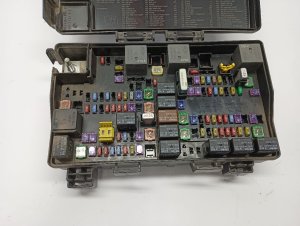
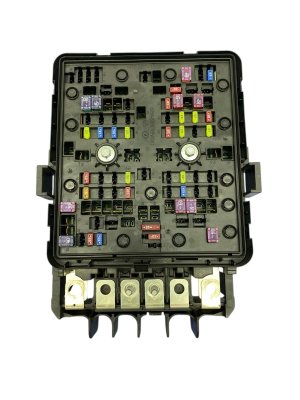
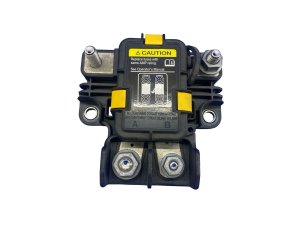
Most used fuse boxes are sold as the main housing and internal circuit board ONLY. They typically do not include the fuses, relays, or fusible links that plug into the top. You will need to carefully transfer these from your old fuse box to the new one. Take a clear photo of your original fuse box layout before you begin transferring them.
Cost of Replacement
The cost can vary significantly based on the source of the part and labor rates.
| Part Type | Estimated Cost |
|---|---|
| New OEM (Dealer) | $300 - $650 |
| New Aftermarket | $250 - $500 |
| Used OEM | $100 - $300 |
| Remanufactured / Rebuilt | $200 - $450 |
| Shop Labor (Replacement & Programming) | $150 - $300 |
Frequently Asked Questions (FAQ)
Can I drive with a bad fuse box?
It is not recommended. A failing TIPM can cause the vehicle to stall in traffic, which is a serious safety hazard. It can also leave you stranded without warning if the fuel pump or starter circuits fail. If you are experiencing any of the critical symptoms, you should not drive the vehicle.
Why are there so many different part numbers?
The fuse box is tailored to the specific features of the vehicle. A Grand Cherokee with a V8, tow package, and air suspension has different power requirements and circuits than a base model V6. Each unique combination requires a specific TIPM configuration, resulting in many different part numbers.
Is the fuse box the same as the TIPM?
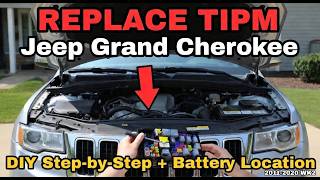
Yes. For these Jeep models, the terms are often used interchangeably. The official Mopar name is typically Power Distribution Center (PDC) or Intelligent Power Distribution Center, but it is the same component commonly known in the repair community as the Totally Integrated Power Module (TIPM).
Can I just replace a bad relay inside the fuse box?
No. On these modern TIPM units, most of the critical relays (like the one for the fuel pump) are not serviceable. They are soldered directly onto the internal circuit board and the unit is sealed. Attempting to open and repair the unit is not recommended and can cause further damage. The entire module must be replaced.
What is a PROXI alignment?
A PROXI (or Proxy) alignment is a dealer-level diagnostic procedure that scans all the electronic modules in the vehicle and ensures they are all configured to work together. When a major module like the fuse box is replaced, this procedure tells the new part what vehicle it's in and what options it needs to control. It's essential for restoring full functionality after replacement.
Helpful Videos
Technical Specifications
OEM Part Numbers: 68347003AC 68347003AD 68347003AE 68366496AE 68602406AA 68251626AB 68251626AC 68251626AD 68320921AB 68347002AC 68347002AE 68347016AD 68347016AE 68417603AB 68425201AB
Also known as Totally Integrated Power Module (TIPM) or Power Distribution Center (PDC). Controls nearly all vehicle electrical systems. Requires PROXI alignment programming upon installation.
We Have This Part in Stock

The information in this article is provided for general reference and educational purposes only. Vehicle specifications, procedures, and part compatibility can vary by production date, trim level, and region. Always consult your vehicle's factory service manual and verify part numbers before purchasing or performing repairs. Safety-critical components such as airbags, seat belts, and braking systems should be installed by a qualified professional.
- Jeep Grand Cherokee:
- Jeep Grand Cherokee L:
- 🎬 Helpful Videos
- 🛍️ Shop This Part
- Understanding the Grand Cherokee Fuse Box: WK2 vs. WL Generations
- Vehicle Generations Covered:
- Common Symptoms of a Failing Fuse Box (TIPM)
- 1. Engine Starting and Running Issues
- 2. Random Electrical Malfunctions
- 3. Dead Battery / Parasitic Drain
- 4. Dashboard Warning Lights
- Associated OBD-II Trouble Codes
- Known Issues, Recalls, and Technical Service Bulletins (TSBs)
- Recalls
- Technical Service Bulletins (TSBs)
- Replacement and Programming
- Does a Replacement Fuse Box Need Programming?
- Buying a Used Fuse Box
- 1. Match the Part Number EXACTLY
- 2. Inspect for Physical Damage
- 3. Understand What You're Buying
- Cost of Replacement
- Frequently Asked Questions (FAQ)
- 🎟️ Get 5% Off