

Infiniti G35, G37 & Nissan 350Z IPDM Guide: Solving Crank-No-Start & Electrical Gremlins
This guide demystifies the common failures of the Intelligent Power Distribution Module (IPDM) in popular Nissan and Infiniti models, helping you diagnose and fix the root cause of frustrating electrical problems.
- The most common cause of IPDM failure is water damage from clogged cowl drains; clean them when replacing the part.
- A failing IPDM is a primary cause of a 'crank, no start' condition in these vehicles.
- Replacement IPDMs do NOT need to be programmed; it is a plug-and-play part, making used OEM a great value.
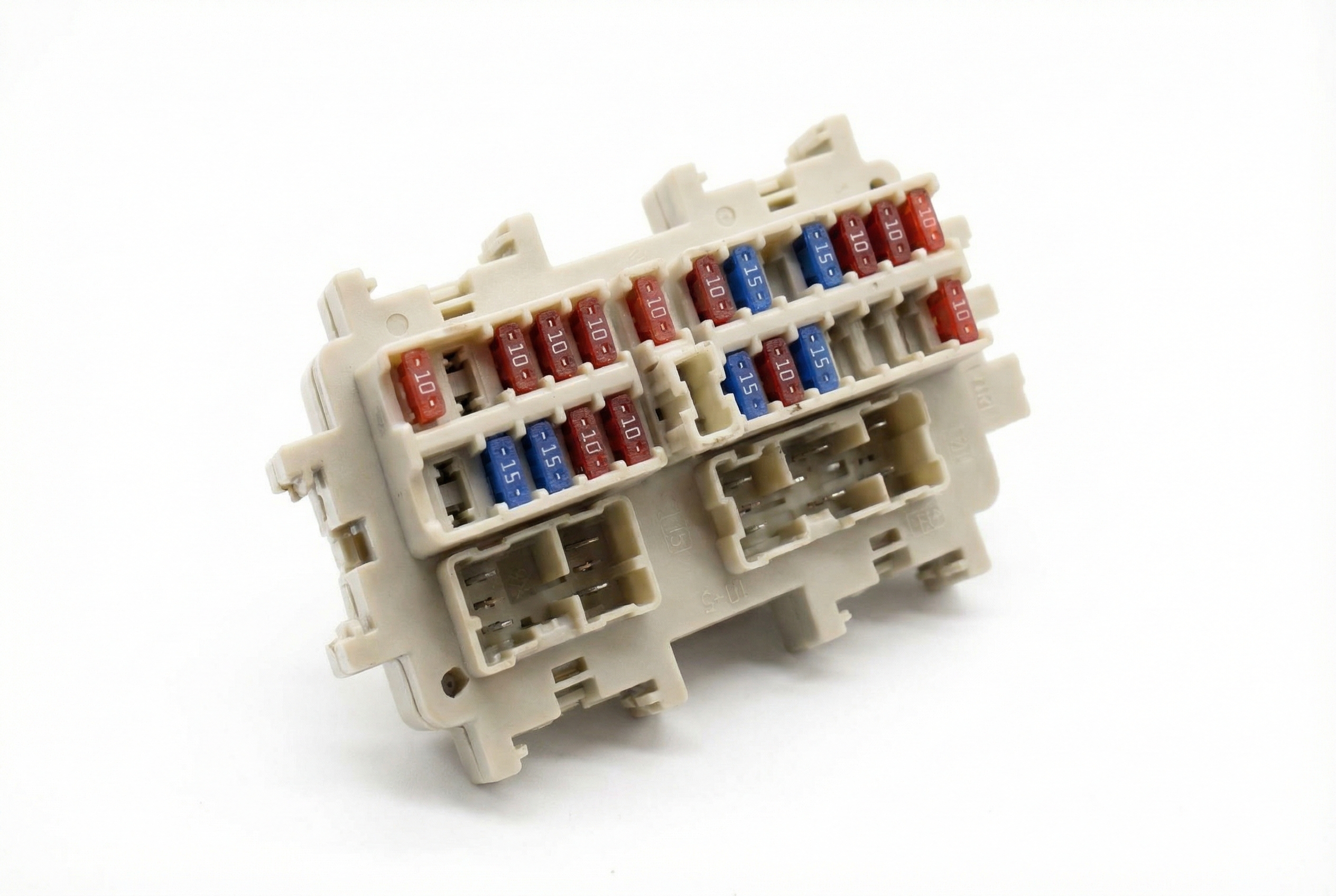
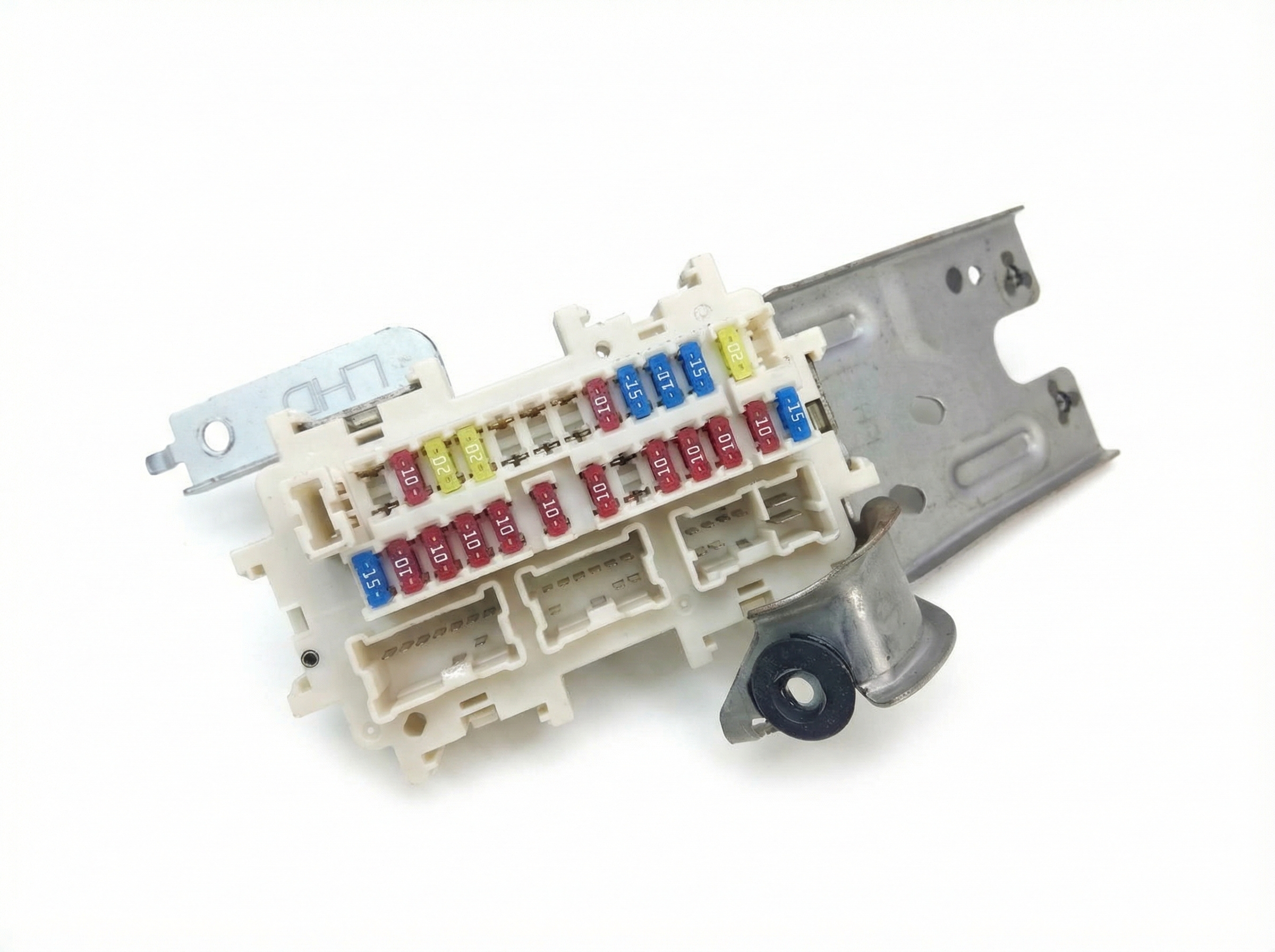
- There are two different IPDM designs; you must match the part to your vehicle's platform (early 2003-2006 G35/350Z vs. later 2007+ G35/G37/G25/Q40).
Understanding the IPDM: Two Platforms, Two Parts

Before diagnosing or buying a replacement IPDM, it's critical to understand that the vehicles covered in this guide fall into two distinct groups with different, non-interchangeable parts. The primary cause of failure for both types is often the same: water intrusion from clogged cowl drains.
Group 1: Early VQ35 Platform (2003-2009)
These vehicles share the earlier 'V35' (Infiniti) and 'Z33' (Nissan) platform architecture and use a common IPDM design.
- 2003-2008 Infiniti G35 Coupe
- 2003-2006 Infiniti G35 Sedan
- 2003-2009 Nissan 350Z
Compatibility Note: The 2007-2008 G35 Sedan belongs to the next generation and uses a different IPDM. However, the 2007 G35 Coupe still uses this earlier style IPDM. This is a common point of confusion.
Common part numbers for this group include 284B7-AQ0xx, 284B7-AL5xx, and 24350-AM60x.
Group 2: Later VQ Platform (2007-2015)
These vehicles are built on the newer 'V36' platform and use a different, updated IPDM design.
- 2007-2008 Infiniti G35 Sedan
- 2009-2013 Infiniti G37 (all models: Coupe, Sedan, Convertible)
- 2011-2012 Infiniti G25
- 2015 Infiniti Q40
Common part numbers for this group include 284B7-JK6xx, 24350-1NF0A, and 24350-1NF0B.
A Note on the 2003-2007 Nissan Murano
The first-generation Nissan Murano (Z50 platform) is also included in this guide as it suffers from nearly identical IPDM failure symptoms, including stalling and electrical issues caused by water damage. While it is a different platform, the IPDM design and failure modes are very similar to the Group 1 vehicles. When sourcing a used part, however, you should match the part number directly from your original Murano IPDM.
Symptoms of a Failing IPDM

A bad IPDM can cause some of the most frustrating and difficult-to-diagnose problems. The symptoms are often intermittent and can seem unrelated.
- Crank, But No Start: This is the most common symptom. The engine turns over strongly, but it will not fire up. This happens because the failing IPDM is not sending power to the fuel pump, the Engine Control Module (ECM), or the ignition system.
- Engine Stalling: The car may stall unexpectedly while driving, often at low speeds. It might restart after sitting for a while, or it might not. This is often traced to a faulty internal ECM or fuel pump relay.
- Cooling Fans Run Constantly: The radiator cooling fans may run at full speed anytime the ignition is on, even when the engine is cold. This is a classic sign of a communication breakdown between the ECM and the IPDM.
- Multiple Electrical Failures: You may experience a strange combination of issues, such as headlights not working, wipers acting erratically, power windows failing, or the radio cutting out.
- No Communication with Scan Tool: In some cases, a failed IPDM can prevent an OBD-II scanner from communicating with the ECM. You may also see a U1000 or U1001 CAN communication error code stored in other modules.
How to Diagnose a Bad IPDM
If you suspect your IPDM is failing, you can perform a simple self-test.
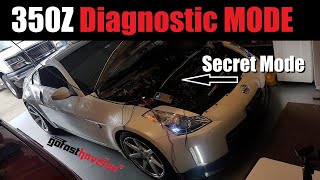
🎬 Watch: How to trigger this secret diagnostic testing mode.- Turn the ignition off and close all doors.
- Open the driver's door.
- Turn the ignition to the 'ON' position (engine off).
- Within 20 seconds, press the driver's door jamb switch (the small rubber-covered button that tells the car the door is open) 10 times.
- Turn the ignition to 'OFF'.
- Turn the ignition back to 'ON'. The horn will chirp once, and the IPDM will begin its self-test sequence.
You will see the headlights, wipers, and other components cycle on and off. This confirms the IPDM's internal processor is working and can command its relays. If the test runs, but you still have a problem with one specific component (like the fuel pump), it points to a failure of that specific circuit within the IPDM. If the test does not run at all, the IPDM is likely dead.
Buying a Used IPDM: What You Need to Know

Because a new OEM IPDM can be expensive, a quality used OEM part is often the best value. Here’s what to look for:
- Match the Part Number EXACTLY: This is the most important rule. While there is some cross-compatibility within the platform groups, the safest bet is to match the primary part number (e.g., 284B7-AQ01B) from your original unit.
- Inspect for Corrosion: The number one killer of IPDMs is water damage. Carefully inspect the electrical connector pins on the used module. They should be clean, straight, and shiny. Any signs of white or green crusty deposits, or any discoloration, is a major red flag. Do not buy a part that shows any sign of water exposure.
- Check the Vehicle Source: If possible, find out the history of the donor car. A part from a low-mileage vehicle that was involved in a rear-end collision is ideal, as the front-end electronics were likely protected.
- Why Used OEM is a Good Choice: For this specific part, a used OEM unit is often superior to a new aftermarket one. The IPDM is a complex module tied into the vehicle's communication network. Aftermarket versions can have quality control issues that lead to the same intermittent problems you're trying to solve. A tested, corrosion-free OEM unit is a known-good component designed specifically for your car.
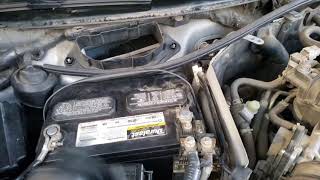
Pro Tip: After replacing your IPDM, you MUST fix the source of the original failure. Use compressed air or a long wire to clear the cowl drain tubes located under the plastic trim near the windshield and battery. 🎬 Watch: How to save your IPDM from water damage. If you don't, your new IPDM will suffer the same fate.
Replacement Cost Breakdown
The cost to replace an IPDM can vary significantly based on the part source and who performs the labor.
| Part Source | Estimated Cost |
|---|---|
| New OEM (Dealer) | $450 - $800+ |
| New Aftermarket | $250 - $400 (Quality varies) |
| Used OEM (Recycled) | $75 - $200 |
| Shop Labor | $100 - $250 (Typically 1-1.5 hours) |
Frequently Asked Questions (FAQ)
Does a replacement IPDM need to be programmed?
No. The IPDM is a plug-and-play module and does not require any programming or flashing. You can swap it yourself without needing a trip to the dealer. 🎬 See this walkthrough on how to change the IPDM yourself. Some dealer service advisors may mistakenly claim it needs programming, but the official factory service manuals do not list any programming steps.
Where is the IPDM located?
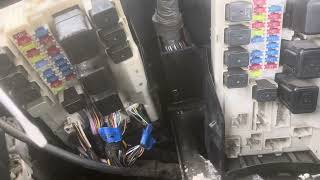
The IPDM is located in the engine bay, on the passenger side, right next to the battery. It's housed in a black plastic box, and you will need to remove the plastic cowl and battery covers to access it.
Can I just replace the bad relay inside the IPDM?
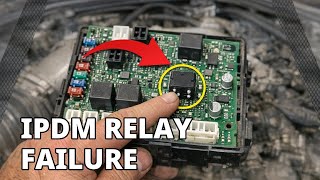
Officially, no. Nissan/Infiniti designed the IPDM as a non-serviceable unit and does not sell the internal relays separately. The relays are soldered directly to the circuit board. While some skilled electronics technicians have successfully de-soldered and replaced a faulty relay (like the one for the fuel pump), it is a difficult repair that risks damaging the board. For most people, replacing the entire IPDM module is the more reliable solution.
What is the difference between the IPDM and the BCM?
The IPDM (Intelligent Power Distribution Module) is the 'muscle'. It's an engine-bay fuse/relay box that directly switches power to high-current devices. The BCM (Body Control Module) is the 'brain' for body electronics, located inside the passenger cabin. The BCM decides what needs to happen (e.g., 'turn on headlights') and sends a low-power command to the IPDM, which then executes the command by activating the appropriate relay to send high-power voltage to the headlights.
Helpful Videos
Technical Specifications
OEM Part Numbers: 24350-AM600 24350-AM60A 284B7-AQ006 284B7-AQ01B 284B7-AL505 24350-1NF0A 24350-1NF0B 24350-79903 284B1-JK62A 284B7-JK06A
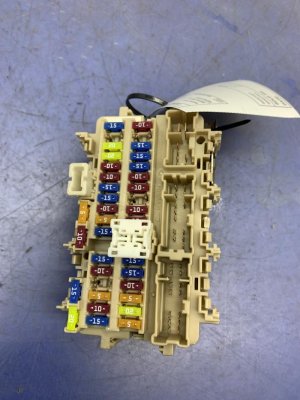
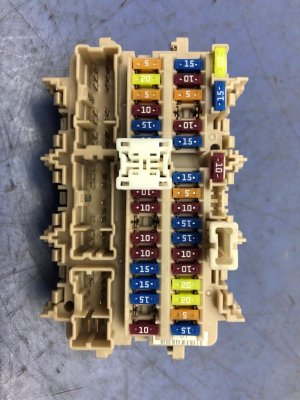
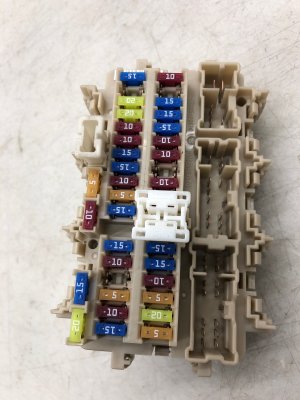
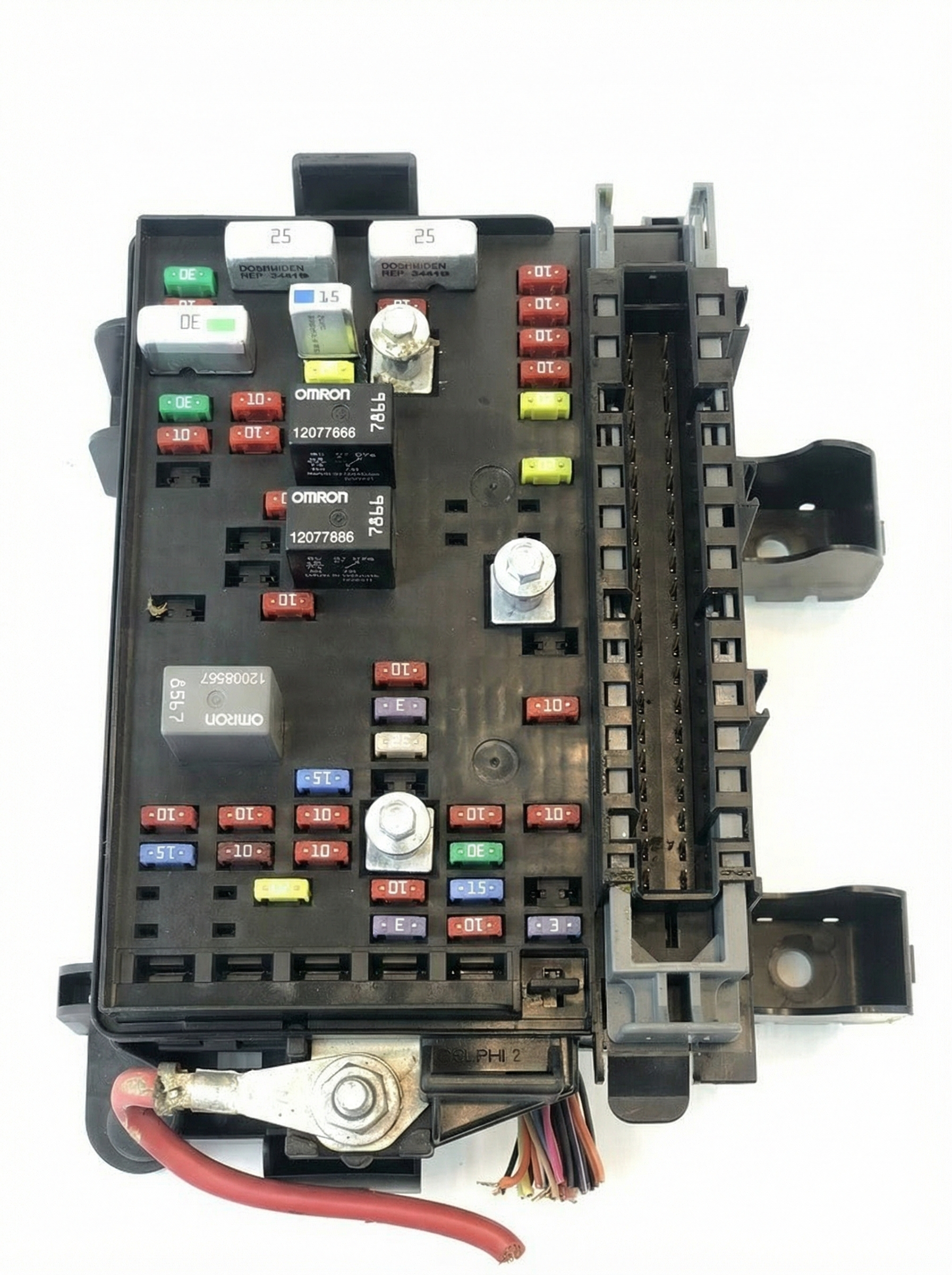
The IPDM E/R (Intelligent Power Distribution Module Engine Room) is a sealed unit containing multiple non-serviceable relays and blade-style fuses. It communicates with the BCM and ECM via the CAN bus network.
We Have This Part in Stock

The information in this article is provided for general reference and educational purposes only. Vehicle specifications, procedures, and part compatibility can vary by production date, trim level, and region. Always consult your vehicle's factory service manual and verify part numbers before purchasing or performing repairs. Safety-critical components such as airbags, seat belts, and braking systems should be installed by a qualified professional.
- Infiniti G35:
- Infiniti G25:
- Infiniti G37:
- Nissan 350Z:
- Infiniti Q40:
- Nissan Murano:
- 🎬 Helpful Videos
- 🛍️ Shop This Part
- Understanding the IPDM: Two Platforms, Two Parts
- Group 1: Early VQ35 Platform (2003-2009)
- Group 2: Later VQ Platform (2007-2015)
- A Note on the 2003-2007 Nissan Murano
- Symptoms of a Failing IPDM
- How to Diagnose a Bad IPDM
- Buying a Used IPDM: What You Need to Know
- Replacement Cost Breakdown
- Frequently Asked Questions (FAQ)
- 🎟️ Get 5% Off